Thursday, January 19, 2017

The Hidden Question

In the early fourth century, Arius brought the proposition that the Son was begotten and not eternal, thus creating a divide between the nature of God and the Son.  This proposition and the ensuing controversy that followed set the young church on fire.  It is said that merchants on the street of Alexandria would debate with their customers the nature of God, and whether the Son was truly, fully God.

And thus the church was changed forever.  To this day, Arius is refuted in churches, attempting to revive the old debate that was, in every way it could be, won by Athanasius and the majority of bishops. Unfortunately, in the focus of the church to hammer out the nature of God and the relationship between the Father and the Son, instead of the focus of the early church.

There is a debate about the nature of God in the NT, but it contains almost nothing about the nature of God's being, but is strongly debating the nature of God's character.  Is God a force of karma, pouring out judgment on those who deserve it?  Or is God ultimately merciful, forbearing to the point of allowing his reputation to suffer so he can bring sinners further into love?

In understanding the character of God, we also understand our own goals as individuals and as societies.  If God is karma, we need to bring harsh justice onto those who do evil.  If God is love and mercy, we should be forbearing and allow people to take advantage of us because in the end it makes us all who we ought to be.

If we focus on the being of God, we neglect the question of character, God's and our own, in order to explore that which we ultimately cannot know.  The being of God is the more interesting question because it requires in depth analysis, some imagination and curiosity.  It is the question that our human nature wants to explore because it does not require us to change, it allows us to be who we are.

But this is not the focus of Jesus or the rest of the New Testament.  They are constantly telling us to change, to be more merciful, loving and peaceful, both as individuals and communities.  They are telling us that it is hard work and requires our whole focus.

We are so easily distracted.

The proper study of God is his nature as displayed by his actions through Jesus, not his being.

Tuesday, January 3, 2017

9 Biblical Principles to Exorcise our Greed

I have a secret to tell you: 

If you are reading this blog, you are probably wealthy.  


I’m not saying absolutely, because I know a number of people who are homeless who might be reading this, and I also know people who are living on the edge of poverty, by their own choice, who scan blogs to read.  But, probably, you have more than you need. 

The Bible makes a difference in their definition of “people who have wealth” and “the rich”, while in English we tend to put the two together.  “Wealth” in the Bible is anything we have that goes beyond what we need.  So most of us reading this essay have “wealth”, something more than what we need.  We might have sentimental trinkets or extra food in the house or items we keep “just in case” we might need it someday.   “The rich” are those who keep such items in order to accumulate their wealth, what used to be known in English “hoarders”, “the stingy” or “greedy.”  Nowadays, “hoarders” are people who collect mostly useless items to their own detriment.  And the other two terms are used to speak of people’s motivation, not what they actually have.

The Bible, when speaking of moral matters, is very clear about having actions that display a moral or immoral attitude.  If a person has covetousness, it is accompanied by a “look of lust”, which in the ancient world was also called an “evil eye”, or a lingering gaze of desire.  Even so, greed is indicated by a mass collection of possessions, whether it be silver, horses, wives, or grain.  These possessions could be excused by a desire to protect one’s retirement, to provide security against future attacks or to empower oneself in the world, whether for good or ill.

This means that, in all probability, we are “rich”.  We keep and save wealth against a future of calamity, like getting old.  A few of us have more than ample possessions or monies for ourselves or our family.  We want to protect ourselves against “love of money” or worship of “mammon”, but the fact is, many of us have every indication that we dove into a sea of that love and can’t recognize that we are drowning in it.

Thankfully, the whole Bible gives us a path to escape such immoral love.


1.       Don’t cheat
In all our ways we should have integrity.  Not just honesty, not just faithfulness to our promises, but integrity.  We should never take from someone what we want for ourselves, unless they openly give it to us.  We shouldn’t take for ourselves what doesn’t really belong to us, but belongs to the public or the poor.  We should be careful with possessions or money whose ownership is questionable.  This goes especially for donated money.  We must be above board, careful.  We don’t have to prove our integrity to the world, but we should be able to prove it to God.


2.       Don’t harm the poor
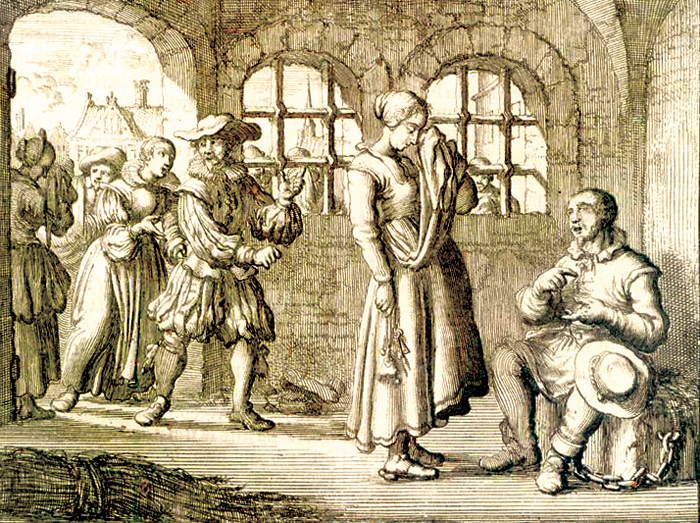
In gathering wealth, we should do nothing to harm the poor.  Many companies and governments are careless about how they help the poor, harming them without knowledge so that they might obtain wealth.  Many companies and non-profits actually target the poor, using them as pawns or as dupes in a long-range con game.  This includes banks who charge the poor but give to the wealthy, police who ticket the homeless but give more “important” citizens a wink.  We must not invest in these groups or support them in order to obtain our wealth or possessions.   Those who participate in scalping the poor for the sake of wealth are called “oppressors”.


3.       Don’t take short cuts
The book of Proverbs frequently warns against “hasty” wealth.  This isn’t because one might get cheated in a con (although that is certainly true), but because hasty wealth is often a cheat and we may not even know where the wealth is coming from.  This could be buying a bicycle inexpensively on the street corner or investing in something that is “too good to be true” to buying out a company for a quick turnaround and profit.  Get rich quick schemes always leave victims.


4.       Be content with little
Often we think about having a huge house with all the food we could want with people to help us clean the fridge every once in a while.  We want a movie collection and a video game library and… well, you know.  And some of us actually get what we want.  Or quite a bit of it.  And because we have dreamed about it for so long, we hold these items very precious.  But the Bible counsels us to be content with what we need.  This doesn’t mean to be happy with less than we need.  We shouldn’t be content with starvation or living out in the cold.  But if we have what we need, we shouldn’t keep wanting more.  We shouldn’t keep striving for needs that are already met, whether that  be possessions or security or good relationships.


5.       Trust in God
When the Bible tells us to trust, it isn’t just some pie-in-the-sky spiritual mumbo jumbo.  It is specifically telling us to trust God in the very areas we are afraid of.  We are afraid that if we don’t have enough money we will lose our home or our car.  We are afraid that if someone gets a certain political or job position, it places us poorly.  We are afraid for our kid’s future, for our future, for what may happen if a burglar comes in.  The Bible tells us not to fear, but to trust in God for all of these things.  This is important to avoiding greed because we collect many things, not because we need them, but we are afraid of the consequences if we don’t have them.  To trust in God is to give Him our future, our worries and to rest on being content with what we actually need.


6.       Share what you have
Okay, now it’s time for the rubber to meet the road.  To not be greedy means specifically not to grasp onto things someone else could use.  This means, first, to share what we own with people who need to borrow them.  Yes, this may mean that your possessions could be damaged or taken.  But this is where trust comes in.  If someone actually needs an item, we need to give them the use of it.  We could loan our car to someone who needs to move.  We could take a spare room and loan it to someone who needs a place to crash.  And if we have anything extra, we should be willing to share whatever that is.


7.       Be generous
The Bible tells us that it is key to our humanity to be generous.  If we give someone wages, from an employee to a tip at a restaurant, we should give more than we need to.  If we give to a beggar, we shouldn’t be stingy.  We should be generous with compliments, generous with thanks, generous with encouragement.  If we have extra food, extra clothes, extra time, extra time, extra space in our house or building, we should be thinking about who should be given these things, who needs them the most.  And then we should give cheerfully.


8.       Seek out the poor
“The poor” in the Bible is anyone who has need of something, whether they put themselves in the situation or they fell into it.  The “poor” are those in need, not those who look like they are in need or those who pull your heartstrings, but those who really lack food, clothing, respect, security, love, hope.  When we run across these people, we are to give.  We know this.  But more than this, we are to seek these people out.  Along with a generous spirit, we are to seek those who have need.  Many of us don’t know anyone who is desperate.  Then we should go out of our way to find them.  This may mean we need to contact people out of our town in order to be generous to those in need.  It may mean we need to open our eyes and ask people about their needs.  But even as Job or Lot wouldn’t allow a single person in his town to be without shelter, we should seek people out who might need our help. Jesus tells us to make friends of the poor, so they are loved by us and we can be generous to them-- thus the poor are saving our souls. 


9.       Do everything with love

For a long time, I followed these principles above.  And I tried to do them with love.  But I had no balance in my life, so love was often lost.  But without love, we might be devoid of greed  but still lack true generosity of spirit.  It is better to be giving than to be stingy with what we have.  But it is far better to allow the Spirit of God to infuse us with God’s love, mercy and generosity.  It is not enough for us to avoid greed.  We must also be surrendering our love at every turn. 


If you're one of those Bible thumpers, here's some verses to get you going on this subject:
Luke 19:1-10; Luke 12:13-34; Psalm 37; Mark 10:17-27; Matthew 25:31-46; Hebrews 13:5; Matthew 6:19-24; James 5:1-6; Proverbs 22:16; Prov 11:24; Prov 28:22; Prov 23:4; Proverbs 13:11; Luke 16; I Corinthians 16:14. 

Monday, December 26, 2016

11 Ways Jesus Fought Patriarchy

Patriarchy is the system of a society which grants a male perspective, power and principles greater pull than women’s, even though both are equally human.  In the Jewish tradition Jesus grew up in, both equality between sexes and a male-centric view was available, but his society was focused on the male.  Only men were granted places of authority, only men were allowed to interpret law (which gave them control over politics and ethics), and men alone were allowed to conduct family business.

It must be admitted that Jesus upheld the patriarchy at points.  Only men were allowed to be in the inner 12, and he allowed men to buster and command as if they were really in charge of his community.  Nevertheless, there are a number of ways that we can see that Jesus was trying to undermine the male-centric society.

1.  Jesus took on female disciples
Jesus was running a religious/political school, and there were some rules about how these schools worked, one of which is that no female students allowed.  They would distract the men, and women wouldn’t be allowed to interpret the law or wield influence (If you aren’t sure on this, watch Yentl).  But Jesus welcomed female students.  There was a small group of women who “followed” him just like the male disciples.  And Jesus openly encouraged Mary, the sister of Martha, to participate in his teaching sessions, saying, “She has chosen the better part.”


2. Jesus defended women over men
While a teacher might approve of something a woman said, in a patriarchal society they wouldn’t support a woman over a man, because this would shame the man.  Jesus, however, publicly rebuked men when they were on the wrong side of an argument with a woman.  Jesus sided with the woman anointing him over his disciple, Jesus even sided with a prostitute over a high-standing politician in the politician’s own party.  In fact, we have no example of Jesus siding with a man over a woman. 


3. Jesus promoted "feminine" virtues over "male"
Most teachers of Jesus’ day upheld the principles of law and justice in judgment was the most essential principle.  Jesus, on the other hand, upheld the more “feminine” or relational, gentle virtues.  He told the Pharisees to learn this verse: “I desire mercy and not sacrifice.”  He spoke of love, humility and compassion as the principles which causes one to be right with God and to build a spiritual community on.


4. Jesus defended “non-feminine” roles for women
Jesus found himself in an argument between two sisters, Mary and Martha.  Martha insisted that her sister not be lazy, but to take on her proper role in the patriarchy, which was to serve the men.  Jesus took Mary’s side, claiming that her role of being a student is better than her traditional female role.  I’m sure Martha was fuming that she didn’t have help doing the dishes.  If Jesus had been on the ball, I’m sure he would have sent Judas to help her.


5. Jesus taught equality between husband and wife
In Genesis, there are two creation stories of the forming of men and women.  One supports men and women being equally created and unified in marriage.  The second promotes patriarchy, teaching that women were created from the “side portion” of men.  Jesus never mentions the second story, but quotes the whole passage of female equality in relation to a matter of divorce, in which women got the worst end.


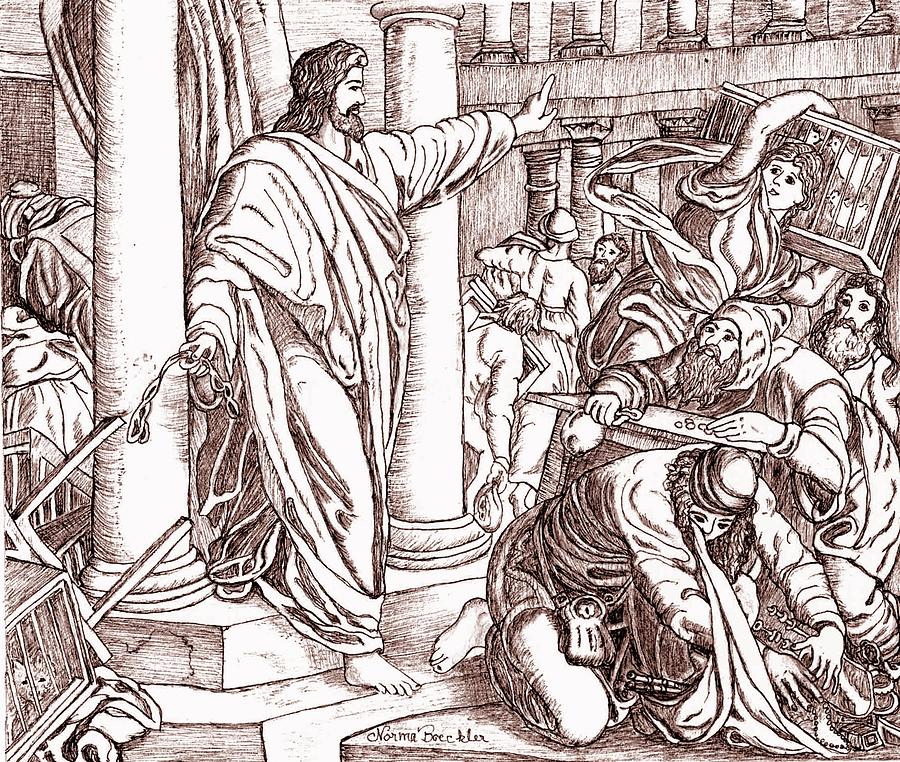
6. Jesus kicked the businessmen from the woman’s court
It was the policy of the high priest of Jesus’ day to allow people to exchange image-filled money with temple-approved money for sacrifices.  But Jerusalem was short on space, so the high priest allowed the money-changers to conduct their business in the “women’s court”, which was the only part of the temple women were allowed to worship and pray in.  Jesus threw the businessmen out, changing the high priest’s policy, reserving the space of women’s worship to be for them.


7. Jesus called himself a mother hen
In his sorrow over Jerusalem, Jesus proclaimed, “How I longed to gather you as a hen gathers her chicks.”  Not a great blow for feminine equality, but his heart is in the right place.


8. Jesus defended a woman caught in adultery
The famous story about Jesus and the woman caught in adultery is often placed in the book of John, but it doesn’t really belong there.  Some old manuscripts place the same story in Luke, but it doesn’t really belong there, either.  We don’t know where it goes, or if it’s really something Jesus did.  But we think it sound like something Jesus would do.  Why?  Because he defends a woman, who was “caught in adultery”, but the men who brought her didn’t bring the other culprit she was caught with.  Again, Jesus in this story promotes the female principle of forgiveness over punishment.


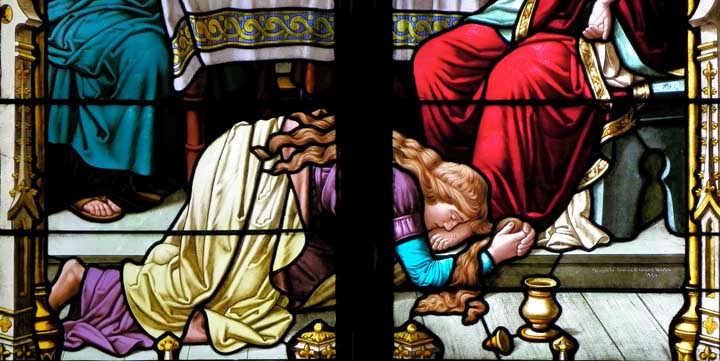
9. Jesus gave a woman primary place in his gospel
There is only one person whom Jesus guarantees a place in his story: the woman (some say Mary) who anointed his feet and who got yelled for it.  Jesus said, “Wherever the gospel,” (gospel =  good news of victory) “is taught, what this woman did will be told.”  This woman’s act is central to Jesus’ victory over the society of the world.  Partly because it was a woman who did it.  Without women, Jesus recognizes, his story would never be told.


10. Jesus recognized a woman’s gift over the wealthy
In looking at the givers to the Temple, Jesus recognized one person over the rest—a woman who had no standing in society, no way to make money because she had no husband to stand for her.  She gave a small coin, but because it was all she had to live on, Jesus proclaimed her gift the greatest.  (He did not, however, say it was just, as he rebuked those who collected the money as “devourers of widow’s homes.”)


11. Jesus’ first resurrection witness was a woman

The greatest thing for woman Jesus did was for Mary Magdalene.   She was the first--and for a while, only—witness of Jesus’ resurrection.  This was in a society in which woman couldn’t be a legal witness, where men didn’t have to believe women’s testimony.  But Mary was the one Jesus trusted to tell the story without twisting it.  No matter what, every man who told the story had to admit that a woman knew about Jesus’ resurrection before anyone else.  That she had to tell them, because they were in the dark.  This is a fitting beginning to a society built upon equity.

Too bad it fell from that lofty position so quickly and firmly. 

Saturday, December 24, 2016

Seven Kinds of Misfits in the Christmas Story

Mary, Joseph and Jesus,
known by Joseph's family as the
Unholy Trinity: "slut, wimp and bastard"
There isn't a single Nativity story, but most of the story is found in two sections of the Bible: Luke 1-2 and Matthew 1-2.  If there is one theme that runs through this story, it is that the soon-to-be-born and newborn Messiah, king of the earth, attracted the most unsavory people.

1. An adulterous wife
Mary, the mother of Jesus, received a great "blessing" of a pregnancy from God... the blessing of being accused of an unfaithful slut.  She was already engaged to Joseph, a trade-worker, so when she shows up pregnant, it's clear that someone wasn't following the rules. Frankly, under the rules of first century Palestine, she could have been stoned to death.  Her (soon to be) husband kept her from this fate because he was...

2. A mystical wimp
Joseph didn't want his fiancee killed, he just wanted her drama to go away.  That is, until he got a dream about an angel.  He didn't even get a face-to-face like his woman, he just had some spicy pizza and dreamed up an angel telling him to go ahead and marry the slut.  He even told the wimp what to name the kid when he was born.  He woke up and said, "Well, I know what to do now."  Really, how many people take their nighttime fantasies as commands?

3. A Communist
Mary decided it was a great time to hang with her cousin in the country, and while she was there she was singing communist propaganda. She sang about revolution and the proletariat taking over.  She also sang about communist deeds like feeding the hungry and taking possessions from the rich.  She was a real party-goer, that Mary.

4. Judgmental family members
We know that Joseph had to go to Bethlehem.  But he had to go there because that was his family home.  He didn't try to go to an "inn" but to a "guest room" that his family home had for visitors.  The room was "full", meaning they didn't have room for a socialist pregnant slut that their wimpy nephew decided to hook up with.  They can go out into the stables.

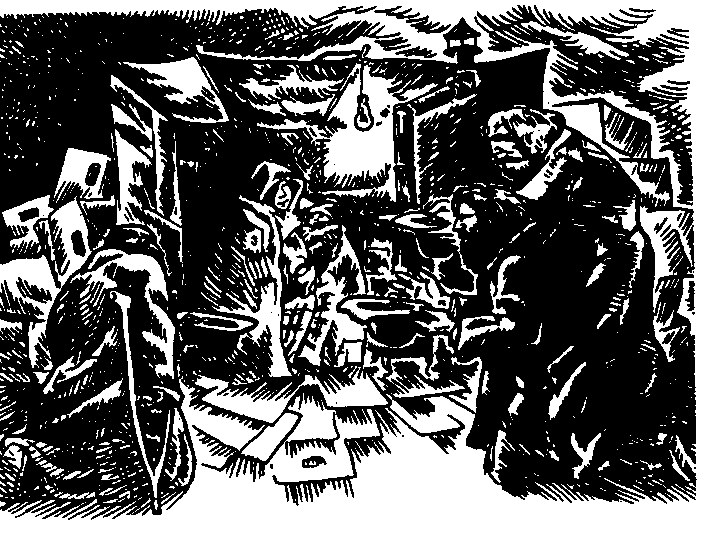
5. Smelly homeless people
Shepherds, back in the day, didn't smell like mothballs or the back of a church closet.  Rather, they smelled like sheep.  Take  a wool sweater, get it wet, roll it in some dirt and grass and then stick it in a box for a month.  NOW you know what shepherd smells like.  These "workers" just hung out with sheep, trying to find someone's lawn for the animals to chomp on.  So everyone within a hundred miles of every flock (read: everyone) hated these wandering guys who liked sheep a bit too much.  For some reason, the angels thought these were the guys who needed to see the great King pop out from a vagina.

6. Nasty Old Fanatics
When Jesus' parents brought him to the temple to have his foreskin ripped off his penis with an ancient "knife", two old people accosted them.  First was Simeon who was "told by God" that he would see the Messiah before he died.  Perhaps he knew the day was coming and just picked out a likely looking male baby and declared his allegiance to that slobbering, wetting-himself King.  Then eighty four year old Anna "who never left the temple" to like eat, or anything saw Simeon fawning over the brat, so she had to have a piece of the spiritual action.

7. Slackers
Those "wise men" we hear about?  They were actually astrologers, who saw a sign in the stars about the king to be born.  So they decided to pop over and see the king.  Only problem?  They lives in Persia, and cars weren't to be invented for a couple thousand years.  So they hoofed it, not having anything better to do, which took them a couple years, so the kid wasn't a baby anymore, but a toddler.  Meanwhile, they got the attention of the local king (read: serial murderer). and gave him the kid's whereabouts.  Then the bums scooted out of time before the genocide began. If it wasn't for another vision of the wimp, the toddler king would have bit the big one.

The whole point is this: the King of Jerusalem, the Teacher of Love, the Jewish Emperor of Heaven, the Son of God... or the Nazarene Bastard, whatever you want to call him... seemed to have a habit even before birth to hang out with people who had less-than-pristine reputations.  Maybe he wanted to have a community made up of the same, you think?  Perhaps he picked up his mother's communist tendencies?


Thursday, December 15, 2016

NO!

"NO! I don't wanna go to the doctor!  I wanna watch Dora!"

"Just let me sleep in, dad.  I don't want to go to school."

"Don't take away the Wifi!  I can do the stupid dishes later! Stop!"

"Why shouldn't I have a car?  I'm 16 and I've passed my driver's exam.  I'm old enough."

"You never understood me!"

"I hate you.  I HATE YOU!"

And the parent waits, patiently.  She waits expectantly. The child must grow, become more than he is.  Not that his present state is bad.  Just unfinished.

The parent does understand.  He had to pass through all of these minor deaths, these sheddings of the past self. He needed someone to stand for him, to press him on toward maturity, when he wouldn't do it himself.


Growth is always better when accomplished by one's choice-- most of the time it doesn't happen any other way.  But every single one of us have faced a time when growth had to be forced on us, when we did not have the discipline or wisdom to accomplish the next step of maturity on our own.  When we were so caught up in ourselves, in our problems, in our pain, that we had no idea that we were the problem.  That we had to be taken out of the equation in order for growth to occur.


Forced growth is anger-inducing, forcing us to face our greatest fear: that we are inadequate for the future.  Although surrounded by many who have been through that same process, we scream about our complete solitude, how no one could possibly understand.

Thank you, Father, for patiently leading us to greener pastures, even through the valley of the shadow of death. 

Sunday, November 6, 2016

26 Anabaptist Distinctives by Dr. William Higgins

Dr. Higgins collected these twenty six themes about 20 years ago.  These represent the communal bible study of the Anabaptist communities throughout Europe in the 16th century.  Not all communities held to all of these distinctives, but they are generally representative of Anabaptists at that time. -Steve K.

#1-- Scripture Alone
Scripture is the supreme authority over the church. Catholic popes, councils or traditions are not the authority. Theologians like Luther or Zwingli are not the authority. City or national governments are not the authority.

#2--The Precedence of the New Testament
The Bible is not flat. The teaching of Jesus and the apostles takes precedence over the Law and Prophets. We come to understand the Old Testament through Jesus and the apostles. The Old Testament has the character of promise. The New testament is all about fulfillment. Now that the promises are being fulfilled this should be the primary focus - especially the gospels and the Sermon on the Mount.

#3-- The Bible is Accessible
The literal meaning of Scripture is available to the common person - Matthew 11:25. Although learning is not bad, there is no need for elitist popes or scholars to dictate to all what the Scriptures teach. On the other hand, all interpreters must rely upon the Spirit and desire to obey the Scriptures to truly understand them. Only these are truly qualified to interpret Scripture.

#4--Biblicism
The end of all Bible study is to do what it says. We literally do whatever Jesus and the apostles teach, whatever the consequences.

#5-- Restorationism
The goal is not so much reform as it is a restoration of the apostolic/New Testament church. It is not enough to take the medieval church and tinker with it (Luther, Zwingli). One must get back past the fall of the church with Constantine and restore the practices of the New Testament church. This is all that is important.

#6-- Saved by Grace Through Faith
Salvation is a gift of God’s grace, based on what Jesus has done, that must be received by faith. Salvation is not based on deeds we do, religious or otherwise. Anabaptists learned this from Luther. But they emphasized that this grace, if it is real will produce acts of righteousness. Only the one who does the will of the Father in heaven will ultimately be saved - Matthew 7:21.

#7-- Human Choice
Although all people are sinners, God makes it possible for all to choose to have faith and be saved. Luther’s concept of predestination is wrong. People do have a choice. God does not predetermine everything. Also Luther’s idea of total depravity is overstated. We are sinful, but by God’s grace we can choose to turn to God.

#8--Spirit Regeneration
The one who believes is born of the Spirit. Believers are new creations in Christ and are thus able to do God’s will. We are not simply forgiven sinners, who continue in sin. We are forgiven and transformed by the Spirit so that we can obey God. For Luther God’s grace is best emphasized when we see God as accepting us despite our continued sin. This keeps us from thinking we can earn our salvation. For Anabaptists God’s grace is best emphasized when we see God’s grace powerfully transforming us. All the good we do is a testimony to God’s powerful work in us.

#9-- Non-Sacramental Ordinances
Baptism and the Lord’s Supper are simply outward signs of God’s grace working in you by the Spirit. A sacrament is “a visible sign of an invisible grace.” In Catholic thought the visible sign conveys the invisible grace by the mere performance of the act. There are seven Catholic sacraments: Baptism, Eucharist, Ordination, Confirmation, Penance, Marriage, and Extreme unction. It is through these acts that God’s grace (salvation) is given to people. For Anabaptists, the two outward signs do not convey the grace. They are a means by which a person testifies to the presence of grace already within them.

#10-- The Lord's Supper
This is a memorial of the death of Jesus and is only for baptized believers who are committed to obedience to Jesus. The idea of the supper as a memorial was learned from Zwingli and/or the Dutch Sacramentists. The bread and wine are only bread and wine. They do not change in essence as in Catholicism. They point to the death of Jesus.

#11-- Believer's Baptism
According to the New Testament baptism is only for believers. It is the pledge of a believer to live a new life as a part of God’s community. It is about discipleship. Since the water is only water, it does an infant no good. The scriptural pattern is always that faith precedes water baptism. Baptism is like a monastic vow. All who choose it commit to walk according to Jesus’ teaching. It is the beginning of a life of discipleship, set apart from the world.

#12--Children are Innocent
On the basis of texts like Matthew 19:14 children should be seen as innocent. There is no need for a sacrament such as infant baptism that can wash away the effects of original sin for them. They are not punished for sin until they come to the age of accountability. Therefore they should wait and be baptized as believers.

#13-- A Visible Church
The church is not invisible - made up of those with faith in their hearts alone. One’s inner experience of God (if real) will show up in an outward conformity to the teaching of Jesus and the apostles. Thus the true people of God will be marked by baptism and a godly life. The spiritualists thought that inner spirituality was enough. Anabaptists insisted that the inner and the outer are connected. Real disciples are known by their fruits - Matthew 7:16.

#14--Two Kingdoms
The church is a separate social entity from the rest of society which is “the world.” These two kingdoms have different standards. You are either among the people of God or you are a part of the world. There is no neutral ground. The dividing line between these two kingdoms is believer’s baptism. This is a rejection of the Christendom conception of a church that is fused together with the state into one social entity, living by one standard. True disciples who live by the teaching of Jesus will not fit in with the world system around them.

#15-- Political Nonconformity
Followers of Jesus must be faithful to the teaching of Jesus, even if this brings them into conflict with the political authorities placed over them by God - Acts 5:29. The church is a prophetic voice to the powers that be of the new way of Jesus. It also calls governments to account for their actions of injustice that go against God’s will for governments. This was especially the case when governments persecuted the Anabaptists.

#16-- Volunteerism
Each person must decide in their conscience what they will believe and should not be
persecuted for this. Each person should be able to choose what they believe without coercion or pressure. If someone wants to be baptized, let them choose it. If not, that is their choice.

#17-- Localism
Each local congregation is qualified and responsible to decide what should be taught in it. They should also call, support and discipline their own pastors. Luther thought that political leaders should decide what the faith of their people would be. Anabaptists taught that each congregation should decide for themselves - not the state or the clergy or the scholars.

#18-- Community Egalitarianism
Within the congregation there is no sharp difference between leaders and followers. Anabaptists did not like the Catholic scheme whereby priests are placed on a higher level because they mediate God to the people. They taught that God is no respecter of persons. They had leaders, but they were common people from the congregation who seemed gifted and called to serve the rest.

#19-- The Ban
When a person breaks their baptismal pledge to follow Jesus the church is to call them to repentance. If they do not repent, they are placed out of the church - Matthew 18:15-20. This is the proper way to purify the church, not persecution and death. The Christendom model either overlooks issues of immorality or it uses the criminal justice system to kill people for matters of faith.

#20-- Enemy Love
Disciples are literally to love enemies and not to resist evildoers - Matthew 5:38-48. This means that Christians cannot be political leaders or in the military. This separates all disciples from the world system which demands warfare and violence.

#21-- No Oaths
Disciples are literally not to swear oaths - Matthew 5:33-37. This also meant that Christians could not be a part of much of the civic and economic life of the day which required oaths.

#22-- Common Goods
Disciples must share what they have with those in the church who have needs. This has more recently been called - “Mutual Aid.” This comes from the teaching of Jesus (Luke 12:33) and from the example of the early church in the book of Acts. Salvation encompasses one’s economic practices. Hutterites went on to say that there could be no private property, but everyone in the congregation must hold all goods literally in common. Other Anabaptists simply held a common treasury, used for those in need in the community.

#23-- Suffering
Disciples must be prepared to suffer for their faith. The true church is characterized by suffering. Anabaptists experienced this from both Catholics and Protestants. There were thousands of Anabaptist martyrs.  This helped spread Anabaptism as others saw that their faith was real. But it also caused great distress and eventually quenched the movement. The leaders were killed and the rest went underground.

#24-- Mission
The church must spread the gospel and establish communities all throughout the world. Protestants and Catholics felt that the great commission had already been finished. Anabaptists saw all of Christendom as a mission field. They set up extensive itinerate systems for evangelism. They were very successful for a time, threatening to become the dominant group. But intense persecution counteracted this.

#25-- Non-Speculative Theology
One should accept traditional orthodoxy, but the real business of the church is that of forming disciple communities through catechism that uses biblical categories and terms. Anabaptists used the apostles creed. They were orthodox in their understandings of the Trinity and Christology. (Although some early Dutch Mennonites had a distinctive Christology.)

#26-- Apocalyptic
Jesus will return at any time to judge the world, and save his own people. The world can be seen in the terms of apocalyptic according to the Anabaptists: the beast and the whore (the persecuting state and the unfaithful church) verses the saints of God. This reinforced their two kingdoms outlook. It also placed their suffering in the wider cosmic context of God’s plan for all of creation.

And then...

And then, all that has divided us will merge.
And then compassion will be wedded to power
And then softness will come to a world that is harsh and unkind
And then both men and women will be gentle
And then both men and women will be strong
And then no person will be subject to another's will
And then all will be rich and free and varied
And then the greed of some will give way to the needs of the many
And then all will share equally in the Earth's abundance
And then all will care for the sick and the weak and the old...


-Judy Chicago


If we seek only eternal life, our eschatology is too small.

Unless we seek the redemption of relationship, of love, of the church, of God Himself, then we are looking too small.

We must be continually dissatisfied with the earth, continually praying, continually seeking until we find the path of love for all, in all, of all, over all the earth. 

If we only seek heaven, our eschatology is too small.  Remember, Satan was in heaven until he was thrown out, seeking the judgment and hatred of even the most righteous man on earth. Heaven itself must be redeemed. It is not enough to be placed in the spirit realm.  We must long for eternal love in all places, even places that cannot be reached from earth except through the Holy Spirit.

We know this new hope begins at the cross.  What is the next step?  What is today's action to allow this eschatology to be imparted?