1.
Free the abused
“The Son of Man has come to seek and save the lost.”
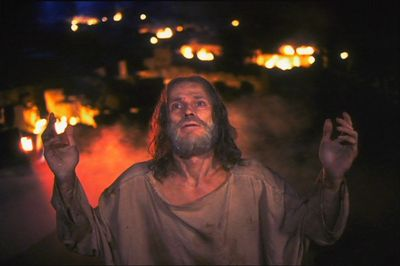
Jesus looked around him and he saw masses of people who were suffering. People who were running around insane, desperately poor, horribly sick, blind, and imprisoned for their debts. Instead of helping these needy people, the leaders of his people punished them more. Preachers spoke to the abused, claiming it was their fault they suffered. Priests kept them from God because their suffering was seen as a punishment. Elders passed laws that made their plight more difficult. Jesus saw the oppressed as “sheep without a shepherd”, a people without a leader, and the leaders as “whitewashed sepultures”—containers of death with a fresh coat of paint on them. So Jesus had a plan to deliver these people—to give them a new exodus, a deliverance from slavery. And that deliverance plan included his own death.
“The Son of Man has come to seek and save the lost.”
Jesus looked around him and he saw masses of people who were suffering. People who were running around insane, desperately poor, horribly sick, blind, and imprisoned for their debts. Instead of helping these needy people, the leaders of his people punished them more. Preachers spoke to the abused, claiming it was their fault they suffered. Priests kept them from God because their suffering was seen as a punishment. Elders passed laws that made their plight more difficult. Jesus saw the oppressed as “sheep without a shepherd”, a people without a leader, and the leaders as “whitewashed sepultures”—containers of death with a fresh coat of paint on them. So Jesus had a plan to deliver these people—to give them a new exodus, a deliverance from slavery. And that deliverance plan included his own death.

2.
Martyrdom
“Blessed are you when men hate you… be glad in that day… for your reward is great in heaven, for in the same way the fathers treated the prophets.”
The first deliverer of Jesus’ people, Moses, was a shepherd who had a deep connection with God, and God enacted the deliverance of the oppressed using Moses as a conduit. There were many like Moses offering deliverance through the years: Deborah, Samuel, Elijah, Elisha, Isaiah, Jeremiah, Ezekiel, Esther. These were prophets, people whom God used to deliver his people from oppression. However, these people, every one, suffered horribly. Their lives were miserable. But the misery of their lives was worth the deliverance they brought, and also because they were given the opportunity to live at peace with God after this life was over. Jesus knew that he was to live like these: be led by God to deliver people, suffer horribly, to be resurrected to be at peace in the end.
“Blessed are you when men hate you… be glad in that day… for your reward is great in heaven, for in the same way the fathers treated the prophets.”
The first deliverer of Jesus’ people, Moses, was a shepherd who had a deep connection with God, and God enacted the deliverance of the oppressed using Moses as a conduit. There were many like Moses offering deliverance through the years: Deborah, Samuel, Elijah, Elisha, Isaiah, Jeremiah, Ezekiel, Esther. These were prophets, people whom God used to deliver his people from oppression. However, these people, every one, suffered horribly. Their lives were miserable. But the misery of their lives was worth the deliverance they brought, and also because they were given the opportunity to live at peace with God after this life was over. Jesus knew that he was to live like these: be led by God to deliver people, suffer horribly, to be resurrected to be at peace in the end.
3.
Demonstrate Love
“Greater love has no one than this: that one lay his life down for his brothers.”
“Greater love has no one than this: that one lay his life down for his brothers.”
Jesus declared that the law is all about
love. Not just any love, but love for
all people, love which helps those in need and love that sacrifices
oneself. Jesus lived out this love every
day. He healed the sick, brought sight
to the blind, fed the hungry, raised the dead, delivered the mentally ill, and
gave to the poor. This was good, but he
needed to provide a final demonstration of how one should live. When Jesus died on the cross, he showed what
real sacrifice was, and the kind of love we all should share with one another.

4.
Jesus On the Campaign Trail
“This is my beloved son in whom I am well pleased”
At the moment Jesus was baptized, he had a vision of God the Father quoting Psalm 2 to him, declaring him to be the Son of God, the new king of the Jewish people, the leader of the people of God, and the next emperor of the world. From this point on, Jesus was campaigning to be this king, to prove himself as more worthy than the current rulers. But Jesus was never campaigning to the people of God, but campaigning for God himself. He was showing himself to be more compassionate than Moses, more obedient than David, and having more faith than Elijah. His death was the ultimate expression of all of these characteristics.
“This is my beloved son in whom I am well pleased”
At the moment Jesus was baptized, he had a vision of God the Father quoting Psalm 2 to him, declaring him to be the Son of God, the new king of the Jewish people, the leader of the people of God, and the next emperor of the world. From this point on, Jesus was campaigning to be this king, to prove himself as more worthy than the current rulers. But Jesus was never campaigning to the people of God, but campaigning for God himself. He was showing himself to be more compassionate than Moses, more obedient than David, and having more faith than Elijah. His death was the ultimate expression of all of these characteristics.
5.
Principle of Humility
“If anyone exalts himself, he will be humbled. Whoever humbles himself will be exalted.”
There was one principle, however, that Jesus needed to demonstrate above all. If a person was to rule under God’s power, the one aspect they had to demonstrate above all is humility. Jesus understood humility to not be an inner sense of unworthiness or lowliness, because he considered himself the next emperor of the world. Rather, humility is accepting a low standing and allowing God to give you a higher one. Jesus had to accept the lowest place, the station of ultimate shame and rejection, and then God would establish him on high. In Jesus’ time, the lowest station he could take on is to be hung in shame on a cross.
“If anyone exalts himself, he will be humbled. Whoever humbles himself will be exalted.”
There was one principle, however, that Jesus needed to demonstrate above all. If a person was to rule under God’s power, the one aspect they had to demonstrate above all is humility. Jesus understood humility to not be an inner sense of unworthiness or lowliness, because he considered himself the next emperor of the world. Rather, humility is accepting a low standing and allowing God to give you a higher one. Jesus had to accept the lowest place, the station of ultimate shame and rejection, and then God would establish him on high. In Jesus’ time, the lowest station he could take on is to be hung in shame on a cross.
6.
Kick the Bums Out
“The vine-growers said to one another, ‘This is the heir, come let us kill him…”
Like David before him, there were already God-appointed rulers over God’s people: the Sanhedrin and the priests of the temple. Jesus couldn’t establish a revolution and kill them, for that would prove him to be unworthy of rule. Instead, Jesus had to demonstrate the unworthiness of these rulers, and then God himself would take them out of power. So he established a situation in which they would kill someone making a claim that was true. That despite their laws and focus on justice, they would kill God’s representative because they didn’t like his claims. Jesus, of course, put himself in that situation. He declared himself king by riding on a colt into Jerusalem with followers honoring him as a great conqueror. He undermined the high priest’s rules by kicking businessmen out of the temple. He publicly declared them killers of the innocent. And then, only to them, he admitted that he was king and would be judging them in God’s name. That was enough for them to crucify him, causing them to be set aside as rulers.
“The vine-growers said to one another, ‘This is the heir, come let us kill him…”
Like David before him, there were already God-appointed rulers over God’s people: the Sanhedrin and the priests of the temple. Jesus couldn’t establish a revolution and kill them, for that would prove him to be unworthy of rule. Instead, Jesus had to demonstrate the unworthiness of these rulers, and then God himself would take them out of power. So he established a situation in which they would kill someone making a claim that was true. That despite their laws and focus on justice, they would kill God’s representative because they didn’t like his claims. Jesus, of course, put himself in that situation. He declared himself king by riding on a colt into Jerusalem with followers honoring him as a great conqueror. He undermined the high priest’s rules by kicking businessmen out of the temple. He publicly declared them killers of the innocent. And then, only to them, he admitted that he was king and would be judging them in God’s name. That was enough for them to crucify him, causing them to be set aside as rulers.

7.
Establishing a new nation
“This is the new covenant in my blood.”
“This is the new covenant in my blood.”
After delivering the people of Israel from
slavery and giving them a new law, God asked for an eternal agreement between
him and his people. On the day of
ratification, Moses had a number of bulls sacrificed. Moses read the law of God and said, “God
wants to be your king and you will be his nation. Do you agree to these terms?” All the people agreed. So Moses had a number of bulls killed and the
blood was put in a basin. Moses then
sprinkled the blood on God’s altar and then on all the people. He said, “This is the blood of the covenant
which the Lord has made with you.” Jesus
used the same words, speaking of his own blood which was to be spilled on the
cross. Jesus made it clear that he was
re-establishing the kingdom of God, a new nation established on the dust of the
old, with Jesus as the king. This is a kingdom
whose law is love, who gives an opportunity for repentance, who gives the
Spirit to empower one to love. And Jesus’
blood is the ink with which the constitution is written.
 8.
Risen
8.
Risen “He began to teach them that the Son of Man must suffer many things… and be killed and after three days rise again.”
All of this was contingent on God’s response. Jesus had said all along that his death was significant only if God raised him from the dead.
If God raised him from the dead, then Jesus was truly the King, as he claimed.
If God raised him from the dead, then the many scriptures that said God would raise the humble would be fulfilled.
If God raised him from the dead, then the path for the oppressed to live a new life in God is established.
If God raised him from the dead, then the sentence of death upon Jesus is reversed.
If God raised him from the dead, then the old system of temple, priests and elders are declared unworthy and set aside.
If God raised him from the dead, then the law of love is established.
If God raised him from the dead then the new covenant is accepted and the new kingdom of God is established.
God did raise him from the dead. There is a new nation without abuse or oppression. It is not led by the church, but by Jesus himself. And anyone who follows Jesus’ path of humility and mercy to the needy can be a part of it. All nations are set aside, rejected by anyone who lives in this new kingdom.