Showing posts with label Bible. Show all posts

Wednesday, September 12, 2018

Saving the Bible

1. Don't Break the Sabbath

Once upon a time there were people who took the ten commandments really seriously.  So seriously, in fact, they not only didn't want people to disobey these laws, they didn't want them to get close to breaking these laws.  So they created laws which made the laws bigger.  And they created laws around those so they wouldn't break those laws, just in case.  They called this process "placing a fence around the Torah."  And in their nation, everyone had to obey the ten and the laws around the ten and the laws around them or they would be rejected from society.

 So they made laws for people not working on the Sabbath.  They defined what work was.  And they defined what a "long walk" was.  And they defined what a person could and could not do on the Sabbath.


In 30 AD, however, they heard that there was this one guy who wasn’t paying attention to the correct interpretation.  That he was teaching something different. So they sent teachers of one of their political parties, the Pharisees, to check out his orthodoxy.  They hang out with Jesus and his disciples and they see the disciples plucking grain on the Sabbath. They look at Jesus and, sure enough, he was not rebuking his disciples to give them the orthodox interpretation.  He seemed to think that it was no big deal. But they were Harvesting. Plucking grain is harvesting. Harvesting. On the Sabbath. One does not harvest on the Sabbath. This is opposed to the word of God.

It was serious because if, for instance, everyone obeyed the restriction of not working on the Sabbath, for instance, the final days would happen and their nation would rule the world.  So the leaders insisted that everyone would do this.  Without exception. 

And so they correct Jesus.  Get on his case because his disciples aren’t being lawful.  And to be “unlawful” or “lawless” is akin to being godless or immoral.  

Looks like David is getting away with something...
2. Who's Not Reading the Bible? Jesus heard their question and decided to answer it honestly and fully.  By telling a story about David. A story that didn’t have anything to do with the Sabbath. Or harvesting.  

Have you never read what David did, when he was in need and was hungry, he and those who were with him: how he entered the house of God, in the time of Abiathar the high priest, and ate the bread of the Presence, which it is not lawful for any but the priests to eat, and also gave it to those who were with him?”

Jesus begins by asking them, “Don’t you ever read your Bibles?”  Of course, he knew that they did. Frankly, that was almost all they did.  Read and study their bibles. They had most of the Torah memorized and knew it inside and out.  But he decided that they didn’t know it well enough, so he recited a story to them.

The story is found in 1 Samuel 21.  David is the shepherd turned warrior for God and the current king, Saul, is frightened that David is trying to take over the kingdom, so he chases David with his armies to kill him.  David and his men become homeless because of this persecution and are on the run. They happen to stop by the high priests and the ark of the covenant and the high priest, *Ahimalech meets David. (*Side note: Jesus says the priest was Abiathar. Samuel says the priest was Ahimalech, Abiathar's father. Interesting. I wonder if Jesus got this wrong on purpose to piss the Pharisees off?)


So David comes up and says, “We’re hungry.  Do you have any bread?” Ahimalech says, “No, I’m sorry.  We’ve got no bread. Well, except for the bread which the law says I can’t give you.”  And it was probably for this very situation that the law was established.

“Every sabbath day he shall set it (the bread) in order before the LORD continually; it is an everlasting covenant for the sons of Israel. 9“It shall be for Aaron and his sons, and they shall eat it in a holy place; for it is most holy to him from the LORD’S offerings by fire, his portion forever.” Leviticus 24:8-9

Frankly, being a priest isn’t a lucrative gig.  You have no land, no way to grow food, and you are dependent on people’s generosity, which isn’t always very generous.  So you serve God and God allows you to have his food. And if someone asks for your food, you say, “Sorry, I can’t give it to you” so the priests still have something to eat.  Makes sense.

But David seems pretty desperate and he told Ahimelech that he was on the king’s business and so Ahimelech allowed him to have the special bread only for priests.  Both the priest and David were breaking the law.

And that is Jesus’ point.  There are times when the law should be broken.  Even the law itself allows the law to be broken.  You hear that Paula White? The Bible says that the Bible must be disobeyed.   But only in specific circumstances. Like, when people are suffering. When they are desperately hungry, or when people are severely oppressed, then the basic laws don’t apply.  Because more important than following the law, Jesus is pointing out, is following mercy. Making sure that people’s needs are met. Mercy is greater than strict adherence to the law. Jesus and David and Ahimelch were on the right side of interpreting the law. Because while the law is supposed to be obeyed, mercy is the greater law. Always.


3. Saving the Bible
So many, many people are using the Bible today, just like in the first century. And they use it for many, many reasons. Some use the Bible to help people. Some use it to teach doctrine. Others use it for their own purposes. Or to force their will on people. Almost always, if someone uses the Bible to say, "Submit," it's for their own nefarious purposes. Or simply because they're right and they want to work against other people's well-being in order to prove they're right.
Jesus came to save humanity.  And in doing this, Jesus came to save the Bible.

Why is this?  Because in order to save humanity, humanity has to change.  We have to stop following our own imaginings and ideals and instead follow the ideals of God, which is love, mercy and grace.  We need to stop being so mathematical and be more relational. We need to work in and for community. Jesus also knows that the primary way that people change is through story.  We need to be a part of a story that means more than just us. We need to be part of the answer to a long narrative. The Bible provides that narrative.

And Jesus said that he came to fulfill the Bible.  Some thinks that means to obey it or to act out the narrative others said he would act out. But the primary meaning Jesus used when he said that he would "fulfill" the Bible is to finish it, to complete it, to provide the proper ending to it. Or at least, to provide a conclusion to one part, the pivot point on which the narrative turns and goes to a different climax than we thought.  

For instance, let’s talk about the original Godfather movie.  All of you know that Marlon Brando is the Godfather and he talks like “I’m going to make you a deal you can’t refuse” and the story is about him and how he takes care of his mafia family, right?  But we get to the end of The Godfather and we find out that the godfather is not Marlon Brando at all, but Al Pacino. And the next two Godfather movies shows how Al Pacino tries to change the empire his father created.  At the point Marlon Brando dies, the whole thrust of the narrative changes to how the mafia must be different than how it was. It must change it's basic nature.

That’s kind of what Jesus means when he says that he has come to “fulfill” the scripture.  He doesn’t want to change the story, but he wants to change the endings of all the stories in the Bible.  And then he invites all of us to participate in those stories.

Jesus says, “Don’t be so hard about the law.  Don’t be like Moses who arranged to have people stoned because they infringed on the Sabbath.  Instead, be like David, be like Ahimelech who is flexible about the law when someone who is hungry is in front of him."  You can chose the story of mercy. The story of love.

We want to participate in the salvation of the Bible.  Jesus does a task, and then invites us to participate with him.  That’s what following Jesus is all about. Not just knowing his words and following them, but also knowing his life and following it.  Jesus saved the Bible through his actions and words. And we want to do the same.


Whenever I teach, I am trying to save the Bible.  Why does the Bible need salvation? Because there are so many people who are trying to save the Bible from itself, to change what it says so it doesn’t seem so human.  Like people who wouldn’t point out that Jesus may have made an error in speaking of the high priest’s son instead of the one in the story. Like people who would say that Jesus couldn’t have broken the law.

We need to save the Bible from people who use the Bible to harm, to separate and to kill.  We need to save the Bible from people who use it to create empire, instead of seeking the kingdom of God.  We need to save the Bible from people who want to shame and harm the poor instead of partnering with them. We want to save the Bible from people who want to create outcast people instead of forming community with them.

In this, we need to take Jesus as our teacher.  In Matthew 23, we read that we have but one teacher, the Christ.  Lots of people can give sermons, lots of people can give the facts of Scripture, many people interpret the Bible and many people can apply it and live it out.  But I trust no one to properly interpret the Word of God, to fully flesh it out and make us realize what the Bible is really about—no one except Jesus.


I love the Bible.  I love all the puns, all the metaphors, all the intense stories, all the hard words of the prophets and all the wisdom. Sometimes I even love the genealogies. But if I wander my own way through the complexity of 31,000 verses, all I will come up with is my own thoughts.  Because the Bible is complicated enough for anyone to make up whatever they want and have enough proof texts to say what they feel.

So I don’t trust myself to guide others through Scripture. I trust Jesus to do that. I trust that what Jesus did and taught in the gospels and the other stories we have about him is enough to train us, to help us be part of the fulfillment of the Bible.  Jesus is the savior of the Bible and we will follow him to save the Bible from those who will use this book to harm.

Wednesday, May 10, 2017

Irony

A famous businessman became president and he invited thousands of peers to come to his inauguration.  Instead of being overjoyed, they made excuses.

"My job requires me to be in the office," said one.
"I just got married and... well, I'm too busy," said another.
"I promised to take my daughter out that day," said another.

The employees who took the RSVPs explained this to the President and he fumed and ranted.  Finally, he said, "Fine! Go downtown and invite every beggar, bum, cripple, wino and homeless to the inauguration." 

After a while, they returned, "We did as you requested, Mr. President, but the greens still look pretty empty." 

"Okay, then," he replied, "go to the day labor stations and the street corners. Find every immigrant looking for work or any foreigners who happen to be standing around. Give them some money, do what you must until the whole area is filled.  Let me tell you, though, not a single one of the ones who offered excuses will stay in my country."


Luke 14:16-24, SKV

Thursday, March 2, 2017

6 Reasons the Bible Sucks (but is Essential as well)

Ever pick up a full Old-and-New-Covenant Bible lately?  It’s pretty heavy.  Now, think about how big and weighty it would be if the book had normal pages, instead of the thin ones you can’t turn and single columns with normal margins and a normal font size instead of the tiny-omg-who-could-possibly-read-this-text monstrosities?  By the way, you know that complaining about text size is the primary sign of aging? 

Anyway, the point is, the Bible is a big, big book.  Bigger than we generally think.  And that’s because it’s not a single book. It is a bunch of books, a library of ancient texts, collected over a thousand year period of time. We don’t actually know how many authors it had, because many of the texts had a number of writers and editors.  The book divisions have a complex history, as some books are clearly a number of shorter texts (Genesis and Psalms, for example) and some books wouldn’t have been divided if they could have fit on a single scroll (I and II Samuel).  These texts are thrown together because of their history of being read together in synagogues and churches and because of a general theme of people influenced by Jewish culture and their experience of God.

Not creepy at all.  Thanks for the flowers, though.
The Bible isn’t exactly unified in theme, though.  While each text seems to present God as a unique person, when put together, God seems like a schizophrenic nation-abuser.  He speaks of his loving  kindness and mercy in one chapter and in another he is killing off masses of people because they ate the birds he gave them to eat. Sounds like God should be walking around in boxers and a wife-beater some of the time and at others he is dressed in a tux, waxing eloquent.

Perhaps we just don’t understand God’s ways?  Perhaps we need to look at God throughout the Bible to get the whole picture? Or perhaps each writer is just expressing their opinion of God, based on their limited experience?  And perhaps the authors of the Bible only understood the bits and pieces of the spirit world that they could comprehend in the midst of their difficult, struggling existence?

I think we need to give the Bible a break.  Putting on it such words as “inerrant” or “infallible” are heavy words to a text that we tend to see in it the likeness of our own opinion.  That’s the convenience of having such a big book written over a thousand year period of time, is that we can find most opinions somewhere hidden in there, both loving and racist, both philosophical and inane.

I have intensely studied the Bible as the word of God and the source of devotion for almost 40 years now, and I have studied it enough that I have a few concerns that I just can’t shake.  Like these:

1. The Bible Teaches that No Woman is Good
Ecclesiastes is a pretty on-the-edge text, one that’s tough to accept in the canon at times, but this passage is really disturbing:

I have searched and found one upright man out of a thousand, but not one upright woman among them all.”

Certainly the viewpoint that people generally suck is found occasionally in the pages of the Bible, and especially in the pages of patriarchal theology.  But we don’t find this point of view very often: Men generally are pretty bad, but every single woman is just plain evil.  “A hundred percent of women are the dust of the ground that I walk, but I found seven and a half million men that are pretty okay”
This theology is disputed in other parts of the Bible, which have people like Tamar, the daughter in law of Judah, and of course Mary the mother of Jesus, but it is just crazy to say that women are absolutely worse than men.  But there it is, right there in your Bible.

What did Luke REALLY do?
2. The Bible says a Woman’s Hand should be cut off
If two men are fighting and the wife of one of them comes to rescue her husband from his assailant, and she reaches out and seizes him by his private parts, you shall cut off her hand. Show her no pity.  (Deuteronomy 25:11-12)
Again, it’s not if anyone touches a person’s genitals in a fight, but if a woman does it.  According to the Bible, women are special.  Here’s another example:

3. The Bible Says its Okay to Rape Women after Battle
In Numbers 31, the Israelites were battling the Midianites and whooped their butt.  But they kept all the innocents alive, you know, the people who weren’t fighting.  Moses smacked his generals around, “What were you thinking of?” He gave very specific instructions.  “Kill off all the boys and all the sluts… I mean women who have been with a man. But any virgins—go ahead and keep them.  Sleep with them for a while.  If you want to keep them permanently, then marry them.  Otherwise, send them away to do… whatever.”  According to this passage, there were 32,000 young women who were raped and then treated this way.  In general, this is the policy for women of an opposing nation in every battle, according to Deuteronomy 21.

"These are real beards, yeah, sure they are"
4. The Bible says prove a bride is a virgin or kill her
In Deuteronomy 22, there are some regulations about marriage.  One of the first is that right after the “bridal night” the couple must present “proof of virginity” to the community—meaning, blood from a woman’s genitals due to first intercourse.  We now know that the hymen can be broken in everyday activity and that intercourse does not always result in a bleeding hymen.  But even so, the consequence of a non-virgin bride is the death of the bride.  “The community shall stone her to death.”

5. The Bible says genocide is required
The Bible doesn’t only abuse women, although they are their most frequent target.  The Canaanites were also supposed to be killed, without exception.  The Canaanites were descendants of Canaan, a huge portion of the world, as he was the grandson of Noah.  So there were a number of peoples who fall under this blood pact, including the Hittites, Amorites, Perizzites, Hivites, and Jebusites.  These nations were supposed to be burned, every man, woman, child, cattle, building… not even the virgins were spared, so they must be pretty bad.

Of course, if these folks looked back in their own history, they’d see that their own genetic line was full of Canaanites (wives of Judah and other sons of Jacob).  So if they’d kill all the Canaanites, they’d have to kill themselves.  And one nation that they are sometimes friendly with, Edom (decendents of Esau and his Canaanite wives).  But hypocrisy didn’t seem to be a big deal in the early part of the Bible.

6. The Bible has a hard time distinguishing between God and Satan
In II Samuel 24, David is tested by God putting the desire for him to take a census so he knows how big his army could be.  It’s a minor sin of a king to number his army, a sign they are not trusting in God to defeat their enemies.  So, according to Exodus 30:12, any census must include a ransom for the life of the person counted, the money, it is assumed, would go into the priestly treasury.  But David, it seems didn’t take the tax, and his conscience pained him, so God gave him an option of punishments, all of which results in a massive loss of life.  David took a plague. But that’s not the point.

The point is that the same story is told again in II Chronicles.  That’s not unusual, as Chronicles and Samuel/Kings often tell the same tales with few variations.  But the variation here is that in Samuel it was God who tested David, while in Chronicles it was Satan who tested David.  Same sentence, different subject.  Now, theologically it isn’t such a problem because Satan is the prosecuting attorney of God.  But it feels weird that in Chronicles, as well as Job, that Satan, the enemy of God, is the representative of God in some places.  It’s a part of the Bible I wish would just go away.

***

The point is this: there are many parts of the Bible which disturb me and just about everyone in our modern society.  Parts of the Bible that feel very tribal, very hateful and about as unloving as one can get.  There are aspects that feel that they would reflect the worldview of a serial killer rather than the God who is Love.  I’m not using this as proof that the Bible is wrong or evil.  I’m saying that a clear look at the Bible recognizes that we can’t just accept it, point-blank, for what it says.  That idea, if truly pursued, goes into some very dark pathways.

I think that the Bible shouldn’t be accepted, swallowed like a multi-vitamin, as if it will all be good for you.  Because even if most of it IS good, there’s still the cyanide put in the mix that is destructive.

Why I Still Accept the Bible
I accept the Bible, but not as a whole.  I pick and choose what I like.  And frankly, so does everyone else.  I haven’t seen any religious group march on Washington demanding their rights to rape virgins (only virgins, mind you).  In fact, that seems pretty monstrous.  Even though it was a pretty common right in the ancient world, post-battle.  Today, slavery seems generally counted as an evil, and no one is demanding that their slave submit to them, despite both biblical and legal precedent.   Jews follow the Rabbinic interpretation of the Bible, which is a softer, more kind version of Moses.  Catholics follow church teaching, which even softens the ten commandments (like pointing out that wives aren’t possessions, for example).  This is just what Muslims have done with their Qur’an, providing a layer of teaching which helps us interpret the Scripture in a kinder way, which is easier to fit into modern morals.   This doesn’t compromise the basic teaching of the Scriptures, but it does strip away the stuff we can clearly see as evil.

For me, I don’t go for complex teachings over centuries.  I’ll just stick with Jesus, and work with his interpretation of the Bible.  Which is exactly what the New Testament says to do, anyway.

No one knows who the Son is except the Father, and no one knows who the Father is except the Son and those to whom the Son chooses to reveal him..”

In the past God spoke to our ancestors through the prophets at many times and in various ways, but in these last days he has spoken to us by his Son, whom he appointed heir of all things…

You are not to have teachers, for you have only one teacher and this is the Messiah.

Anyone who runs ahead and does not continue in the teaching of Christ does not have God; whoever continues in the teaching has both the Father and the Son.”

In summary, these passages are saying that the Bible, as a whole, is inadequate to represent God.  Only Jesus accurately represent God.  Which is why I think that having a general Bible approach to theology or truth about God is misbegotten.  The Bible is a bunch of people like us, writing down their experiences of God.  Only Jesus-- the gospels, the teachings that tell us what Jesus did and said while on earth-- can show us who God is really like.  The rest is all guesswork.  And sometimes pretty shoddy guesswork at that.

Some will say, at this point, that I’m using the Bible in a willy-nilly, non-objective manner.  And I am.  I’m okay with that. As long as I keep Jesus central. 

 I have Jesus as my savior, not Moses, David or Paul or John.  And so I might ignore some things you might think I should pay attention to.  On the other hand, you might ignore some things I think are essential.  But that’s one of the great things about life.  We get to figure things out.  I’m trying to understand and follow Jesus, not anyone else and certainly not the Bible as a whole.


I’d be happy to have you join me in this quest. 

Thursday, February 2, 2017

A Foundational Guide to the Books of the Hebrew Scriptures

Old TestamentThe previous agreement with God’s people. Stories and laws and sermons about and to the people of Israel before 400BC. 39 books.
A sh**ton of screwed up people listening to God


Genesis
Beginnings—Latin. Beginnings of humanity and the people of God— Adam through Joseph.
When you ask people if they've read the Bible, this is actually the part they read.  Well, at least a few chapters.


Exodus
Going out—Greek. The deliverance of God’s people from slavery in Egypt, the first commands and the building of the Tabernacle.
Great story... until you get past the ten commandments.  The second half of the book is all laws and a detailed description of the tabernacle.  Really?  Really?


Leviticus
Book of the Levites—Latin. Commands of the temple cult: sacrifices, priests, basic laws for all ethnic groups in God’s people.
It begins with butchering animals. It's only downhill from there.  Wait till you get to chapter 18.


Numbers
 Census—English. Stories of the wanderings of the children of Israel in the wilderness for 40 years and sundry laws.
Look, just skip the counting of the tribes, unless you like reading lists of names that mean nothing to you. The good stuff begins at chapter 11.  Start there.


Deuteronomy
 Second law—Greek. The lectures of Moses to the children of Israel before they entered the promised land.
Moses whines like a old guy at McDonalds.  

Moses in the book of Deuteronomy

Joshua
 Yahweh is salvation—Hebrew. Stories of the conquering of the promised land.
Gotta just love that genocide.


Judges
 God’s chosen leaders—English. Stories of the rebellion of God’s people and God’s salvation of his people through heroes.
I can't wait until someone does a movie on this book. NC-17 for sure.

Ruth
 Friend—Hebrew. A story woman’s obstinate choice of Israel and Yahweh, an ancestor of David.
You really want to win your man?  Sleep with him.  He'll get the hint.


I Samuel
 Listen to God—Hebrew. Stories of God’s choices of Samuel, Saul and David to lead his people, to the death of Saul.
This book wants to be treated like it's own thing.  But it's really just the first half of the book of Samuel-- who dies a quarter through this book! Who is naming these books, anyway?

II Samuel
 Listen to God—Hebrew. Stories of the reign of David over God’s people.
David was awesome in the first half of the story-- you know, I Samuel.  Now he screws up.  Don't you love happy endings?

I Kings
 English. Stories of God’s call to his kings over his people, from Solomon to Elijah and the death of Ahab.
It's a bunch of sucky leaders until Elijah. Elijah is the best, though.  He even gets suicidal.  Elijah rocks.


II Kings
 English. Stories of God’s call to his kings over his people, from the death of Elijah to the exile of Judah.
Elisha, the sequel to Elijah.  You know he won't be as good.

I Chronicles
 English. A summary of God’s history, from Adam and focusing on the rule of David.
Wait.... Eleven chapters of names and then a story we already read?  What is this book even doing here?


II Chronicles
 English. A summary of God’s history, from the death of David to the end of Judah’s exile.
This book seems really familiar... oh yeah!  We already read it in Kings.
"Have you heard of  this before?"
"Seems familiar"


Ezra
 Helper—Hebrew. Stories of the return from exile: rebuilding of the temple and the re-establishment of the Law.
Nothing like a Bible scholar to break up marriages.

Nehemiah
 Sorrow of Yahweh—Hebrew. Stories of the Emperor’s cup-bearer building the walls of Jerusalem through turmoil.
The emperor's right hand man goes to his hometown to take over.

Esther
 Star—Persian. The story of the salvation of the Jews in exile.
She sleeps to the top and then topples a corrupt government.  Gotta love Jewish heroines.


Job
 Enemy—Hebrew. An epic poem of a man in severe trial learning to trust in God’s justice.
The most depressed man in the Bible arguing with his stupid friends in Shakespearian. 

Psalms
 Songs of praise—Greek. Songs to God.
Wow, that's long.  I mean, really long.  Do we have to read it all? Like reading the lyrics of Dylan.

I've only got thirty years to go...

Proverbs
 English. Wise epigrams, mostly by Solomon.
I think Solomon would be wiser with a few guitar riffs thrown in there.

Ecclesiastes
 Sermons—Latin. Essays of wisdom, on the worthlessness of the world and of confidence in God.
Whenever I start feeling hopeful or happy about the state of the world, I go here.  Straightens me out immediately.  Like, by the first word.

Song of Solomon
 or, Song of Songs—English. A love poem.
The Bible to watch porn by.

Isaiah
 Yahweh will deliver—Hebrew. Prophecies, sermons and stories about the salvation of God, in two parts: a. God’s salvation during the time of Hezekiah (ch 1-39). B. God’s salvation after the time of exile (ch. 40-66)
Hey, I think I know a few of these!  I really got a Handel on Isaiah!

Jeremiah
 Yahweh is on high—Hebrew. Prophecies and sermons and stories about God’s judgement of God’s people during the war and fall of Jerusalem and the restoration of God’s people.
Gotta appreciate a guy who stands face to face with God and says, "You're just wrong."

Lamentations
 Statements of lament—English. Jeremiah’s poems of sorrow at the fall of Jerusalem.
Okay, so you lost your hometown.  Saw it burn in front of you.  Watched women eat babies.  First world problems.

Ezekiel
 God is strong—Hebrew. Visions of a wild prophet among the captives of Babylon during the siege of Jerusalem.
Whatever this guy is on, give me some so I can throw it in the toilet.


Daniel
 God is my judge—Hebrew. Stories and visions of faith and the judgment of the nations by Daniel, a man in exile.
Chapters 1-6:Whoa, some really excellent stories.
Chapters 7-12: WTF?????


Hosea
 Deliverance—Hebrew. Prophecies about God’s betrayal by his wife, Israel, and his plans to restore her.
And I thought Ezekiel had it bad.  God is never naming my kids.


Joel
 Yahweh is his God—Hebrew. Prophecies about the events of the Day of the Lord.
General gloom and doom.  Just another day for a prophet.

Amos
 A burden—Hebrew. Prophecies about injustice in the land of Judah.
Gotta appreciate a guy who stands before a king, talks about how all the enemy nations suck-- "But you know what?  You suck worse and let me tell you how."

Obadiah
 Servant of Yahweh—Hebrew. A prophecy about God’s judgment of Edom.
I love this book.  It's shorter than Danny DeVito. 

Jonah
 Dove—Hebrew. A story about a prophet rebelling against the mercy of God against evil nations.
The only minor prophet anyone really reads.

Micah
 Who is like Yahweh?—Hebrew. Prophecies about the salvation of God.
The cliff notes of Isaiah.

Nahum
 Consolation—Hebrew. A prophecy about the judgment of Nineveh.
Another book about Nineveh? I'm never visiting that town.  All punishment and repentance.

Habakkuk
Embrace—Hebrew. Prophecies and a poem about the judgment of Israel and the judgment of Babylon and the faith of the prophet.
"God, your people suck!"  "Yeah, well, I'm going to punish them with Babylon."  "God, wait!  Babylon sucks worse!"

Zephaniah
 Yahweh of darkness—Hebrew. Prophecies about the judgment of God on Judah for idolatry.
I know I read this book, like, five times, but I can't remember a thing about it.
I'm afflicted with CRS:
Can't Remember Sh**

Haggai
 Festive—Hebrew. Prophecies about the rebuilding the temple after exile.
Haggai, you're boring.  Just dull.  Please, talk to your friend Zechariah.  He'll give you a few tips.

Zechariah
 Yahweh is remembered—Hebrew. Prophecies and visions of the present and future after the return from exile.
Zechariah, you are effed up in the head. You need to chill. Take a few tips from Haggai. 


Malachi
 Messenger—Hebrew. Prophecies about the restoration of God’s justice through the Law.
A prophet who actually makes sense and says it like it is!  No poetry, no mysticism, just "I hate divorce! Where's my money!"  I get it. 

Tuesday, January 3, 2017

9 Biblical Principles to Exorcise our Greed

I have a secret to tell you: 

If you are reading this blog, you are probably wealthy.  


I’m not saying absolutely, because I know a number of people who are homeless who might be reading this, and I also know people who are living on the edge of poverty, by their own choice, who scan blogs to read.  But, probably, you have more than you need. 

The Bible makes a difference in their definition of “people who have wealth” and “the rich”, while in English we tend to put the two together.  “Wealth” in the Bible is anything we have that goes beyond what we need.  So most of us reading this essay have “wealth”, something more than what we need.  We might have sentimental trinkets or extra food in the house or items we keep “just in case” we might need it someday.   “The rich” are those who keep such items in order to accumulate their wealth, what used to be known in English “hoarders”, “the stingy” or “greedy.”  Nowadays, “hoarders” are people who collect mostly useless items to their own detriment.  And the other two terms are used to speak of people’s motivation, not what they actually have.

The Bible, when speaking of moral matters, is very clear about having actions that display a moral or immoral attitude.  If a person has covetousness, it is accompanied by a “look of lust”, which in the ancient world was also called an “evil eye”, or a lingering gaze of desire.  Even so, greed is indicated by a mass collection of possessions, whether it be silver, horses, wives, or grain.  These possessions could be excused by a desire to protect one’s retirement, to provide security against future attacks or to empower oneself in the world, whether for good or ill.

This means that, in all probability, we are “rich”.  We keep and save wealth against a future of calamity, like getting old.  A few of us have more than ample possessions or monies for ourselves or our family.  We want to protect ourselves against “love of money” or worship of “mammon”, but the fact is, many of us have every indication that we dove into a sea of that love and can’t recognize that we are drowning in it.

Thankfully, the whole Bible gives us a path to escape such immoral love.


1.       Don’t cheat
In all our ways we should have integrity.  Not just honesty, not just faithfulness to our promises, but integrity.  We should never take from someone what we want for ourselves, unless they openly give it to us.  We shouldn’t take for ourselves what doesn’t really belong to us, but belongs to the public or the poor.  We should be careful with possessions or money whose ownership is questionable.  This goes especially for donated money.  We must be above board, careful.  We don’t have to prove our integrity to the world, but we should be able to prove it to God.


2.       Don’t harm the poor
In gathering wealth, we should do nothing to harm the poor.  Many companies and governments are careless about how they help the poor, harming them without knowledge so that they might obtain wealth.  Many companies and non-profits actually target the poor, using them as pawns or as dupes in a long-range con game.  This includes banks who charge the poor but give to the wealthy, police who ticket the homeless but give more “important” citizens a wink.  We must not invest in these groups or support them in order to obtain our wealth or possessions.   Those who participate in scalping the poor for the sake of wealth are called “oppressors”.


3.       Don’t take short cuts
The book of Proverbs frequently warns against “hasty” wealth.  This isn’t because one might get cheated in a con (although that is certainly true), but because hasty wealth is often a cheat and we may not even know where the wealth is coming from.  This could be buying a bicycle inexpensively on the street corner or investing in something that is “too good to be true” to buying out a company for a quick turnaround and profit.  Get rich quick schemes always leave victims.


4.       Be content with little
Often we think about having a huge house with all the food we could want with people to help us clean the fridge every once in a while.  We want a movie collection and a video game library and… well, you know.  And some of us actually get what we want.  Or quite a bit of it.  And because we have dreamed about it for so long, we hold these items very precious.  But the Bible counsels us to be content with what we need.  This doesn’t mean to be happy with less than we need.  We shouldn’t be content with starvation or living out in the cold.  But if we have what we need, we shouldn’t keep wanting more.  We shouldn’t keep striving for needs that are already met, whether that  be possessions or security or good relationships.


5.       Trust in God
When the Bible tells us to trust, it isn’t just some pie-in-the-sky spiritual mumbo jumbo.  It is specifically telling us to trust God in the very areas we are afraid of.  We are afraid that if we don’t have enough money we will lose our home or our car.  We are afraid that if someone gets a certain political or job position, it places us poorly.  We are afraid for our kid’s future, for our future, for what may happen if a burglar comes in.  The Bible tells us not to fear, but to trust in God for all of these things.  This is important to avoiding greed because we collect many things, not because we need them, but we are afraid of the consequences if we don’t have them.  To trust in God is to give Him our future, our worries and to rest on being content with what we actually need.


6.       Share what you have
Okay, now it’s time for the rubber to meet the road.  To not be greedy means specifically not to grasp onto things someone else could use.  This means, first, to share what we own with people who need to borrow them.  Yes, this may mean that your possessions could be damaged or taken.  But this is where trust comes in.  If someone actually needs an item, we need to give them the use of it.  We could loan our car to someone who needs to move.  We could take a spare room and loan it to someone who needs a place to crash.  And if we have anything extra, we should be willing to share whatever that is.


7.       Be generous
The Bible tells us that it is key to our humanity to be generous.  If we give someone wages, from an employee to a tip at a restaurant, we should give more than we need to.  If we give to a beggar, we shouldn’t be stingy.  We should be generous with compliments, generous with thanks, generous with encouragement.  If we have extra food, extra clothes, extra time, extra time, extra space in our house or building, we should be thinking about who should be given these things, who needs them the most.  And then we should give cheerfully.


8.       Seek out the poor
“The poor” in the Bible is anyone who has need of something, whether they put themselves in the situation or they fell into it.  The “poor” are those in need, not those who look like they are in need or those who pull your heartstrings, but those who really lack food, clothing, respect, security, love, hope.  When we run across these people, we are to give.  We know this.  But more than this, we are to seek these people out.  Along with a generous spirit, we are to seek those who have need.  Many of us don’t know anyone who is desperate.  Then we should go out of our way to find them.  This may mean we need to contact people out of our town in order to be generous to those in need.  It may mean we need to open our eyes and ask people about their needs.  But even as Job or Lot wouldn’t allow a single person in his town to be without shelter, we should seek people out who might need our help. Jesus tells us to make friends of the poor, so they are loved by us and we can be generous to them-- thus the poor are saving our souls. 


9.       Do everything with love

For a long time, I followed these principles above.  And I tried to do them with love.  But I had no balance in my life, so love was often lost.  But without love, we might be devoid of greed  but still lack true generosity of spirit.  It is better to be giving than to be stingy with what we have.  But it is far better to allow the Spirit of God to infuse us with God’s love, mercy and generosity.  It is not enough for us to avoid greed.  We must also be surrendering our love at every turn. 


If you're one of those Bible thumpers, here's some verses to get you going on this subject:
Luke 19:1-10; Luke 12:13-34; Psalm 37; Mark 10:17-27; Matthew 25:31-46; Hebrews 13:5; Matthew 6:19-24; James 5:1-6; Proverbs 22:16; Prov 11:24; Prov 28:22; Prov 23:4; Proverbs 13:11; Luke 16; I Corinthians 16:14. 

Sunday, September 25, 2016

Why Do Churchies Not Read Their Bibles?

Most church-goers do not read the Bible, even though almost all of them have one. There’s a couple reasons for that.

First, because the Bible is way more difficult of a book than sermons make it seem. We want our Bibles to be like children’s Bibles, full of stories and to the point. However, it turns out that this millennia old volume was written to ancient people, not us. It is full of genealogies, laws, architectural notes and rantings about ancient politics. It has an extraordinary amount of cultural detail that isn’t explained. Most people who pick it up to read it cover to cover give up by Exodus, if they even make it that far. Frankly, its much easier to pay someone else to study it and explain it to us, like churches have done for thousands of years.

Second, the Bible isn’t necessary to live a spiritual life. Love is, Jesus is, God’s spirit is, but the Bible isn’t the only door to open up a person’s spirituality. For some people it really works and for others it causes them to kill their spiritual life by diving into arguments about detailed interpretations.

 No one should complain to people about not reading their Bible. They should complain if they fail to love as Jesus loved.

Friday, August 12, 2016

How Should we Read the Bible?

“You do not have His word abiding in you, for you do not believe Him whom He sent.  You search the Scriptures because you think in them you have eternal life…”  -Jesus

There’s a lot of people who think that salvation is found in the Scriptures.  I’m here to tell you, it isn’t true. 

That’s a pretty shocking thing to hear from a guy who’s still pretty much evangelical.  I mean, aren’t we supposed to be all about Sola Scriptura—salvation by Scripture alone?  As an Anabaptist, aren’t I supposed to believe that anyone can find salvation, the truth and hope of God, by just picking up a Bible and reading it?

Well, if you’re looking for me to believe something just because its “evangelical” or “Anabaptist” I think you will be pretty much disappointed.  Mind you, I certainly believe that the Bible holds the truth and that this truth can lead you to salvation.  But the Bible isn’t salvation in and of itself.  And clear-thinking people can get the Scripture wrong.  Really, really wrong.

Look at the Jewish leaders Jesus was speaking to.  They knew the Scriptures quite well.  Better than you or I do, that’s for sure.   But here is Jesus, in John 5, telling them that all their Bible studies and memorization and analyses were wrong.  They were doing all they could with the Bible, and they were dead wrong.  Dead, as in God’s judgment dead.  That’s pretty dead.

There’s a right and wrong way to read the Bible.  Let’s talk about the right way, and we’ll look at some wrong ways.

How to read the Bible:
You're Reading it Wrong
1.      Look for God’s care
Whatever was written in earlier times was written for our instruction, so that through perseverance and the encouragement of the Scriptures we might have hope. (Rom 15:4 NAU)
People often look at the Scriptures and they find a horrible God in the Old Testament and a loving, kind God in the New Testament.  But Scripture was not written to terrify us, but to give us hope.  God is and always has been a God of love.  Yes, in the NT it says that God is love, that God so loved the world.  But in the OT the foundational statement about God is: “Yahweh, Yahweh God is gracious and compassionate, slow to anger, abounding in lovingkindness…” (Exodus 34:6).  If we are looking for God’s hatred, then we are reading the Bible wrong.  Certainly the Bible says that God hates sin, but he loves all people, no matter who they are, what they’ve done or how much they personally irritate you.  We need to look for God’s deliverance, God’s compassion, God’s mercy and God’s acts of salvation.  If we look for destruction or hatred, we are reading it wrong.  Throughout the Bible God is the Father, not the Destroyer.

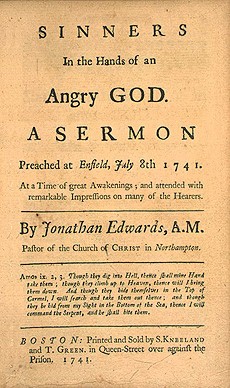
Pastor Edwards, you're doing it wrong
2.      Look for Jesus 
And the Father who sent Me, He has testified of Me...You search the Scriptures because you think that in them you have eternal life; it is these that testify about Me. John 5:37-38

When we read the Bible, we should be looking for Jesus, if we are reading it right.  Some want to see Jesus’ death in every verse, or look for Jesus’ presence behind each bush.  I think this is the wrong approach.  I think Jesus lead us to play the game “Where’s Jesus”in a couple different ways:

a.       See Jesus as fulfillment
Jesus said that he came to fulfill the Scriptures.  This means that he came to live out prophecies, but also to fix all that was wrong about the Bible.  The Bible contains a lot of failures (one of the best things about Scripture), but for every failure, Jesus is there to be the success.  David sinned, big time, Jesus was without sin.  Israel didn’t trust in the Father, Jesus completely trusted.  For every prophecy, for every failure, we should see Jesus as the answer.

b.       See Jesus’ principles
Jesus taught the Scriptures himself, and He taught how the Scriptures should be used as a guidebook to life.  Jesus taught us to look for mercy, for grace, for love.  We should re-interpret the Bible as a way to understand what Jesus taught us.

Calvin, you're doing it wrong
3.      Look for what we should do
Prove yourselves doers of the word, and not merely hearers who delude themselves. (James 1:22)
Many people see the Bible as a book of doctrines, of a list of things to believe.  They want to find precisely what the Bible teaches so that we can have our teachings in line, believe the right things, and so be saved.  However, the Bible tells us that we should see the Scriptures as a way to live, a guide to a particular lifestyle.  If we are only looking for things to believe, we are reading the Bible wrong.  Rather, the Bible should change how we live, point at what we should do in order to be pleasing to God, and to live in harmony with each other.


Guess who's reading it wrong?
4.      Look for love
If you had known what this means, 'I desire compassion and not sacrifice,' you would not have condemned the innocent. (Matthew 12:7)
You search the Scriptures because in them you think you have eternal life... I know that you do not have the love of God in you. (John 5:39, 42)
And now we come back to the beginning.  Even as we should be searching the Bible for God’s compassion, so we should be seeking out our own.  If we use the Bible as an excuse to hate or to reject someone, we are reading it wrong.  The Bible is there, according to Jesus, to teach us to live in compassion, grace, mercy and encouragement.  If we use the Bible to enact our prejudices, our oppressions, our greed or our ambition, we are using it wrong. 

According to Jesus, the context of the Bible, the whole Bible, is love.  If we read hate in it, then we are reading wrong.  Yes, there are acts of hatred, vengeance, prejudice in the Bible.  I won’t deny it.  But these acts should be even more startling when we learn “God is love” and we are to love all people, even those who do us wrong.   Jesus is the fulfillment of Scripture, and all scripture should point to God’s deliverance of the needy, and the hope that God gives to all of us. 


Please, don’t read the Bible wrong.