Ever pick up a full Old-and-New-Covenant Bible lately? It’s pretty heavy. Now, think about how big and weighty it would be if the book had normal pages, instead of the thin ones you can’t turn and single columns with normal margins and a normal font size instead of the tiny-omg-who-could-possibly-read-this-text monstrosities? By the way, you know that complaining about text size is the primary sign of aging?
Anyway, the point is, the Bible is a big, big book. Bigger than we generally think. And that’s because it’s not a single book. It is a bunch of books, a library of ancient texts, collected over a thousand year period of time. We don’t actually know how many authors it had, because many of the texts had a number of writers and editors. The book divisions have a complex history, as some books are clearly a number of shorter texts (Genesis and Psalms, for example) and some books wouldn’t have been divided if they could have fit on a single scroll (I and II Samuel). These texts are thrown together because of their history of being read together in synagogues and churches and because of a general theme of people influenced by Jewish culture and their experience of God.
 |
| Not creepy at all. Thanks for the flowers, though. |
The Bible isn’t exactly unified in theme, though. While each text seems to present God as a unique person, when put together, God seems like a schizophrenic nation-abuser. He speaks of his loving kindness and mercy in one chapter and in another he is killing off masses of people because they ate the birds he gave them to eat. Sounds like God should be walking around in boxers and a wife-beater some of the time and at others he is dressed in a tux, waxing eloquent.
Perhaps we just don’t understand God’s ways? Perhaps we need to look at God throughout the Bible to get the whole picture? Or perhaps each writer is just expressing their opinion of God, based on their limited experience? And perhaps the authors of the Bible only understood the bits and pieces of the spirit world that they could comprehend in the midst of their difficult, struggling existence?
I think we need to give the Bible a break. Putting on it such words as “inerrant” or “infallible” are heavy words to a text that we tend to see in it the likeness of our own opinion. That’s the convenience of having such a big book written over a thousand year period of time, is that we can find most opinions somewhere hidden in there, both loving and racist, both philosophical and inane.
I have intensely studied the Bible as the word of God and the source of devotion for almost 40 years now, and I have studied it enough that I have a few concerns that I just can’t shake. Like these:
1. The Bible Teaches that No Woman is Good
Ecclesiastes is a pretty on-the-edge text, one that’s tough to accept in the canon at times, but this passage is really disturbing:
1. The Bible Teaches that No Woman is Good
Ecclesiastes is a pretty on-the-edge text, one that’s tough to accept in the canon at times, but this passage is really disturbing:
“I have searched and found one upright man out of a thousand, but not one upright woman among them all.”
Certainly the viewpoint that people generally suck is found occasionally in the pages of the Bible, and especially in the pages of patriarchal theology. But we don’t find this point of view very often: Men generally are pretty bad, but every single woman is just plain evil. “A hundred percent of women are the dust of the ground that I walk, but I found seven and a half million men that are pretty okay”
This theology is disputed in other parts of the Bible, which have people like Tamar, the daughter in law of Judah, and of course Mary the mother of Jesus, but it is just crazy to say that women are absolutely worse than men. But there it is, right there in your Bible.
 |
| What did Luke REALLY do? |
2. The Bible says a Woman’s Hand should be cut off
If two men are fighting and the wife of one of them comes to rescue her husband from his assailant, and she reaches out and seizes him by his private parts, you shall cut off her hand. Show her no pity. (Deuteronomy 25:11-12)
Again, it’s not if anyone touches a person’s genitals in a fight, but if a woman does it. According to the Bible, women are special. Here’s another example:
If two men are fighting and the wife of one of them comes to rescue her husband from his assailant, and she reaches out and seizes him by his private parts, you shall cut off her hand. Show her no pity. (Deuteronomy 25:11-12)
Again, it’s not if anyone touches a person’s genitals in a fight, but if a woman does it. According to the Bible, women are special. Here’s another example:
3. The Bible Says its Okay to Rape Women after Battle
In Numbers 31, the Israelites were battling the Midianites and whooped their butt. But they kept all the innocents alive, you know, the people who weren’t fighting. Moses smacked his generals around, “What were you thinking of?” He gave very specific instructions. “Kill off all the boys and all the sluts… I mean women who have been with a man. But any virgins—go ahead and keep them. Sleep with them for a while. If you want to keep them permanently, then marry them. Otherwise, send them away to do… whatever.” According to this passage, there were 32,000 young women who were raped and then treated this way. In general, this is the policy for women of an opposing nation in every battle, according to Deuteronomy 21.
 |
| "These are real beards, yeah, sure they are" |
4. The Bible says prove a bride is a virgin or kill her
In Deuteronomy 22, there are some regulations about marriage. One of the first is that right after the “bridal night” the couple must present “proof of virginity” to the community—meaning, blood from a woman’s genitals due to first intercourse. We now know that the hymen can be broken in everyday activity and that intercourse does not always result in a bleeding hymen. But even so, the consequence of a non-virgin bride is the death of the bride. “The community shall stone her to death.”
In Deuteronomy 22, there are some regulations about marriage. One of the first is that right after the “bridal night” the couple must present “proof of virginity” to the community—meaning, blood from a woman’s genitals due to first intercourse. We now know that the hymen can be broken in everyday activity and that intercourse does not always result in a bleeding hymen. But even so, the consequence of a non-virgin bride is the death of the bride. “The community shall stone her to death.”
5. The Bible says genocide is required
The Bible doesn’t only abuse women, although they are their most frequent target. The Canaanites were also supposed to be killed, without exception. The Canaanites were descendants of Canaan, a huge portion of the world, as he was the grandson of Noah. So there were a number of peoples who fall under this blood pact, including the Hittites, Amorites, Perizzites, Hivites, and Jebusites. These nations were supposed to be burned, every man, woman, child, cattle, building… not even the virgins were spared, so they must be pretty bad.
Of course, if these folks looked back in their own history, they’d see that their own genetic line was full of Canaanites (wives of Judah and other sons of Jacob). So if they’d kill all the Canaanites, they’d have to kill themselves. And one nation that they are sometimes friendly with, Edom (decendents of Esau and his Canaanite wives). But hypocrisy didn’t seem to be a big deal in the early part of the Bible.
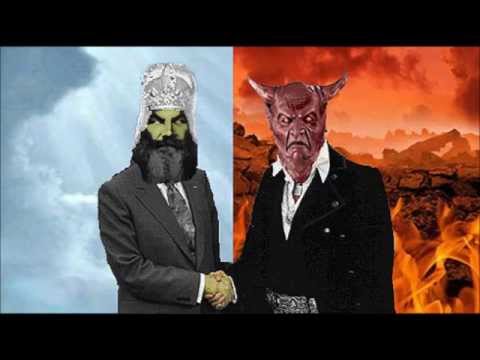
6. The Bible has a hard time distinguishing between God and Satan
In II Samuel 24, David is tested by God putting the desire for him to take a census so he knows how big his army could be. It’s a minor sin of a king to number his army, a sign they are not trusting in God to defeat their enemies. So, according to Exodus 30:12, any census must include a ransom for the life of the person counted, the money, it is assumed, would go into the priestly treasury. But David, it seems didn’t take the tax, and his conscience pained him, so God gave him an option of punishments, all of which results in a massive loss of life. David took a plague. But that’s not the point.
The point is that the same story is told again in II Chronicles. That’s not unusual, as Chronicles and Samuel/Kings often tell the same tales with few variations. But the variation here is that in Samuel it was God who tested David, while in Chronicles it was Satan who tested David. Same sentence, different subject. Now, theologically it isn’t such a problem because Satan is the prosecuting attorney of God. But it feels weird that in Chronicles, as well as Job, that Satan, the enemy of God, is the representative of God in some places. It’s a part of the Bible I wish would just go away.
***
The point is this: there are many parts of the Bible which disturb me and just about everyone in our modern society. Parts of the Bible that feel very tribal, very hateful and about as unloving as one can get. There are aspects that feel that they would reflect the worldview of a serial killer rather than the God who is Love. I’m not using this as proof that the Bible is wrong or evil. I’m saying that a clear look at the Bible recognizes that we can’t just accept it, point-blank, for what it says. That idea, if truly pursued, goes into some very dark pathways.
I think that the Bible shouldn’t be accepted, swallowed like a multi-vitamin, as if it will all be good for you. Because even if most of it IS good, there’s still the cyanide put in the mix that is destructive.
Why I Still Accept the Bible
I accept the Bible, but not as a whole. I pick and choose what I like. And frankly, so does everyone else. I haven’t seen any religious group march on Washington demanding their rights to rape virgins (only virgins, mind you). In fact, that seems pretty monstrous. Even though it was a pretty common right in the ancient world, post-battle. Today, slavery seems generally counted as an evil, and no one is demanding that their slave submit to them, despite both biblical and legal precedent. Jews follow the Rabbinic interpretation of the Bible, which is a softer, more kind version of Moses. Catholics follow church teaching, which even softens the ten commandments (like pointing out that wives aren’t possessions, for example). This is just what Muslims have done with their Qur’an, providing a layer of teaching which helps us interpret the Scripture in a kinder way, which is easier to fit into modern morals. This doesn’t compromise the basic teaching of the Scriptures, but it does strip away the stuff we can clearly see as evil.

For me, I don’t go for complex teachings over centuries. I’ll just stick with Jesus, and work with his interpretation of the Bible. Which is exactly what the New Testament says to do, anyway.
“No one knows who the Son is except the Father, and no one knows who the Father is except the Son and those to whom the Son chooses to reveal him..”
“No one knows who the Son is except the Father, and no one knows who the Father is except the Son and those to whom the Son chooses to reveal him..”
“In the past God spoke to our ancestors through the prophets at many times and in various ways, but in these last days he has spoken to us by his Son, whom he appointed heir of all things…”
“You are not to have teachers, for you have only one teacher and this is the Messiah.”
“Anyone who runs ahead and does not continue in the teaching of Christ does not have God; whoever continues in the teaching has both the Father and the Son.”
In summary, these passages are saying that the Bible, as a whole, is inadequate to represent God. Only Jesus accurately represent God. Which is why I think that having a general Bible approach to theology or truth about God is misbegotten. The Bible is a bunch of people like us, writing down their experiences of God. Only Jesus-- the gospels, the teachings that tell us what Jesus did and said while on earth-- can show us who God is really like. The rest is all guesswork. And sometimes pretty shoddy guesswork at that.
Some will say, at this point, that I’m using the Bible in a willy-nilly, non-objective manner. And I am. I’m okay with that. As long as I keep Jesus central.
I have Jesus as my savior, not Moses, David or Paul or John. And so I might ignore some things you might think I should pay attention to. On the other hand, you might ignore some things I think are essential. But that’s one of the great things about life. We get to figure things out. I’m trying to understand and follow Jesus, not anyone else and certainly not the Bible as a whole.
I’d be happy to have you join me in this quest.