Showing posts with label Suffering. Show all posts

Thursday, December 15, 2016

NO!

"NO! I don't wanna go to the doctor!  I wanna watch Dora!"

"Just let me sleep in, dad.  I don't want to go to school."

"Don't take away the Wifi!  I can do the stupid dishes later! Stop!"

"Why shouldn't I have a car?  I'm 16 and I've passed my driver's exam.  I'm old enough."

"You never understood me!"

"I hate you.  I HATE YOU!"

And the parent waits, patiently.  She waits expectantly. The child must grow, become more than he is.  Not that his present state is bad.  Just unfinished.

The parent does understand.  He had to pass through all of these minor deaths, these sheddings of the past self. He needed someone to stand for him, to press him on toward maturity, when he wouldn't do it himself.


Growth is always better when accomplished by one's choice-- most of the time it doesn't happen any other way.  But every single one of us have faced a time when growth had to be forced on us, when we did not have the discipline or wisdom to accomplish the next step of maturity on our own.  When we were so caught up in ourselves, in our problems, in our pain, that we had no idea that we were the problem.  That we had to be taken out of the equation in order for growth to occur.


Forced growth is anger-inducing, forcing us to face our greatest fear: that we are inadequate for the future.  Although surrounded by many who have been through that same process, we scream about our complete solitude, how no one could possibly understand.

Thank you, Father, for patiently leading us to greener pastures, even through the valley of the shadow of death. 

Saturday, October 15, 2016

"It Was Good for Me to be Afflicted"


I knew I was heading into depression, and here I am.  

I have an addiction to adrenaline, so whenever I step out of the serious crisis-oriented occupation that causes me to face suffering people daily and hear their stories of woe and oppression, then I go through withdrawals.  I am a drug addict, it's just that the drug that I long for is created within my body.  No need for pipes or needles.

And so I read about suffering in the Bible.  And there's a lot of it.  And I'm trying to figure out just how true it is for me.

Some may say, "You're an addict! That's not the same as the suffering for righteousness."  Well, I can understand that point of view.  But I'm not really an addict any more than Jesus was.  Jesus was supposed to take a time of rest, but when faced with the suffering of his fellow humans, he was "moved with compassion" and so worked more than was good for him. That's what gets me in this place.  So indulge me for a moment, and consider my depression-- the deep sickness in my stomach, the uncontrollable outburst when I look into a human face-- a form of suffering that might be acceptable in God's sight.

Paul and James and Peter have a pattern by which they prove that suffering is beneficial:

Suffering causes endurance
Endurance causes character
Character causes hope. 


Let's break this down.

The hope that they speak of is the hope of the Beatitudes-- the peace and mercy and kingdom of God in it's fullness.  The suffering and poor and mourning and persecuted do not experience it now, but it is the promise of God, the result of the sufferings they now experience.

The other NT writers spell out the secret steps between suffering and the future hope.  They say that suffering produces endurance.  That we persist in doing good and mercy through the suffering.  And that endurance produces character-- we display who we really are through remaining loving and pure in the midst of trials.

But what if we don't?

The patter assumes that the sufferer will endure.  But not everyone endures through suffering.  Some endure, but some break. I think they are correct that suffering is the step that indicates the character of the one put on trial.  But we make a mistake when we think that the NT writers were saying that suffering automatically leads to a display of positive character.

I know that my internal suffering causes me to be impure at times.  I am not loving through my suffering.  I sometimes endure, and sometimes I clearly do not.  And I think that's most of us.  Our lives are messy, not so clean cut, black and white to stamp "enduring" or "not-enduring" on our foreheads.

I think Jesus knew that.  Pretty sure he did. So he had us pray "Lead us not into trial."  It is often translated "temptation", but the Greek word periasmos in the gospels has a fuller meaning of, "a trial or suffering that causes us to fall away from faith."   It's a specific temptation-- a suffering that we can no longer endure through.  

Jesus is saying that we should beg God that such trails that break us be cast out of our way.

However, I am here to say, that such trials certainly come our way, despite our prayer.  It came Jesus' way in the cross.  It came Paul's way in his thorn of the flesh.  It came Peter's way when he denied Jesus.  We get caught in an affliction, a trap that causes us to fall.

I guess the real test of endurance is not that we break.  We will have times of deep failure.  Times when our love crumbles like a sand castle under a wave. That is a given.  

Endurance happens when God gives us the strength to step over the corpse of our failure and keep walking anyway.  


Thursday, September 24, 2015

Depression

I get it.  When someone is going through suffering, it makes us uncomfortable.  We don’t want to see people suffer.  We understand when someone has an open wound or bruises to show, but when someone is suffering internally, we don’t know what to say, we just want to say, “Stop suffering!  You don’t have to!” 

Of course, they have no choice but to suffer.  Their depression, their internal pain, their grief, their internal oppression won’t go away because we want it to.

And why do we want it to go away?  Because we experience some of their suffering with them.  We have a natural ability to empathize, and when someone we care about is suffering, we feel it too.  We don’t feel the depth of how they feel, but we take on some of their suffering by watching them suffer.  Honestly, it can be overwhelming at times.

The problem comes when we use our theology to try to stop them from suffering.  We are telling them that God doesn’t want any of us to experience pain or grief or sorrow.  That the salvation of God requires us all to live in contentment with what God has given us.   This is what Job’s friends tried to do.  They were telling him to repent of his sin, because God wouldn’t have him suffer so for any other reason.  They used their idea of God as a wedge to force Job out of his suffering, so that they might have some peace.

But isn’t this a selfish way of using theology?  To tell people to step up, to get right, so that we could all be a little more comfortable?  To force others to be the way we want them to be, and to use the Bible or made up theological concepts to make them a bit easier to be around?

As opposed to our uncomfortable friends, God understands our depression.  God knows that we are suffering, and it is okay, it is a part of life.  Moses, Elijah, and even Jesus suffered from depression, and expressed it openly.  But Job best expresses his anguish again and again.  Job, the righteous, the one whom God boasts about to Satan.  Job is allowed to express his depression long and creatively.  Yet we don’t want to talk about depression in our churches, and we want to tell people who are depressed that there is something spiritually wrong with them.

Depression is not a spiritual crime.  It is an honest assessment of our inner life. God looks at the depressed one, and admits that he created depression so we can deal with the grief that our bodies carry.  God takes joy in depression, for it is a stage of healing. 

But to those who condemn the depressed person, God has the most severe language.  “My wrath is kindled against you because you have not spoken of Me what is right as my servant Job has.”  When we manipulate others with our theology, we lie about God.  We lie about God’s judgment and his mercy.  God forgive us.


May God give us the ability to be honest about our internal suffering and to comfort those afflicted with it. 

Monday, August 31, 2015

Must We Suffer? Part 2

I don't believe in a government system based on selfishness, nor a system based on controlling authority. I don't believe in the will of the people nor in social contracts. 
I believe in a system of government that is founded on self sacrifice.

* * *
Jesus suffered for us, and calls us to suffer. That is how suffering ends. Suffering without a purpose is pointless. Suffering to give life is birth. 

Every mother suffers for the birth of her child. It would be deeply unfortunate if no one shared that suffering with her. Sure, there's no real reason for men to share that suffering with women...except to make our whole society more compassionate, more understanding of each other. The less we share in other's suffering, the poorer our world is. The more people involve themselves in other's suffering, the more that weight is shared and so the easier for all to bear.

Birth is a metaphor, but raising children is not. We must suffer to raise our children properly. Some of us must suffer for 18 years or more, if our child has a severe mental or physical illness, but we don't give up on them because we want to give them life. I know a woman (who is probably reading this) who is my hero because she has fibromyalgia and is raising her children, one of whom is on the autism spectrum. She loves them with the deepest love through her pain every day.

My strongest memory of my children... Yes the births, but more so the three months of colic of my first child. Sleepless nights, constant high pitched screaming, my wife a zombie and dealing with postpartum depression and we didn't have enough money for food some days. That was the most growing experience of my life. I would have done anything to end those days at the time. Now I know it was what I needed to grow up. I could have let my wife deal with it. (Although that would have been evil) and there were days I wanted to leave the baby alone, it was so extreme. But it was essential to me, I chose it and I'm so glad I did.

Real pain real suffering is usually unexpected. If we choose to turn away from suffering, we are poorer for it.

* * *
For those who are suffering from being outcast, the only way they are going to be delivered-- whether it be slaves, or the homeless or people who are targeted for genocide-- only the greatest sacrifice will deliver them. Yes, thousands can give food and clothes, but that won't help their condition. It won't stop them from being a target. It requires others to sacrifice for them, to be a target with them. It may even require dying for them. And if that's the case, to give and not receive, to be yelled at and even arrested, to even be killed so that some others might obtain freedom or rest, it's worth it. It's necessary. The world cannot improve without some people giving their whole selves over for the sake of those in the greatest of need. It's always been that way.

* * *

We live in a world which causes the poor to be poorer and those who suffer to suffer more. We live in a world in which the outcast cannot be heard.

There are some who are called to give more than they have in order to make it right. They give their whole lives so that some might live. They do labor so that others have the chance to rest.

But there comes a time when there is nothing left to give, even for those whom God called. They cannot give with any love, they suffer pains no one else can see. God will then lead them into a time of rest, like Elijah, completely exhausted from his labors, crying to God to kill him... God gave him a brook and a slight breeze that spoke to him.

There is a time to exhaust oneself, and a time to rest.

When those who sacrifice rest, there is space for others to take up their own sacrifice. 

Must We Suffer? Part 1

Jesus sometimes sought to rest (and failed), and Jesus walked through the crowds untouched. Jesus said "It is not my time.". There is a time to turn away from suffering.
Jesus also said, "My time has come," and handed himself to God's will to suffer. Jesus handed himself over to abuse and torture, when the right word could free him.
When and how we suffer is a personal decision, between us and God. If anyone commands us or forces us to suffer, that is oppression. If any one commands us not to suffer, they are being a busybody.
Suffering should be a choice, a personal option.
* * *
The cross is easy to accept when you take out the part where Jesus says "Now you carry it" and replace it with the lie, "I carried it so you don't have to."
The cross is custom fit for every follower of Jesus. If anyone tells you that hardship isn't for you to bear, just tell them what Jesus did, "Get behind me, Satan."
* * *
Jesus sometimes chose to suffer and sometimes chose to rest. But when he made that choice, it wasn't simply about God's will or about what would be personally best. He made his choice based on love.
Jesus taught us that there are times love requires us to suffer. Requires us to put ourselves last so we can put others first. That we are to take up the cross so that others might live.
But if our suffering does no good to anyone else, if it causes others to suffer, if it makes us full of rage, then we should not choose suffering, or learn to bring better balance in our lives.
Our lives are to be about loving the people we know in greatest need, without being the cause of their pain. Love is always the answer.

Thursday, July 16, 2015

Dear Pope Francis

Hello, this is Steve Kimes, a Mennonite pastor among the homeless in Portland Oregon.

I just want to let you know that I'm a fan.  I'm a fan of anyone representing Jesus by speaking to power about the needs of the poor.  And not only do you speak, but you act.  Visiting the homeless, establishing shelters... you're my kinda guy.  Great that you've got such a megaphone to speak the true word of God.

I'm sure you've noticed, though, that some people are representing you but don't have your same heart, or vision for the needy.  There are churches that I know where the congregation has to hide the homeless from their priests so the priests won't call the police to get the homeless out of their area.  There are bishops who block funds to help the poor to support building and other projects instead.  I know times are financially hard for the church.  But you know that the poor should always be priority, otherwise why should our doors be open?  We should not be dissuading the poor, but giving them respect and hope.   But you know all that.  And from your position, you can't solve all the issues of your church.  I get it.

But today I hear the news that for your visit in Philadelphia, the city of brotherly love, the city that was named after the persecuted and poor church in the book of Revelation, the mayor is planning on sweeping out the homeless who are sleeping on the site that you are speaking.  In your name, they are going to get rid of the poor from your presence, from the presence of Christ in the mass, because they are unworthy to be there.  They might allow "a few" of the homeless to remain, but be rid of the majority of those who, more than any, belong there.

I wouldn't say anything about this, but they are doing it for you, and this is opposed to everything you have said about the poor.  I am hoping that you won't stand for it.

I also want to point out one other item:  This photo of the mayor of Philly helping his security guard hold down a homeless man.  The homeless man just wanted to talk to the mayor, and to let him know how unfair it is for him to force the homeless out of their sleeping spots for your visit.  And for his boldness, he was abused, and the mayor helped.

This is a symbol of the homeless in America.

In every major city in the US, the homeless are abused, not by the states or by the federal government, but by the cities, by the mayor and the police.  The homeless have their tents and sleeping gear stolen from them on the orders of mayors.  They are forced to move from their location, and given no other place to be, for it is illegal to be homeless in almost every city in the U.S.  And in many cities, it is illegal for the homeless to sit, to lie down to sleep, to ask for money.  Because these women and families and men are poor, they are being abused and harmed.  This picture of the mayor is exactly what is happening to all the homeless of the United States.  We have a secret third world here in one of the wealthiest nations of the world, and for our troubles we are being abused by the local governments.

Dr. Susan Fiske, a highly respected sociologist, explains it this way:  The homeless is the social group that is most put into the category of "disgust."  She says that when the average American sees a homeless person, they see, not a human being, but "a pile of garbage."  And so the cities of the United States treat the homeless as garbage.  As something to be moved, not a human being to be cared for.

I want to ask you this: Please speak to the plight of the homeless.  A Red Cross worker called the homeless situation the constant state of emergency that isn't treated like an emergency.  But if you could take your megaphone and call our cities to justice.  To support us would mean a lot.  I don't expect an overnight turnaround, but if you could speak to the issue, we would all appreciate it, here in the foxholes.

In Philadelphia, could you have a special mass for the homeless?  Could you invite them into your presence, invite them into the presence of the body and blood of Christ?  Could you show the mayor and all the mayors how the homeless should be treated, with dignity and opportunity?

I write this with tears in my eyes because over the last twenty years I have seen the homeless beaten, attacked by dogs, tased multiple times, lit on fire, their corpses abused and left without burial for months, and arrested not only by the local governments but by the community and the church.  All for the "crime" of being poor.  Please, help us in our fight against oppression.

Thanks, Steve Kimes


Sunday, April 5, 2015

Jesus' Politics, part 2: Death and Resurrection

The glorious one, the resurrected finishes his discussion of confession and forgiveness with the child who denied his Father.  

Peter: Well, that was uncomfortable.

Jesus: Wasn’t too comfortable on my side, either.

Peter: Yeah, I’m sure.  (A silence hangs in the air for a moment, as a decision to change the subject is made.)  So what is with all the elaborate setup?

Jesus: (Raises his eyebrows) Sorry?

Peter:  I’ve had some time to think and I realized—You set all this up.  The arrest, the conviction, the crucifixion.  Not only did you know it was going to take place, but you created the circumstances through which it would happen.  Okay, so why?  Why do all this?  I mean, resurrection is great and all, but why bother?  There were other ways to accomplish your goals.

Jesus: (Sits back) Really?  So what is the goal?

Peter: Well, to be Messiah, right?  To be king of Jerusalem?

Jesus: Well, kind of.  Remember my first message?  What I repeated again and again to all synagogues?

Peter: (Thinking…) Well, um.  Yeah.  “The kingdom of God is near.”  Sure.  And that’s how you establish God’s kingdom, by being Messiah, right?

Jesus: Well, that’s how I establish MY kingdom. 

Peter: (Speaking quicker, with more assurance) Same thing.  So why didn’t you establish your kingdom through armies?  Killing off your enemies?  Or why didn’t you do politics, infiltrate the Council and take power bit at a time?  Or just ask God to wipe them all out?  Or tell your followers to take over Jerusalem.

Jesus: Yes, those are all good ways to establish my kingdom.  But I never was interested in doing that.  I want to set up God’s kingdom.

Peter: I just don’t understand the difference.

Jesus: When Moses established God’s kingdom, who did the work?

Peter: Moses.  Of course.

Jesus: Um, really?  Moses freed the slaves?  Broke open the Red Sea?  Feed the masses?  Established the ten commandments?

Peter: Well, yeah… I mean, kind of.   (He slowly realizes Jesus’ point.) Well, I guess not really.  God did all the heavy lifting.

Jesus: Right.  This is the difficulty: God’s kingdom must be led by humans, because that is God’s promise to Adam and Abraham and David.  But it cannot be God’s kingdom unless it is established by God’s power and principles.

Peter: That still doesn’t explain why God didn’t just do a major miracle—like wiping out all the Roman armies—and just put you in charge.  That would be God doing the work and you stepping in.

Jesus: Yes, but that’s not how God’s justice works.

Peter: I think it’s quite just.

Jesus: (Rolling his eyes) Yes, you would.  Do you think God just wipes people off the way a child destroys ants? Don’t you yet understand God’s love for people?

Peter: I don’t think he much loves the elders and priests who killed you.  I can’t wait to see their comeuppance.

Jesus: All this time with me, and you still don’t understand the ways of God.  Haven’t you heard that God is merciful and compassionate, slow to anger and forgiving to many generations?  Don’t you think that the elders and the priests and the Pharisees fall under God’s grace as much as you do, denier?

Peter: (Winces at the hard truth) Ouch.

Jesus: (Softening) I’m not trying to rebuke you, Peter, I’m trying to explain.  God isn’t interest in condemning anyone.  His mercy falls on all people.   Remember, I asked for God’s forgiveness on all those who crucified me.

Peter: (Quickly responding) I heard about that.  You said, “Father, forgive them for they know not what they do.”  Surely that applies to the Roman soldiers who tortured you, but not the elders or high priest.  They knew exactly what they were doing.

Jesus: (Firmly) Stop judging quickly, Peter, and start thinking with compassion!  The Council didn’t understand, either.  They thought they were protecting their temple and nation.  God’s plans were so deep, they didn’t have a clue what was going on.

Peter: (Confused, as usual) So why did you allow yourself to be killed?  Why did God resurrect you?  I understand less than before.

Jesus: (Giving that condescending smile that professors have given since time began) Good, now you are ready to hear.  Who are God’s appointed authorities?

Peter: Well, the priests, of course.

Jesus: Right.  And with them the High Priest, right?

Peter: Of course.

Jesus: What about the Council of elders?

Peter: Well, they are given authority in the Scriptures…

Jesus: Yes.  Who else?   

Peter:  Um… maybe the Emperor?

Jesus:  That’s right.  Who else?

Peter: I’m not sure.

Jesus: Under the Emperor is the Roman army.  And Pilate, who condemned me to death.

Peter:  Pilate was established by God?

Jesus: Absolutely.  I told him so myself.

Peter: (Smiling slyly) I bet he loved that.

Jesus: He avoided almost everything about me.  You know who else is established by God?  The Pharisees, who plotted my death.  And the Sadducees who hated me.  And Herod who condemned me.  But you see?  Since God established all of them, do I have the right to take them down, to destroy them, to take their place.

Peter: Well, if you were appointed by God, as you were, then you had that right…

Jesus: (Slightly exasperated)  Do you really think so?  Look, David was appointed by God while Saul was still ruling God’s kingdom. Did David have the right to take out God’s appointed Messiah and put himself in Saul’s place, even though he had God’s anointing?

Peter:  Actually, no.  It’s strange, but he made a point of stepping back and never even touching Saul, because he was God’s appointed king.

Jesus: That’s right. David didn’t step toward ruling the kingdom until God had dealt with Saul himself. Until Saul had proven that he was unworthy and had been judged by heaven.  David never raised a pinky against Saul, even though he had the promise.

Peter: So he waited for God to act?

Jesus: Yes, because God has to establish His kingdom.  We humans can’t do it ourselves.  Our place is to wait for God to act.

Peter: So why didn’t you hide out in the desert, like David, and wait for God to act against the evil authorities?

Jesus: Well, first, it would take forever.  There’s always a new High Priest, always new Pharisees, always another Herod, another governor appointed by the Emperor.  Also, there needed to be decisive proof that these authorities were evil.  They needed to all be complicit in the worst deed a God-appointed authority can do.

Peter: (Guessing) Sexual immorality?

Jesus: Worse than that.

Peter: Umm… (Thinking for a minute). Taking a bribe?

Jesus: Do you want me to tell you?

Peter: Sure.

Jesus: Killing an innocent citizen.

Peter: (Incredulous) Really?  These guys have done that for years!   Blood drips from their hands!

Jesus: That’s true.  But now they have gone that extra step—they have killed God’s chosen one.  They have killed the Messiah, the Son of God.  Every life is worth a world.  But the stirring of God’s ire against them is rising into a flood of wrath.  They prove themselves to be the anti-David, more than willing to destroy God’s chosen if it is politically convenient.  They have proven, decisively, that they are unworthy to lead God’s people.  That they need to step aside.

Peter: Is that why you are resurrected? 

Jesus: Among other reasons.  It is true.  I was sent to dark Sheol, where those who have been declared guilty go.  But my case was given before the final Judge of heaven and earth, and he decided to overturn the verdict of the Pharisees, of the Council, of Herod and of Pilate.  They declared the very innocent one to be guilty, and so their sentence was reversed.  And I was brought back.

Peter: So now, now is the time? Now God will take them out, and destroy them?

Jesus: No.  Our political campaign isn’t over.

Peter: What do you mean?  We’ve done the work.  You paid the ultimate price.  It’s time to end this and establish your kingdom.

Jesus: You are right.  It is time for God’s reign through me to begin.  And I will go and take this kingdom up very quickly.

Peter: (Standing up in excitement)  Well great!  I’ll call the others over and we’ll gather all the followers back and we will take over Jerusalem…

Jesus: (Laughing out loud)  Peter, you know I love you, right?

Peter: (Eyes like slits)  I hate it when you do that.  You make me look like an idiot.

Jesus: (Slyly) I’ve never had to do that, Peter.  Why do you think I named you “rock”?  No, this dirty, unholy Jerusalem is not where I will receive God’s kingdom.  You think the Father will come down here and hand me this mess?  My kingdom is not of this world.  I must receive it elsewhere.

Peter: (Eyes tearing up, delving into the waters of mourning he had just released. ) You go to the Father?  You will leave us again?  Can’t you take us with you?

Jesus: No, Peter, I can’t.  I will go to heaven and try to repair the world from up there.  But the work you will do is just as difficult.

Peter:  (Tears dripping down his face.) Great.

Jesus:  Peter, it’s okay.  I’ll make sure you are ready.  You’ll have enough time to mourn and to be prepared, I promise. 

Peter: What is this work?

Jesus: You know that I forgave all the authorities that killed me.  I want you and your fellows to go to them all and give them an opportunity to repent and to be a part of my kingdom.

Peter:  How does one become a part of your kingdom, Lord?

Jesus: Same as always, Peter.  Turning away from the nations of this world, even Judea and the priesthood, and taking on the rite of immigration to my kingdom-- being baptized in my name.

Peter: The authorities would never do that. 

Jesus: Probably not.  But some will surprise you.  Even Gentiles, even oppressors of our people, will come into my kingdom. 

Peter: Yeah, sure.  We won’t even get an audience with the Council or Pilate or Herod, let alone the emperor.  No one will listen to us.

Jesus: You’ll see.  Tell them of my resurrection.

Peter: Couldn’t you do this yourself, Lord?  We’ll talk with them, but it would be much more convincing if you show yourself, alive and glorious, ready to rule God’s kingdom.

Jesus: Then they might hesitate to show who they really are.

Peter: What do you mean?  How do they do that?

Jesus: They are killers of the innocent.  And even if I have forgiven them, many of them will refuse to repent and continue to kill the innocent.  Once they have made their final refusal, then God will step in and take them out.

Peter: Wait… you are talking about us, aren’t you?

Jesus: Yes.  I will send to them apostles and prophets and they will kill you.  You will go to kings and judges and priests and emperors and they will show you who they really are.  And God will then judge them according to their actions.

Peter:  So when you said to take up your cross…

Jesus: I meant it literally.  It is the only way to establish my kingdom on earth.  And when I come, you, in full resurrected splendor, will reign with me as well as all your companions who were rejected by this world by enacting the mercy and grace and compassion of God.

Peter: Well, that’s a tall order.

Jesus: Yes, it is.  Few will be able to accept it.  But I have confidence in you.

Peter: But I’m not worthy.  How do you know that I won’t deny you again?  I’m already broken, fallen.

Jesus: Yes.  I know.  But I have confidence in you, Peter.  In all of you.  As broken as you are, that’s just how strong God will make you for this work.

Peter: So when you establish the kingdom in heaven…

Jesus: So you will establish my kingdom on earth.  Bring people to me, Peter.  I’ll  take care of the rest.

Peter: (Breathes deeply the breath of decisiveness.) Okay.  I’ll do it.


Jesus: I knew you would. 

Thursday, February 26, 2015

Is Suffering Beneficial?

As a new pastor (many years ago now), I welcomed my church to a Sunday evening bible study.  Only a few people showed up at first, but we had the occasional visitor.  A tall, red-haired man and his wife showed up, and sat down listening while slightly uncomfortable.  The subject that night was the New Testament teaching on suffering, and how suffering is seen as beneficial, for it develops character. 

We read Romans 5, “Tribulation brings about perseverance; and perseverance, proven character; and proven character, hope.” (Rom 5:3-4).  And Paul in Acts, “Through many tribulations we must enter the kingdom of God." (Acts 14:22)  And James, “Consider it all joy, my brethren, when you encounter various trials, knowing that the testing of your faith produces endurance. And let endurance have its perfect result, so that you may be perfect and complete, lacking in nothing.”  (James 1:2-4)

The red-haired man finally spoke: “That is a load of crap.  I have suffered pain for the last five years, a degenerative condition in my back and neck that leaves me immobile for days.  I function as well as I can, but often I can’t do anything.  And I’m here to tell you, my pain and ‘tribulation’ hasn’t improved my character one bit.  In my suffering I am only more irritable, irrational, frustrated and hateful.  My wife hates who I’ve become and no one visits me because I’ve become a miserable wretch.  So don’t give me some fairy tale about suffering developing character.  That’s naïve bullshit.”

It seems that I gave him some platitudes and unsatisfying dogmatics that night, but I don’t really remember much about my response.  I’ve never forgotten his honest evaluation of the text, however.  It’s easy for a young person who hasn’t undergone chronic suffering to quote and evaluate texts in the Bible and to express an opinion, but until one has actually suffered our opinion doesn’t count for much.  We should listen to Paul, Jesus, James and others in the NT because they knew what they were talking about.  They understood suffering, and knew the consequence.  But they gave us little more than summaries of their experience.  Not enough for a person unexperienced with trauma to comfort anyone.

Since my experience with the red-haired man, I have had a number of encounters with suffering.  I’ve suffered chronic, deep pain with gallstones and an inflamed appendix.  I’ve had sciatica which shot pain through my leg for weeks at a time.  I’ve experienced a decade of depression.  I’ve been rejected by my friends and co-workers, accused of all kinds of immoral and criminal activity.  I’ve had the police, the homeless and the mentally ill scream threats at my face.  I’ve encountered the deaths of too many of my friends and seen my wife suffer because of a lifestyle that has been hard on both of us.  I don’t say this in order to obtain sympathy, but to establish my qualifications:  After the last two decades, I have gained the right to draw some conclusions about suffering that I was unable to say as a young pastor.

1.       Suffering benefits no one if it disregards our responsibility
Often when we suffer, we are looking for the cause of our anguish.  That makes sense, because if we find the cause of pain, then we can often resolve it.  All too often, however, we think that the cause of our anguish is the final trigger of us snapping, rather than the chronic precursors.  It is easy to blame my child’s noise for my anger, instead of my overwork or the constant pain in my back.  I blame my child, not because she is the real cause of my suffering, but because she will accept my blame and agree with my evaluation.  If I blame causes that have no real solution, or no easy solution, then I cannot give myself the temporary satisfaction of having “solved” the problem.   Suffering can allow us to misjudge the source of our suffering because we find the true source to be difficult to find.  This is self-deception, and perpetuates our mental anguish.

2.      
Suffering benefits no one if it excuses our tendency to cause others to suffer
When we suffer, our natural response is to pass that suffering on to others.  We don’t mean to cause others to suffer, we simply want to reduce our own suffering by controlling others’ actions.  In our mental anguish, the only way we find to control others is by increasing their suffering.  As if our suffering excuses our causing suffering in others.  What we don’t understand is that if we increase others’ suffering, then those around us will be miserable, isolated, and respond to us with increasing our suffering in turn.  This cycle of suffering producing suffering comes back against us, and we end lonely, bitter, and angry.  This end result of this cycle is that we become a small, shriveled, black mass of hate.

3.       Suffering is a benefit if it teaches us to lessen ourselves
The first lesson we must learn from our anguish is that we are weak.  We are not failures, we are not corrupt, but we are weak and we can accomplish nothing in and of ourselves.  We need to stop thinking that we are the power in our world, that we do our work of our own power or ability.  Suffering teaches us humility.  It teaches us the need for rest, because we are unable to function without a Sabbath.  It teaches us the need for community, because we are unable to function without others to support and take our place when our suffering is too great.  It teaches us to depend on God, for only God never fails, is always strong.

4.       Suffering is beneficial if through it we accomplish God’s will
An acquaintance of mine has suffered with fibro myalgia for years.  For those who do not know, FM is daily pain, some days worse than others, where the cause is unknown and it is incurable. She is also the mother of two, one of whom is autistic.  These children are her life, and she has the most remarkable parental wisdom I have ever heard.  She is not a perfect parent, but she is an amazing person because of her focus on her children.  For a person in great pain, she is full of love and is so inventive.  Her suffering sometimes limits her because when she has a bad day, she is unable to function at all.  But she has others who help her, her husband and a small group of friends.  She is an inspiration to many, not just because of her pain, but because she knows what God’s will is for her life—raising her children—and she pours her energy into that work, not allowing her ailment to stop her.  This gives her a strength of character and wisdom that without her suffering and work she might never obtain.

5.       Suffering is beneficial if it drives us toward empathy

I have seen a wrong attitude toward the poor cripple people.  Many people have a poor view of the homeless.  Some think that the homeless are criminals, lazy, worth nothing.  Many of these people become homeless themselves.  Some do not change their opinions.  Some homeless steal, and they think that all homeless are like that; some homeless leave piles of trash and they think they all do that.  In that way, they also hate themselves, because they see themselves as a part of this horrible group.  Others become homeless and it opens their eyes.  Suddenly, they understand that the homeless are a compassionate, supportive group, struggling to survive against the odds.  These homeless use their suffering to empathize, to have compassion, to understand others’ pain and struggle.  When I was in the depths of my depression, I stumbled into a pornography addiction.  This allowed me to understand the addiction of many people that I knew, and gave me the compassion to deal with them gently, to have the wisdom and strength to help them make better decisions.  Suffering can help our neighbor if it increases our love.

This article is part of a MennoNerds Synchro-Blog reflecting on suffering during the Lent season of 2015.  To read more articles in this series, go to http://mennonerds.com/tag/mennonerds-lent-2015/.  To find out more about MennoNerds in general, go tohttp://mennonerds.com/about.

Wednesday, February 18, 2015

Hell

You told me that you were going to hell.

Did you say that because you’ve fallen in an addictive behavior? Did you say that because you can’t control your temper? Did you say that because life is so bad for everyone you really love and you can’t do anything to fix it? No, my friend.  Hell isn’t what’s ahead of you.  It’s what you are living right now.

Hell is raising small children that never stop screaming and you can’t do anything to stop it. Hell is seeing your teen ruin her life with stupid decisions and you are helplessly watching her do it. Hell is taking on lives that another man screwed up and trying to deal with his mess. Hell is knowing what you need to do to take care of yourself, but setting that aside again and again because that’s not what’s good for the family as a whole. Hell is working all day, stress-filled evenings and  chronic lack of sleep. That’s right, you are living through hell right now.

As a pastor, it is not my job to lessen that knowledge.  It would be a lie to tell you that God gave you the strength to deal with all this, because you already know that’s not true.  As far as you are concerned, you’ve already failed.   So the biggest hell you are living in is looking around you and seeing failure.

Now I want to tell you what you need to hear, like it or not.

1.       You have not failed
Anyone can look in the middle of a marathon, see how many people are ahead of them and think they’ve lost the race.  Anyone can look at an unhappy child and say they weren’t raised right because they aren’t happy right now.  Anyone can see the stress that they’ve lived in for years and throw up their hands because they don’t see how it will end. 
But the middle isn’t the end.  You don’t know how you or your children or your relationships will end.  That’s still to come.  All you have to do is not give up.

2.       The future will get better
Living in the middle of hell seems endless.  You can’t see the future, because there is a wall of stress and anger and inadequacy that is covering your eyes so you can’t see.  But I can see it, and your future looks great.  You aren’t in hell, technically, but purgatory.  You are in the middle of fire, but you are already in the process of putting that fire out, with God’s help.  I know you don’t see it and it makes no sense where you are, so I just ask that you trust me for a moment.  I’m looking from a different perspective.  It will take some time, but all this stress and fire and anguish will fade away.  Rest is coming.

3.       Have faith
Many people say that faith is trust in dogma, but you know that isn’t true.  Faith is trusting in a trustworthy person.  The only trustworthy person.  Faith is saying that you know who God is.  That God is love, and so He offers you forgiveness.  That God is powerful and can deliver you from your hell.  That God really cares for you, personally and so will deliver you, but perhaps not when you expect it.  You don’t have to trust in anyone but God.  And God is on your side.  Even now.

4.       Rely on God’s community
God didn’t leave you alone, but He already gave you people to help.  He gave an overworked pastor to set an hour aside to talk to you (or write you an encouraging note).  God also sent you Mary Anne who can provide babysitting for you so you can get a break.  God sent you Jeff to build you up.  God sent you Genevieve to financially support you when you needed it.  Sometimes you want to deny these gifts that God gave you.  But you need to accept them, and take what little bits of respite that God has provided.  

5.       The Lord has appointed salvation for you
You may think that you will go to hell, but God has a different plan.  God said that the people who seek their own comfort to the harm of others are going to hell.  But those who go through hell now for the sake of others, God has provided comfort and rest and everything they need.  Jesus said, “The one who endures to the end will be saved.”  Just by being there, taking the abuse, and doing what little you can both for your own children and the children God gave you, dealing with the stress and the sleepless nights and still providing and forgiving and apologizing… that’s all God asks of you.  Sorry, but hell isn’t your destiny.

6.       Joy
Jesus never said that perfect joy is for this life.  Look at his life—he suffered and had anguish and disappointment and sacrifice.  The joy we have, he said, doesn’t come from our present circumstances, but because we look ahead.  We look in faith at the God who sees all the hell we are going through and all the suffering and all the sacrifice we make for others and we know that God takes people like that and gives them perfect rest.  Not today, but soon.  We know that because of our present anguish we will receive a better life than we could possibly imagine.  We don’t choose a horrible life because that’s what we want.  But because God will grant us a better life.   That’s my faith.  I am not joyful now.  I am content.  And that contentment will become joy eventually, because of the hell I’ve had to go through.  And you will get the same.


Be at peace. 

This article is part of a MennoNerds Synchro-Blog reflecting on suffering during the Lent season of 2015.  To read more articles in this series, go to http://mennonerds.com/tag/mennonerds-lent-2015/.  To find out more about MennoNerds in general, go tohttp://mennonerds.com/about.

Friday, October 31, 2014

Five Timeless Heresies of the Church

For Reformation Day, when Martin Luther's 95 theses against the church mis-doctrine of indulgences are celebrated, I want to remind us of a few ways the church continues to misguide us all. 

1.       The church has the right to oppress heresies or immoralities
Heresies and immoralities come and go.  There will always be a sin that people call righteous and there will always be an evil doctrine that people call godly.  But the response of the true church to these is not to fight them or attack them.  The true church, in humility, realizes that neither our doctrine nor practice is perfect.  The true church will discuss, and point toward Jesus.  The true church realizes that Jesus alone is the true teacher and that Jesus is the only judge.  Thus, we do not judge for ourselves, nor teach our own doctrine or practice, but just point to Jesus.   And, like Jesus, we harm no one, nor let a hateful word pass our lips.

2.       The church is a place of safety from the world
We see our properties and buildings as holy places, a place of purity and quiet to worship the Lord.  To do that, we lock ourselves off from the chaos of the world, we separate ourselves from sinners and we create peace for those who live according to the tenants of our community.  But Jesus lived among the demon-possessed, the lepers and the chronically ill, in order to bring healing.  Jesus ate and fellowshipped with sinners, making them family.  Jesus offered peace to those who have no peace in themselves.  The church is not to create safety for itself, but safety for those who truly need it—the vulnerable of the world.

3.       Church leadership is a means of gain
Many become pastors because it is a decent profession and they want to help people.  Many become pastors because they want to discuss theology and the Bible and make a living at it.  Some become church leaders because they see it as a means of avoiding poverty and even a means of power for them and their family.  But Jesus said that church leadership is not a means of power or gain, but rather a means of slavery.  True leadership in the church is lowliness, poverty and the acceptance of persecution.  Jesus’ true leaders are those who give and give and give until there is nothing left to give, who drain themselves in love.


4.       Money and influence is power for the church
Churches and church leaders often complain that there is not enough money to run their programs, that they need more volunteers, that they need to wield more influence on the world.  They want to change the world and build community and they see wealth and people and politics as the means to create true change.  But according to Jesus, true change happens through resurrection, and resurrection only happens through the cross.  True change occurs when we completely trust the Power that enacts change.  The greatest power in the world for change is trust in God, and we enact that trust by living according the merciful will of God.

5.       Oppression of the church is to be avoided

We pray for our persecuted brothers throughout the world, and we might seek political change to ease their suffering.  We are willing to fight and even bomb those who threaten the lives of our fellow Christians.  We will enact cultural war so we need not change our traditions and practices for any outside influence.  But Jesus said that we are not to fight persecution, but rejoice in it.  We are not to fear tribulation, but to recognize that it is the key to open the door to the kingdom of heaven.  It is a means of opening up the heavens so that blessings would come down upon us.  For when we have the comforts and support of this world, we will not obtain the greater blessings of God.  The oppressed church is the normative church.

Tuesday, May 28, 2013

The Second Baptism: A Scriptural Guide

Thesis:   Followers of Jesus will suffer and be persecuted in their lives.  They need not seek this out, but they should expect it and rejoice when it comes, they should not avoid it, and not fight against it.  In the end, it is only through suffering that we are saved.   Even as the first baptism takes us ritually through death into the life of Jesus, so suffering, the second baptism, takes us through death into the resurrection from the dead in Jesus.


All who desire to live godly in Christ Jesus will be persecuted.
II Timothy 3:12

 For this finds favor, if for the sake of conscience toward God a person bears up under sorrows when suffering unjustly. For what credit is there if, when you sin and are harshly treated, you endure it with patience? But if when you do what is right and suffer for it you patiently endure it, this finds favor with God.  For you have been called for this purpose, since Christ also suffered for you, leaving you an example for you to follow in His steps,
I Peter 2:19-21

A disciple is not above his teacher, nor a slave above his master. It is enough for the disciple that he become like his teacher, and the slave like his master. If they have called the head of the house Beelzebul, how much more will they malign the members of his household!
 Matthew 10:24-25

If the world hates you, you know that it has hated Me before it hated you. If you were of the world, the world would love its own; but because you are not of the world, but I chose you out of the world, because of this the world hates you. Remember the word that I said to you, 'A slave is not greater than his master.' If they persecuted Me, they will also persecute you; if they kept My word, they will keep yours also. But all these things they will do to you for My name's sake, because they do not know the One who sent Me.
 John 15:18-21 

Fixing our eyes on Jesus, the author and perfecter of faith, who for the joy set before Him endured the cross, despising the shame, and has sat down at the right hand of the throne of God. For consider Him who has endured such hostility by sinners against Himself, so that you will not grow weary and lose heart. You have not yet resisted to the point of shedding blood in your striving against sin.
 Hebrews 12:2-4

Blessed are those who have been persecuted for the sake of righteousness, for theirs is the kingdom of heaven. Blessed are you when people insult you and persecute you, and falsely say all kinds of evil against you because of Me. Rejoice and be glad, for your reward in heaven is great; for in the same way they persecuted the prophets who were before you.
 Matthew 5:10-12

We exult in our tribulations, knowing that tribulation brings about perseverance; and perseverance, proven character; and proven character, hope; and hope does not disappoint, because the love of God has been poured out within our hearts through the Holy Spirit who was given to us.
 Romans 5:3-5

 Truly, truly, I say to you, unless a grain of wheat falls into the earth and dies, it remains alone; but if it dies, it bears much fruit. He who loves his life loses it, and he who hates his life in this world will keep it to life eternal. If anyone serves Me, he must follow Me; and where I am, there My servant will be also; if anyone serves Me, the Father will honor him. Now My soul has become troubled; and what shall I say, 'Father, save Me from this hour '? But for this purpose I came to this hour.
 John 12:24-27

Truly I say to you, there is no one who has left house or brothers or sisters or mother or father or children or farms, for My sake and for the gospel's sake, but that he will receive a hundred times as much now in the present age, houses and brothers and sisters and mothers and children and farms, along with persecutions; and in the age to come, eternal life.
 Mark 10:29-30

The Spirit Himself testifies with our spirit that we are children of God, and if children, heirs also, heirs of God and fellow heirs with Christ, if indeed we suffer with Him so that we may also be glorified with Him.  For I consider that the sufferings of this present time are not worthy to be compared with the glory that is to be revealed to us.
 Romans 8:16-18

I rejoice in my sufferings for your sake, and in my flesh I do my share on behalf of His body, which is the church, in filling up what is lacking in Christ's afflictions.
Colossians 1:24

He has said to me, "My grace is sufficient for you, for power is perfected in weakness." Most gladly, therefore, I will rather boast about my weaknesses, so that the power of Christ may dwell in me. Therefore I am well content with weaknesses, with insults, with distresses, with persecutions, with difficulties, for Christ's sake; for when I am weak, then I am strong.
 II Corinthians 12:9-10


If anyone wishes to come after Me, he must deny himself, and take up his cross and follow Me. For whoever wishes to save his life will lose it, but whoever loses his life for My sake and the gospel's will save it.
Mark 8:34-35

Brother will betray brother to death, and a father his child; and children will rise up against parents and have them put to death. You will be hated by all because of My name, but the one who endures to the end, he will be saved.
 Mark 13:12-13

Through many tribulations we must enter the kingdom of God.

Acts 14:22

Wednesday, August 18, 2010

Economic Sacrifice!

We are Christians, therefore we are dedicated to Jesus—right? We look to Jesus for our salvation and trust in God that through Jesus we will be delivered from sin, Satan and death. Praise God for the deliverance we have through his death on the cross! May the cross be proclaimed from the lowest parts of the earth to the highest point in heaven!

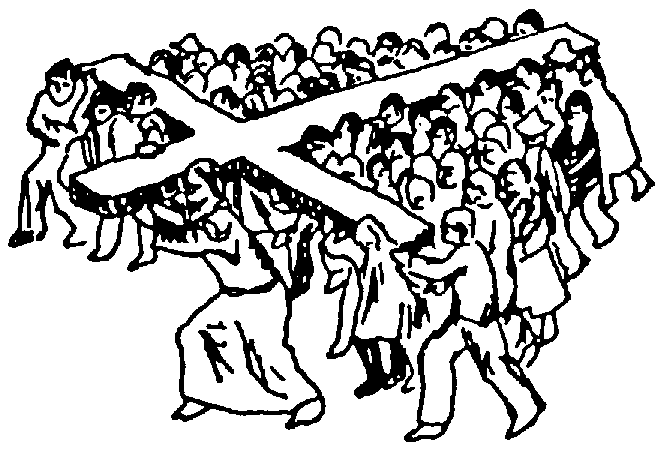
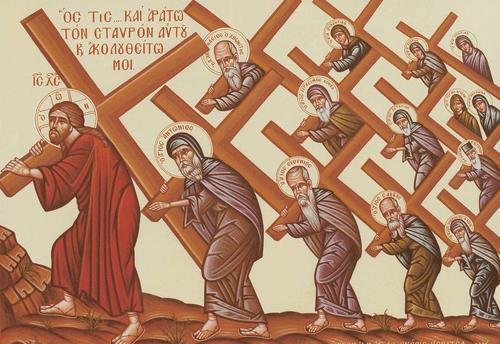
But in our proclamation of the salvation to be found in the cross of Jesus, we have forgotten the teaching of Jesus about the cross. The cross is not just something that we look at, believe in and admire from a distance. Rather, the cross is something for us to carry. Jesus said, “If anyone wishes to come after Me, he must deny himself, and take up his cross and follow Me. For whoever wishes to save his life will lose it, but whoever loses his life for My sake and the gospel's will save it.” (Mark 8:34-35)

The gospel is not a “feel good” religion. The source of the gospel is Jesus himself, and he himself determines what the gospel consists of. And Jesus himself declared the gospel to be the accepting of suffering and economic sacrifice—not only for himself, but for everyone who wishes to receive his salvation.

If we desire to partake in the salvation of Jesus, the cross is not just an option—it is a requirement. To lose our lives, to deny ourselves is not just something for the super-powerful saint, but for the everyday disciple of Jesus. If we do not follow him, we do not have salvation.

One aspect of the cross of Jesus is to accept a lifestyle of what many call inadequate living or “poverty.” Economic sacrifice is not just an option. Rather, it is an essential requirement of the gospel. To accept the gospel, one must renounce ones own riches and possessions for the sake of the kingdom of God, for the sake of the needy.


What does Jesus say?

The poor of this world will receive God’s kingdom.
“Blessed are you disciples who are poor, for yours is the kingdom of heaven.” Luke 6:20
“God chose the poor of this world to be rich in faith and heirs of the kingdom which He promised to those who love Him.” James 2:5

No one can be a disciple unless he renounces all of his possessions.
“Let’s say that a king is going to meet another king in battle. The lesser king has ten thousand men and the greater king has twenty thousand. Wouldn’t the lesser king send a delegation to the greater king for terms of surrender—giving up out of his storehouse what he has? Even so, no one can be my disciple unless he renounces all of his possessions.” Luke 14:31-33.
“The kingdom of heaven is like a treasure hidden in a field. A man found it and hid it again. Then he sold everything he had in order to buy that field in order to gain joy.” Matthew 13:44

If you give what you have to the poor, you will have treasure in heaven.
“Do not treasure up treasure on earth, but treasure up treasure in heaven.” Matthew 6:19-20
“Sell your possessions and give to the poor and so make for yourselves a treasure in heaven.” Luke 12:33

He who renounces a normal life for the sake of Jesus will gain more than what he left and eternal life.
“There is no one who has left house or brothers or sisters or mother or father or children or farms, for My sake and for the gospel's sake, but that he will receive a hundred times as much now in the present age. He will receive houses and brothers and sisters and mothers and children and farms— along with persecutions. And in the age to come he will receive eternal life.” Mark 10:29-30

The one who renounces their possessions for the sake of the gospel will have their provisions met by God.
“Do not worry about your life— what you will eat or what you will drink. Do not worry about your body—what you will put on. Look at the birds of the air, that they do not farm, nor harvest nor store up food, and yet your heavenly Father feeds them. Are you not worth much more than they?” Matthew 6:25-26

If we are to follow Jesus, we must renounce our riches and possessions and surrender them to those who have needs. If we do not do so, we do not have the salvation of Jesus. This is a result of our faith, not just a nice thing to do. This is fulfilling the word of Jesus. It is obeying the gospel.