Friday, August 5, 2016

Jesus the Strategist

In general, the church's strategy to deal with poverty is twofold:

First, give poor people food and clothing.  That'll help them live another day.

Second, teach poor people the gospel, which will cleanse them from their sin.  That'll help them deal with their setbacks and get on the right track in life, so not be poor anymore.


Assumptions
There are a number of wrong assumptions that come up from this approach to poverty.
-That the poor are poor because of individual sin
-That the poor have less of Jesus than the middle class do
-That food and clothing is sufficient to meet people's needs
-That relief is the kind of direct help that is good enough.


The answer

Jesus' answer to poverty was a multi-faceted approach.

1. Healing
Jesus didn't just feed and clothe people, although he certainly did that.  He listened to desperate people, discovered their needs and used what resources he had to meet them.  This was a variety of things-- healing blind eyes, feeding poor, paying other's taxes, raising the dead, offering forgiveness of sins and more.  Jesus didn't come to the poor assuming he knew what they needed.  He heard their needs from their own lips.  That was his system of relief?

2. Ending Systemic Poverty
Jesus publicly spoke against the systems, political and religious, that kept people poor.  He launched a protest against the system of the Temple for keeping out the women and the Gentiles. And then he embarked on a program to undermine systemic poverty in his nation.  His strategy was to be executed although an innocent man, to plead his case before God and then to get the poverty pimps out of power.  His plan was shown to be approved by the resurrection.  And the systems were ousted by 70AD.

3. Create Community
Jesus' third strategy was to create a religious community that focused as much on helping the poor as they did on worship.  The primary economic action of the church was providing for the poor, not only for their own community, but for people in need around them.  The church leadership were assisted only if they were poor-- if they could provide for themselves then they would.  So
me of the more wealthy community members provided their own houses for meeting spaces.  But almost all money given to the church was used for programs for the poor.  This approach came from Jesus' teachings.


The strategy of the church concerning poverty is far removed from Jesus' approach, except for some Christian organizations (Mennonite Central Committee is happily one of the exceptions).  But when congregations deal with poverty in their communities, this three-pronged approach of Jesus is far from their minds.  There is much hand-wriging and perhaps a ministry to the poor that barely hangs on.  I challenge churches to consider a strategy to seriously make an attempt to undermine poverty in their communities.


Sunday, July 31, 2016

That Weird Kinda Christian


I'm that weird kinda Christian that doesn't believe in going to heaven, but that Jesus is working on making the earth livable for all.

I'm that Christian that doesn't believe that the Bible is the word of God.  But Jesus is. 

I'm the kinda Christian that thinks Jesus grants peace, not to those who believes in Christianity, but to those who act like Jesus, no matter what they believe.

I'm the kinda Christian who thinks we can do Jesus work through giving and sacrifice, not through comfort.

I'm the kinda Christian who thinks that nothing can be solved through arguing doctrine, or debating over the "right" leaders. Rather, all things can be solved through well-planned, compassionate love.

I'm the kinda Christian who thinks that the only decent church to go to isn't the one with perfect doctrine, or the one that meets our needs, but rather the one that has a workable strategy to help the poor.

Yeah, that's me.  What kinda Christian are you?

You Are Here

I think God on occasion looks down at us and things to himself, "You know, that planet is really noisy. The universe would be so much quieter if I just stopped giving them life every moment."
Then he shakes his head and says, "Yeah, they're irritating. But I like 'em."
And he lets us continue on.


Thursday, June 23, 2016

Badassssssssss Bible Quiz

So you got top scores on all the other Bible quizzes.  It’s time for a real challenge this time.  And you get to find out just how much you don’t rate compared to the tough guys (and gals) in the Bible.

How many Philistine foreskins did David cut off (that means he had to touch them) to marry Saul’s daughter?  Extra credit: Write an essay about what you think Saul did with them after he received them.
  1. 100
  2. 50
  3. 1000
  4. 200

Who had every male descendant of Ahab killed, and just how many children did he do away with, before he had their heads piled up in two heaps?
  1. Manassah, 200
  2. Jehu, 70 
  3. Elisha, 100
  4. James, 97

Who boasted to his wives that he would kill a boy for hitting him (temper, temper…)?  And how many wives did he have?
  1. Lamech, 2
  2. Philemon, 3
  3. Jacob, 4
  4. Solomon, 1000

Who invited a neighboring king to dinner, laid him to rest on a comfy pillow, and just after he fell asleep, hammered a tent peg through his skull?  Extra credit: What kind of pain reliever should you give him for his headache in the morning?
  1. Jezebel
  2. Jasmine
  3. Jael
  4. Zipporah

Which judge stuck his short sword into the king’s noble blubber and the rolls of fat swallowed it up, then he got away by telling the guards outside the door that the king was taking a dump?
  1. Barak
  2. Gideon
  3. Sampson
  4. Ehud

Who got ticked off at a neighboring prince for raping their sister, so invited all of his town to get circumcised, waited till they were good and in pain and wiped out the lot of them by the sword?  Extra credit: Guess which body part they cut off first?
  1. Levi and Simeon
  2. Ruben and Naphtali
  3. Joseph and Benjamin
  4. Judah and Dan

Who beat up a group of shepherds so the pretty girls could get the well water?  Remember: “Wells don’t kill people, hormonally-enhanced shepherds kill people.”
  1. David
  2. Joseph
  3. Moses
  4. Jacob

In what book is the verse, “Jesus wept” and who made him cry?  After all, there’s got to be a special circle in hell for the one who made Jesus cry.
  1. Matthew, Peter
  2. Mark, James
  3. Luke, John
  4. John, Mary

Which prophet got irritated at a group of young gangstas for calling him “baldy”, so called a bear to come and gore them?
  1. Elisha
  2. Elijah
  3. Jeremiah
  4. Obadiah

Jephthah, the son of a prostitute, vowed that he would sacrifice the first thing he saw when he came home.  What did he end up sacrificing?
  1. His wife’s breasts
  2. His daughter’s virginity
  3. His son’s… um…
  4. His Star Wars Action Figures had to be taken out of their boxes

What did the Levite chop into twelve pieces in order to send a message to the twelve tribes of Israel?
  1. His oxen that he had just used to plow his field
  2. Each of his toes, plus a couple fingers for good measure.
  3. His wife’s raped body
  4. None of the above

Who killed Ananias and Saphiarah in cold blood, in a closed room for lying to the Holy Spirit?  Extra credit: Which detective would you choose to solve the crime? (I’d choose Batman)

  1. Peter
  2. James
  3. John
  4. God

Monday, June 20, 2016

Eschatology

Our vision of the future motivates us and compels our actions today. We work not because work is good in itself, but because our work produces something good, if only some finances to help us and our family survive.

Many of us are also motivated by our vision of the world's future. We not only see how the world is, but what it could be and work toward that ultimate goal. In doing this, we expect the world to improve. This is hope.

Here is my vision of the future:

That those who remained kind and generous and merciful and forgiving through poverty, pain, brokenness and betrayal will lead the world to become a society of love.


It is also my prayer that I could see this society begin today.

Sunday, June 19, 2016

Dad Jokes for Father's Day

My son and I drove past a well-kept cemetery. I said, "I hear that people are dying to be buried here. But," I continued, "they won't let me be buried there."
He asked, "Why not?"
I said, "Because I'm not dead yet."

***

My wife is always wanting my help in cutting up the fruit salad. It's enough to make a mango crazy.

***

My daughter, when she was young, would play with my beard. She asked if my beard was itchy and hot. I replied, "At first I didn't want a beard. But then it grew on me."

***

When I was young, one of my teachers was concerned about my vision (rightly so!). One of the tests I took determined that I was a bit colorblind. When I found out about this I said, "Well, that certainly came out of the purple!"

***

My daughter always has fascinating dreams. It's a bad night when she doesn't have a creative dream to share the next day.
I was so jealous, I said, "Last night I dreamed I was a muffler. I woke up exhausted."

***
After I went to jail, my son asked if they took a mugshot.
"Actually, there's a new program in the jail. They let you take your own mugshot. They're called cellfies."

***

My daughter wanted to make some homemade ice cream.
I said, "Wait a minute. Have you ever gone to sundae school?"

Thursday, June 2, 2016

Why is the Bible so Hard to Understand?


I have a friend who is frustrated at the Bible.  He has a hard time remembering things, and though the reads the Bible daily, he gains no real comprehension. "If the Bible is God’s word," he says, "God’s communication to humanity, then why is it so hard to understand? Why so many interpretations?"

The simple answer is that it was written thousands of years ago, to people who lived thousands of years ago, giving words to thoughts that rarely anyone thinks anymore. 

It was written in genres we don’t read anymore, except in the Bible. 

It is an example of a form of historic thought modern scholars don’t trust. 

It is filled with a style of storytelling that doesn’t communicate. 

It is communicating to people who lived in cultures we just don’t understand most of the time. 

Times have changed, people have changed.  The Bible is part of that change, and many of the changes have been for the good.  I am glad, for one, that we don’t stone or crucify people anymore.  I am glad that gentleness can be an acceptable way of life for some.  I am glad that we no longer live in a predominantly paternalistic culture (even if the dregs of it still remain)—and the Bible has been significant in helping to make these changes, even as it is also significant in keeping the bad parts of older cultures alive.  But there have been so many changes in 2000 years, it is difficult to understand the original contexts and cultures that wrote the Bible in the first place.

But his question is less practical and more theological.  If the Bible is the primary mode of communicating to humanity, then why hide that communication in genres and language we cannot understand?  Why not give us a sign, like neon?  Why not send out an update every once in a while?

Of course many believe that God does exactly that.  Some believe that God continues to write books and give messages: through His Spirit, through creation, through His church, through visions, through the imaginations of men.  I cannot deny this, nor can anyone.  If God is alive, and personal, and loves us, then He must communicate to us still.  I think there is clear indication that He does.  Not only through these means, but also through life experiences, through human education, through personal insights… heck, even through blogs.

But the massive number of texts and ideas are like the internet—the truth is out there, but how are we to know what is the true truth? How can we pick and choose?  If it is science, we can experiment, we can go through a rigorous process of understanding.  But we cannot use science for an individual personality.  What evidence is there that my friend Bill exists?  Or that my wife exists?  There are documents, or you can interview them personally, but science can’t do much for you in that regard, other than give you a picture of their DNA.
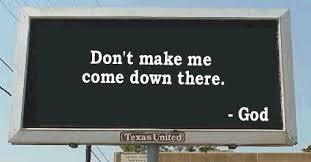
The Bible, through Jesus’ understanding, doesn’t give us a whole picture of God.  Nor does it tell us who to marry or whether we should quit our job, specifically.  But the Bible, through Jesus, gives us the basic principles.  It doesn’t tell us whether this latest prophecy is from God, but if the prophecy is opposed to Jesus’ principles, then we can say clearly that it isn’t from God.  And knowing what is not from God, gives us a much better shot at trying to determine what IS from God.  Jesus’ Bible is a foundation on which we can build all other communication that we receive from God.

But how do we use the Bible?  How can we get past the shell of thousands of pages and ancient society to get across a real truth?  What about that the Bible says one thing at one time and another at another time?  How can we obtain any meaning from the Bible?

Well, it isn’t easy.  It takes work.  We can do this task ourselves, or we can let others do it for us.  But even if others tell us what the Bible says, that doesn’t mean that we can’t ourselves go back and see if it is true.  

This is what I’ve found to be the best ways to understand the Bible:

1.  Discover themes that develop through the Bible

A graph of connections between Bible books
This is easier than it sounds.  It requires one first step—read the whole book.  Not something you can do in one sitting, but it is a fair thing for every literate person to do.  For the average reader, you can get through it in a half hour a day.

We should all have a reading of the Bible, even if we don’t believe in it, because the Bible is a foundation for much of our society and thought.  Once you’ve read it through, you will see similar themes, or perhaps contrary ideas or the development of ideas.  Spend a little bit of time thinking about these things, write them down.  The Bible is all about themes and how they develop, ideas that begin as a seed and grow.  They may be communicated in different ways, but the same ideas are there, and that is where the power of the Bible really is.  We can also see ideas as they develop over time.

2.  Apply Jesus’ principles and actions to the whole of the Bible
If you are only reading through the Bible once, I’m going to give you a strange idea: begin at the middle.  The Bible is not a novel that must be read from beginning to end.  Rather it is a collection of stories and books that have a purpose in its order, but can be read out of order.  My suggestion is this: begin with the four gospels, Matthew, Mark, Luke and John.  Then go to the beginning and start again.  If, as I hypothesize, the entire Bible is about Jesus, then it will only make sense if Jesus is kept in mind from the very beginning.   You will see that Jesus’ ideas and actions are right there in the first chapter of the Bible, and it only grows from there.  You will see actions and ideas that Jesus seems to oppose, and that he approves.  But the Bible will make more sense if you keep him in mind as you read it.  

The Bible doesn't stand on it's own as a solid block of truth.  Rather, Jesus interacts with the book, sometimes disagrees with it and often explains difficult passages.  Not all of them, some passages are just plain mystifying.  But Jesus is there to be our teacher, to show us how to live life in a way none of the other characters of the Bible do.

3. Create cultural bridges from Bible themes to our lives
The Bible will use similar ideas that we use, but communicate them differently.  For instance, the Bible speaks about widows and orphans as objects of pity.  But what is the reason for this pity?  Because in the firmly patriarchal society, those who were not citizens nor without connection to citizens had no legal standing, and so could not worship, go to court, or have justice in any way.  They were vulnerable and dependent on mercy.  So we apply such ideas to today: who are the ones who have no legal standing today, who cannot get justice, have a fair standing in court or be welcome at church?  Perhaps the extremely poor, the illegal immigrant, the “sinner”?  We take the ancient ideas and apply them today and thus give the Bible a place in our lives.

The purpose of the Bible isn’t to give us a bunch of stories.  Nor is it to give us theology.  It is there to change our lives, to help us consider a better way to live, and a better way to connect with God.