Saturday, December 26, 2015

Recommitting Ourselves in the New Year

Some of us sorrow because we have failed Jesus.
Some of us don't want to have anything to do with Jesus, because the demands are too difficult.
But most people, even Christians, misunderstand what Jesus calls us to.
When we agree to follow Jesus, we commit to become a student. When Jesus called his disciples to follow him, he was in a centuries-old tradition of calling students to learn and then follow his way.
Jesus' final exam was his arrest in the garden, which all his students failed, because they did not study (pray).
Yet all of his students but one passed the class. This is because Jesus knew that his class continues on for an entire life. The only students who fail are those who drop out.
Following Jesus isn't a commitment to be perfect, or a commitment to reach a certain standard. It is a commitment to learn from Jesus, every day, how to draw on God's resources to love better. As long as we remain on the path, we will still be able to learn. 

And we can't look at another student in the class, demanding that they measure up to our standard. They are just in a different place in the curriculum.

Let us determine not to judge the other students in the class.
Let us not judge ourselves because we haven't learned enough.

But most of all, let us renew our commitment to draw on God's resources
     to love those around us
     to follow Jesus more thoroughly this year. 

Sunday, December 20, 2015

Gett: The Principle of Patriarchy

Religion is the arena of popular, especially traditional, philosophy and ethics.   Courtroom dramas push the envelope of ethics, displaying where law fails ethics, or the law can uphold ethics, depending on the story.  Gett is the intersection of traditional and modern ethics in the midst of a curious courtroom drama.

The set up sounds like the Iranian drama from a couple years ago, A Separation, in which a woman desires a divorce from her husband, but obtaining that divorce isn’t at all clear cut.  In Gett (which is the Hebrew term for “divorce”) it is clear that the husband is a righteous man, a scholar of Torah, who neither abuses nor cheats on his wife, and although it is clear that their marriage is far from a happy one, he refuses to give her a divorce.  And he has the right to refuse her.

In a secular court, divorce, especially since the 1950’s, has been much easier to get.  The trickiest part is if money or children are involved.  In a religious court, such as Orthodox Jews or Catholics might have, a divorce is much more restrictive, and a level of unfaithfulness must be proven.  Of course, one could always obtain a divorce through the secular court, but not if you want to remarry a Catholic or an Orthodox Jew.  Then the right to remarry a religious must be obtained through religious permission.   Vivian Amsalem is a religious woman, and wants to live her life at peace with a religious man.  Thus, she must have a gett.

The ethical principle primarily being challenged in this film is patriarchy.  Ancient Jewish culture is the oldest patriarchy based on a rule of law that considers all in the society, still in existence.  Many Jewish cultures have set aside patriarchy, but many have not.  Certainly, a strict reading of ancient Jewish law says that a divorce may only be obtained if the husband hands a written divorce to his wife.  Thus, the husband has all the control of a divorce.  A woman might sue for divorce, like Vivian, but she does not have the right to speak for herself, and if the husband refuses to give a divorce, then the judge’s hands are tied.

As a narrative, the great mystery is the marriage itself.  All we see is the speech offered in court and in the anteroom.  We have no idea how they lived or why Viviane is so desperate to get a divorce.  And the courtroom proceedings, for the most part, carefully steps around the marriage, speaking of reputation and the public face of the marriage, only giving us small glimpses of the marriage itself.  So we, along with the judges, are piecing together the truth and the motivations behind Viviane’s desperation and Elisha’s refusal.

While the hesitantly granted details are interesting, what is really on trial is the process itself.  The greatest benefit of modern justice, in the instances when it is allowed, is the ability to speak one’s own perspective.  An older male can never understand what it means to live as a woman.  A wealthy person will never really appreciate the difficulties of being poor.  The sane will never understand the way a mentally ill person undermines themselves without knowing. The white person won’t understand the limitations of being a black American.  We can intellectualize the situations, even appreciate the difficulties, but the life of an oppressed person is much more difficult than any of us realize until we have experienced it ourselves.  The life of a person of power is all the same, but each life of oppression is uniquely different.  Thus, the oppressed must have the opportunity to speak, to explain, to give windows to the difficulties.  And if there is a system in which the weak are not allowed to speak their peace, then no one can say it for them.  No one will give them justice, because no one other than they even know what justice looks like for them.

Everyone must be given an opportunity to speak for themselves, to explain who they are and the difficulties they face.  And people of power must be forced to listen to them or else justice will be thrown out the window.

The film is sparsely decorated, simply scripted, but the cinematography is interesting.  Each scene is uniquely set up, with cameras seeking out different details.  So we look at each time frame with different eyes, even though we are in the same rooms.  It is clever and powerful and strongly reminiscent of 12 Angry Men in it's simplicity and power.


Monday, December 14, 2015

In Opposition to "When Peace Like a River"

When peace like a river attendeth my way,
when sorrows like sea billows roll;
whatever my lot, thou hast taught me to say,

"It is well, it is well with my soul."

Horatio Spafford, the author of this most famous hymn, had incurred huge financial losses in the Great Chicago Fire.  He sent his four daughters and wife across the Atlantic, and the ship sank, his wife alone of his family surviving.  In his great sorrow, he wrote this hymn, to encourage himself and all of us to consider that our souls are worth more than our sorrows, and retaining a generally optimistic view of life.

Although I appreciate the poetry and the lulling verses, leading to a powerfully climatic chorus, I dislike this song, and refuse to sing it.

It seems to me to stand against the sorrows of Scripture.  Yes, it is true that Jesus told us to "rejoice" in our persecutions, but it is because we are in the place of the prophets who were also persecuted for standing with God.

But Spafford is not speaking about persecution.  He is speaking of the everyday, if terrible, tragic circumstances of life we all must face.  God did not give us these circumstances, or orchestrate them, neither for our understanding, nor for our punishment.  Rather, we obtain assurance of our standing with the prophets because we have stood for God's love and mercy and people have hated us for it.

Scripture gives us example after example of people who suffered terribly in sorrow.  Job, of course, suffering deep depression, but many others as well.  Aaron, who had to hide his sorrow over the loss of his sons for the sake of the community.  David, who wept aloud and fasted over the loss of his children.  Even Jesus, who wept for his own sorrow and for the sorrows of women yet to come.

To set aside horrible circumstance and say, "Well my soul is in good shape" lessens the tragedies of life.  We should weep with those who weep, not tell them, "Buck up! Your spiritual life is great!"  We must allow sorrows, and even encourage them, for it says in Ecclesiastes, "A sad face is good for the heart."

I also question the level of assurance of the man's soul.  I do not know much about Spafford, but I know about myself.  I know that if I assured myself of my own standing before God at all times, then that assurance easily moves toward arrogance and spiritual laziness.  I must be challenged to be a better person, or else I won't be that better person.  

If I am constantly assured, "It is well with my soul," then I will do no work on my soul.  My soul is in good shape, why mess with perfection?

I believe that our spiritual lives are a process that we work on with the Holy Spirit.  A receiving and dispensing of God's grace that we are constantly striving toward.  My soul is not well.  It is sick and weak and must improve, with God's help.  I am but an amateur at love, a beginner at obtaining peace for my fellow human beings.  I will not give myself any false back patting.  I will continue to strive for my soul's health.

Sunday, December 13, 2015

Why Is It So Hard to Understand the Bible?

I have a friend who asks that if the Bible is God’s word, God’s communication to humanity, then why is it so hard to understand? 

The simple answer is that it was written thousands of years ago, to people who don’t exists, giving words to thoughts that rarely anyone thinks anymore.  It was written in genres we don’t read anymore, except in the Bible.  It gives a style of history scholars don’t trust.  A style of storytelling that doesn’t communicate.  It is communicating to people who lived in cultures we just don’t understand most of the time.  Times have changed, people have changed.  The Bible is part of that change, and many of the changes have been for the good.  I am glad, for one, that we don’t stone or crucify people anymore.  I am glad that gentleness can be an acceptable way of life for some.  I am glad that we no longer live in a paternalistic culture (even if the dregs of it still remain)—and the Bible has been significant in helping to make these changes, even as it had been significant in keeping the older cultures alive.  But there have been so many changes in 2000 years, it is difficult to understand the original contexts and cultures that wrote the Bible in the first place.

But his question is less practical and more theological.  If the Bible is the primary mode of communicating to humanity, then why hide that communication in genres and language we cannot understand?  Why not give us a sign, like neon?  Why not send out an update every once in a while?

Of course many believe that God did exactly that.  Some believe that God continues to write books and give messages: through His Spirit, through creation, through His church, through visions, through the imaginations of men.  I cannot deny this, nor can anyone.  If God is alive, and personal, and loves us, then He must communicate to us still.  I think there is clear indication that He does.  Not only through these means, but also through life experiences, through human education, through personal insights… heck, even through blogs.

But the massive number of texts and ideas are like the internet—the truth is out there, but how are we to know what is the true truth? How can we pick and choose?  If it is science, we can experiment, we can go through a rigorous process of understanding.  But we cannot use science for an individual personality.  What evidence is there that my friend Bill exists?  Or that my wife exists?  There are documents, or you can interview them personally, but science can’t do much for you in that regard, other than give you a picture of their DNA.
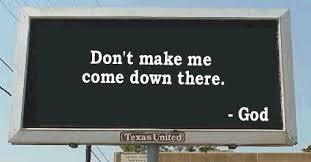
The Bible, through Jesus’ understanding, doesn’t give us a whole picture of God.  Nor does it tell us who to marry or whether we should quit our job, specifically.  But the Bible, through Jesus, gives us the basic principles.  It doesn’t tell us whether this latest prophecy is from God, but if the prophecy is opposed to Jesus’ principles, then we can say clearly that it isn’t from God.  And knowing what is not from God, gives us a much better shot at trying to determine what IS from God.  Jesus’ Bible is a foundation on which we can build all other communication that we receive from God.

But how do we use the Bible?  How can we get past the shell of thousands of pages and ancient society to get across a real truth?  What about that the Bible says one thing at one time and another at another time?  How can we obtain any meaning from the Bible?

Well, it isn’t easy.  It takes work.  We can do this task ourselves, or we can let others do it for us.  But even if others tell us what the Bible says, that doesn’t mean that we can’t ourselves go back and see if it is true.  This is why I will try my best to give verses and links so you can check what I say for yourselves.  I’m just a guy who’s done his own studies and wants to share his thoughts.  It’s up to you to decide what is true.

But this is what I’ve found to be the best ways to understand the Bible:

1.  Discover themes that develop through the Bible

A graph of connections between Bible books
This is easier than it sounds.  It requires one first step—read the whole book.  Not something you can do in one sitting, but it is a fair thing for every literate person to do.  We should all have a reading of the Bible, even if we don’t believe in it, because the Bible is a foundation for much of our society and thought.  Once you’ve read it through, you will see similar themes, or perhaps contrary ideas or the development of ideas.  Spend a little bit of time thinking about these things, write them down.  The Bible is all about themes and how they develop, ideas that begin as a seed and grow.  They may be communicated in different ways, but the same ideas are there, and that is where the power of the Bible really is.

2.  Apply Jesus’ principles and actions to the whole of the Bible
If you are only reading through the Bible once, I’m going to give you a strange idea: begin at the middle.  The Bible is not a novel that must be read from beginning to end.  Rather it is a collection of stories and books that have a purpose in its order, but can be read out of order.  My suggestion is this: begin with the four gospels, Matthew, Mark, Luke and John.  Then go to the beginning and start again.  If, as I hypothesize, the entire Bible is about Jesus, then it will only make sense if Jesus is kept in mind from the very beginning.   You will see that Jesus’ ideas and actions are right there in the first chapter of the Bible, and it only grows from there.  You will see actions and ideas that Jesus seems to oppose, and that he approves.  But the Bible will make more sense if you keep him in mind as you read it.

3. Create cultural bridges from Bible themes to our lives
The Bible will use similar ideas that we use, but communicate them differently.  For instance, the Bible speaks about widows and orphans as objects of pity.  But what is the reason for this pity?  Because in the firmly patriarchal society, those who were not citizens nor without connection to citizens had no legal standing, and so could not worship, go to court, or have justice in any way.  They were vulnerable and dependent on mercy.  So we apply such ideas to today: who are the ones who have no legal standing today, who cannot get justice, have a fair standing in court or be welcome at church?  Perhaps the extremely poor, the illegal immigrant, the “sinner”?  We take the ancient ideas and apply them today and thus give the Bible a place in our lives.

4. Interpret the Bible as a Third World Refugee
Almost every part of the Bible was written to people who were poor, were vulnerable and who often were not in their homeland.  Those desperate to follow God's will aren't the secure, the settled, or the satisfied.  The Bible was written to those desperate to have their needs met, and who daily face danger and loss.  When we read it, we need to understand it from the perspective of those in need, and apply it in our lives that way.

The purpose of the Bible isn’t to give us a bunch of stories.  Nor is it to give us theology.  It is there to change our lives, to help us consider a better way to live, and a better way to connect with God.

Wednesday, December 2, 2015

Be Not Afraid

I'm not afraid of black men.
I'm not afraid of refugees from the middle east.
I'm not afraid of white men.
I'm not afraid of the homeless.
I'm not afraid of Muslims.

They are all people.

And, generally, if you treat them with love, then they'll be kind to you in return.
Sure, there are always the exceptions, but who wants to live afraid that this one person might be the exception to the rule?
I don't  because if I live out of fear of the exceptions, the violent, the thief, the liar
then I lose out on the chance to love.

There are two ways to make the world more secure:
Be kind.
Build community.
Nothing else really works.

Monday, November 30, 2015

The Progress of Shalom

Without exception, everyone has done wrong before God and become offensive to Him.  But we all have been given the opportunity to be right before God through the deliverance from the slavery to sin and death which can be found in the Messiah Jesus.  When the Father raised Jesus from an official execution, he showed him to be the path to be forgiven of our sins and to have a relationship with God.  God proved his justice—which was called into question by him overlooking sins in the past and because of his patience—by making acceptable the one who enters into the devotion of Jesus, and so He proved his actions just….Jesus was given to the authorities to be punished because of our wrongs before God and Jesus was raised from his execution so that we could be made acceptable before God.  Therefore, since we have been made acceptable by committed devotion, we have the shalom of God through our King, Messiah Jesus.  It is because of Him that we have the right to speak to God and receive the blessings of God, on which we depend on for our very well-being.  We boast in our confidence in being a part of God’s glory.  You see, we can boast in the sufferings we receive—even as Jesus did—because we know that our suffering gives us the opportunity to stick with God.  And sticking with God in the midst of suffering—even as Jesus did— is the test of our true devotion to God.  And if our devotion is tested, then we have confidence—because if Jesus was raised by His enduring devotion, so will we.  And this confidence will never be dashed because God’s love fills us through the Holy Spirit, given by God, to help us endure in the midst of our struggles. (Romans 3:23-26; 4:25-5:5)

Got World Peace?
Peace, according to the Bible is not just an absence of violence or a peaceful, easy feeling, but it is well-being in a community.  When the Bible promises “peace on earth to those obtaining grace”, it is not speaking of a lack of war, but of a ruling principle and nation who would provide for all in need and offer justice and peace to everyone, without exclusion.  This well-being and justice is called “shalom” in the Bible.

Stuck With Whirled Peas?
If there is one thing the world lacks, it is peace, meaning shalom.  If shalom is a world-wide community in which everyone experiences well-being, acceptance, mutual assistance, and equal justice for all, then we have never experienced it.  In every nation, in every era, the poor have been oppressed. The outcast have been thrown out because of arbitrary cultural mores.  The religious have judged and rejected all people who did not accept their narrow guidelines.  The non-religious have judged and rejected the religious because of their devotion to God.  And all people purpose to harm all people who stand in the way of their culture controlling and manipulating all others. 

Life on earth is not shalom.  It is anti-peace.

Everyone wants peace.  Most of us in the world recognize that we are all in trouble, that we don’t have peace, and all of us want to obtain it.  Or create it.  Or force it on others.  To create shalom where there is no shalom is what the Bible calls “salvation.”  Frankly, it is a utopian ideal, just like democracy is, just like capitalism is, just like communism.  The difference is that the Bible claims that salvation—the creation of shalom in the world—is something that only God can do.  Peace and justice cannot come simply from human effort or from anarchy.  It must be a work of God that humans join with.  But it is initiated by God.

Getting Better All The Time
The first step of God’s shalom-making was creation.  God saw the chaos, the pointlessness of the world and made it again.  And, according to Scripture, after God’s peace-making, He established humanity to rule over His creation and to keep it in shalom.  This plan failed when humanity chose rebellion and chaos instead of God’s shalom.

Another step in God’s shalom-making was choosing Abraham.  Abraham was not a perfect man, but he was a person who sought God alone, being faithful to Him, and trusting in Him when all else seemed chaotic.  God chose Abraham because of his trust in God and said that whoever would obtain shalom, in all the world, they must be like Abraham and choose his path of trust.  This plan failed because people thought that following the ritual of Abraham or being born into the family of Abraham obtained this shalom.

Another step in God’s shalom-making was to create a community of shalom with very specific rules.  He chose for His people a nation in slavery—the outcast—so they would know how to treat those who were outcast.  And He taught them His ways of love and shalom for all his people.  This experiment failed in different ways, over the years.  First, the people didn’t believe that God could really give them shalom.  Then, they sought out other spiritual powers to grant them shalom.  Then, they oppressed the poor, forgetting that they were once poor themselves.  And finally, they took God’s rules and make them so burdensome that it became impossible to live them out.


Love Reign O’er Me
Finally, after all of these temporary experiments, God began his final plan for shalom.  He sent his Son to be emperor of the world, ruler of his people.  First, Jesus displayed shalom by setting people free from spiritual judgment, offering them freedom from diseases and mental illnesses and offering them a new life in God.  Then he told the people the life of shalom in God, living by the principles of shalom.  Then, finally, he allowed the rulers of God’s people—the priests and elders—to kill him, treating him as an outcast of God’s people.  But God vindicated his Son as the only way to God’s shalom, the great Truth-teller.  And a new people was created under Jesus, living Jesus’ shalom-principles and testing the world with their message of destruction of the anti-shalom and the establishment of God’s shalom.

Underground Revolution
Through Jesus, God is continually creating communities of shalom—some big and some small.  These communities are made up of those who were rejected by the world and who are baptized in Jesus—namely, those who have committed themselves to being citizens of Jesus’ new nation of shalom.  These baptized are committed to Jesus’ principles of peace and justice.  But these principles are not enough in and of themselves, because we all are too weak, as humans, to maintain shalom.  So the Emperor has allowed us to receive the Holy Spirit, who helps us in our weakness to maintain shalom, even when we do not have the strength to live it out. 

            Then God sent these Jesus communities out into the world.  They preached the kingdom— the nation of shalom—and displayed the power of the Spirit.  Communities were in this way tested—would they accept the good proclamation of shalom through Jesus, or would they reject God’s shalom?  Would they practice shalom with the needy of Jesus, or would they reject them?


This time of testing continues on even today.  Many communities of the world—even many who claim Jesus to be Lord—reject Jesus’ principles of shalom.  Many in Jesus’ name harm and kill others.  Many in Jesus’ name refuse to help the needy.  Many in Jesus’ name even reject the true God and seek a distant Spirit who is unobtrusive and will never give anything, let alone shalom.

Wednesday, November 25, 2015

Recommendations for Your Holiday Meal

When you host a feast this Thanksgiving or Christmas, don't invite your friends or family. They will expect to do the dishes, or to bring something, or invite you back to their place next year. Instead, invite the homeless, the refugees, those in nursing homes, the mentally ill, because the only reward you could expect then would be from God.

And when you go to a feast, don't boast about all the things you did this last year, your great accomplishments, and don't expect to be honored. If you insist upon yourself, you will be a boor, and everyone will ignore you and try to interrupt you. Instead, sit in the corner and say nothing. Then your host will note your silence and ask you, "What do you have to be thankful for this year?" and you will be given honor.

Don't demand respect, or else you will be rejected. Be humble and you will be given greater respect.

-Jesus


(Luke 14:8-14)