Saturday, May 23, 2015

Exercising Compassion

I hear a lot about needing love for oneself before giving to others. It is true that if we are emotionally exhausted or overtaxed that it is all the more difficult to give to others with sincerity and love.

But I find that the most frequent block between us and loving others isn't lack of self love, but a lack of reaching out to others. Compassion is a muscle, and the less we use it, the less we understand it. We can build this muscle up, strengthen it and build it. But if we don't exercise it, force ourselves to build it up, then it will never come naturally. For many of us, our minds naturally gravitate toward judgment and feeling put upon. To remain in that place is simple laziness or ignorance.

Here are some compassion exercises we can do to strengthen our mind to be closer to Jesus':

-Every time a judging thought about another enters our heads, let's think of the suffering they endure, and how they can be healed.

-Whenever we feel put upon by another, let's consider how God might use that circumstance to build us up in love.

-If there is a person we feel disgusted by, let's think about their lives and how they might have ended up in that circumstance.

-For every person we want to punish, let's consider how love might change their lives.

-When we watch movies, rate it's compassion. See if the drama would be greatly decreased if love were more involved (which would make a poor movie, perhaps, but an easier real life situation)

-Give generously. Start with once a week, then increase it to daily until you find that it is a regular practice. 

-Think about what you have that you don't need. Then think about who could use it. Then give it to them.

-Be generous with your emotions. Laugh with people, thank people, compliment people. Practice with strangers, like store clerks, and then move on to people who ask you for money on the street.

Tuesday, May 19, 2015

Africa's Poor v. America's Poor

It is pretty easy to look at the homeless in the United States and say, "Yeah, they're poor, but they aren't as poor as the starving people in..." (name impoverished country, usually in Africa).

Certainly, if we are talking about physical depravity and lack of what helps us survive, those in the poorest countries in the world are worse off than the homeless.  The homeless are resourceful, and often live off the toss-offs of the wealthy country they live in.  A dumpster behind a single grocery story in the United States has better and more plentiful food than what is offered a whole city of beggars in a poor country.  In impoverished cities or nations, the problem is scarcity, and while some use that scarcity for their own advantage, the major problem is a universal one.

But if you look at the poor people of other nations, you can see a major difference between them and the poor of the United States:


Do you notice the differences?  The non-Americans were all obviously starving, that's one difference.  But the more obvious difference is that the non-Americans are with others, working with others, but the Americans are alone.  This is probably just a result of the style of the photographers, but it also reflects a reality both live with.  The poverty of Africa is a poverty of resource to certain communities.  The poverty of America is a poverty of community which results in scarcity.

The poverty of the homeless person or of the welfare mom or of the mentally ill is not a lack of food, but a lack of meaningful community.  Poverty is not primarily an economic reality.  Rather, it is a social reality that has an economic result.  The poverty of the third world is a poverty of a community.  The poverty of the United States is a poverty of individuals.

The poverty of the United States, which might also include starvation, but certainly includes dangers of hypothermia and dehydration and sickness due to stress and unsanitary conditions, but also has an added layer of daily rejection from society.  

Not only is a poor individual in the US facing a lack of their survival needs, but they also have people telling them how bad they are, forcing them to move on a regular basis, assumptions that they are criminal and people telling them how they are not doing enough.  They are rejected by a whole society, outcasts from community, forced to not only be poor, but to be isolated.

I am not sure which poverty is worse. 

Tuesday, May 12, 2015

Mending the Divide: Homosexuality in the Bible, Two Views

This blog post proposes to solve all the problems of homosexuality in the church.  After this, there will be no questions, no problems, and peace and harmony will rule and Jesus will return.  Well, maybe not.

The first issue is one I have long wanted to resolve: Which acronym should we use?  LBGTQ is usually accepted for those of an alternative sexuality, mostly because there are a variety of terms and issues involved in the community, and it seems best to include everyone, rather than exclude some.  Of course, some are excluded, even in this unwieldy and hard to remember acronym.  An alternative has been raised, which solves all of my problems: QUILTBAG (Queer, Undecided, Intersex, Lesbian, Transexual, Bisexual, Asexual, Gay).  This term not only includes almost everyone, but it is also much easier to remember.  And it has a sense of humor, which is helpful.

Below, I wish to suggest two valid interpretations of the Bible text, and three biblical conclusions we might draw from these interpretations. 

View #1: Traditional view—The act of homosexuality is a sin
We are only speaking about the act of homosexuality here, not any given orientation.  A person might be sexually attracted to puppies, and to act on that attraction would be a sin, but the attraction itself is not a sin, should a person resist that attraction.   (BTW, ew.)

The evidence of this is found in particular passages:

Leviticus 18: This passage gives a number of sexual taboos, including two men having sex, incest, bestiality, and having sex with a woman during her period.   The importance of this passage is not simply that it is a sexual law, but that it is the foundation of the idea of “fornication”. From this point on, especially in the New Testament, the word “fornication” or “sexual immorality” is used to summarize sexual sin.  This chapter summarized what “fornication” is defined as.  Thus, when Jesus condemns “fornication” (in Greek, porneia, for instance in Mark 7:21), he condemns all these sins, including the act of homosexuality.

Romans 2—Homosexuality as a judgment on society, a release of God to allow men give into sinful lusts.  Thus, the homosexual act is not only a judgment, but also a sin.

I Cor 6:9—Homosexuality in a list of sins which prevents one from entering into God’s kingdom.

I Timothy 1:10—Again, the homosexual act is in a list of sins, and is “contrary to sound teaching.”

Jude—Sodomy as a sin due to their fornication (sexual sin) and going after “strange flesh”, meaning not the opposite sex.

View #2—New View: New Testament Morality is Love, not bans against certain kinds of sex

In Bible times, homosexuality is used in the contexts of rape, pedophilia and violence.   Homosexual acts as a part of a loving relationship is new, and so not discussed in the Bible passages at all. 
Sexual immorality isn’t defined clearly and to apply Leviticus 18 to that word isn’t biblically necessary.  We can see that sexual mores have changed, even in Bible times.  From the beginning to the end of the Bible, monogamy, incest, and other sexual mores have changed.  In today’s mores, having sex with a woman on her period is common, and having sex doesn’t make one unclean (at least no more unclean that a quick wash can’t fix).   Thus, the term “fornication” changed from the OT to the NT, and it has changed with the times.  “Fornication” is never applied to a heterosexual couple before marriage, nor specifically applied to sex with children.  How we use fornication is different today than how they did in the Bible.  Clearly adultery is always wrong because it is an act of unfaithfulness.  But if two men or two women are faithful to each other, then they do not commit adultery, and they do not commit fornication, according to the definition we now use.

Paul specifically was speaking to a Roman context in which homosexuality was common between older , men and children whom they were tutoring.  Is it the kind of sex that is offensive, or the abuse and lack of love?  It is just as likely that the lack of love is the worse offense, as the objective act itself. 

The sexual mores of the NT all have to do with love.  The act of sex between two men or two women aren’t a sin in a faithful relationship, even as they are not in a heterosexual faithful relationship.  The importance of the NT moral code is that  of love and faithfulness, which both heterosexual and QUILTBAG relationships can have.

Abbreviated Discussion between the two views:

1. OT Law
New View: Leviticus is the Mosaic Law, which is set aside by Jesus
Traditional View: However, Jesus also rejects fornication (porneia) and this is based on Leviticus 18.
NV: Does Jesus also then reject having sex with one’s wife during menstruation?  Shouldn’t you also be decrying that sin, according to the definition of Leviticus 18?
TV: If we were consistent in our interpretation, I guess we would.

2. Romans 1
NV: Is Paul really making a claim against homosexuality himself, or is he making an argument from a judgmental point of view against Gentiles and then decrying it with his words in Romans 2: “Who are you to judge?”
TV: Even if Paul is quoting someone else (which there is no evidence of), then it doesn’t mean he disagrees with what is sin.  Yes, Paul speaks against judgment, but this means that anyone can be set free by the power of Jesus.  Paul speaks of judging under the law, which condemns one to death.  The lack of judging happens only under Jesus.
NV: But if we are freed of judgment, then how can we judge QUILTBAG Christians?
TV: We are freed of judgment, but, as Paul argues in Romans 6, we are also freed of participating in sin.
NV:Assuming that the homosexual act, in and of itself, is a sin.
TV: Yes, assuming that.

3. Jesus
NV: Jesus says nothing about the homosexual act, of either good nor ill, so it cannot be declared to be a sin.
TV:First, it is enough for us that Paul says it is a sin.  But we do not think that Paul said this of his authority.   Jesus spoke against fornication, which, we have shown, includes the homosexual act.
NV: But Jesus approves of marriage, and so if a sexual act is done in marriage, then it must be approved by him.
TV: But Jesus defined marriage as being between a “man and a woman” in Matthew 19: 4—“For this reason he made them male and female” in reference to marriage.

4. The term arsenokoitai
NV: I Timothy 1 and I Corinthians 5, in their vice lists, use the term “arsenokoitai” which is modernly translated “homosexual”.  However, it is better understood to be homosexual offenders, such as pedophiles and male prostitutes, not homosexuals in general.
TV: There is no evidence that Paul would have used a different term for homosexuals in general.
NV: Since the word and idea of “homosexual” is only used in the last two hundred years, I think we can.
TV: But the term certainly refers to men having sex with each other.
NV: But not two women, and the word “homosexual” implies both men and women.  Paul is clearly talking about a different idea than we have today.  And in his context of an almost universal practice of noble men having sex with their students, it makes sense that this would be what he is speaking of.  Not having a homosexual orientation and being faithfully married within that orientation.  That wasn’t even an idea.
TV: No, just the sexual activity was, no matter what the context.

Three conclusions:

a.       What we cannot agree on:  whether the act of homosexuality is a sin.
Since there are two interpretations, one based on strict textual analysis, and one primarily based on cultural context, both are viable interpretations.  Thus, we need to learn to live together with the two interpretations.  In the past, the church lived with different views of the divinity of Jesus, with different views of pictures of Jesus, different views of worship, different views of the last days.  We can live with two views of whether the act of homosexuality is sin or not.

Paul laid down the basic principles of how we live with different interpretations under Jesus.  First, that we do not judge each other.  We will have disagreements and different actions based on our different ideals, but we still must accept each other as believers.  Just because someone reads the Bible differently than we doesn't mean they are stupid, immoral or not listening to God.  They just disagree.

Second, we must not cause others to stumble.  This means that if we have the freedom to participate in an activity, that doesn’t mean that we should convince someone else to participate in that activity if they think it is a sin.  If a QUILTBAG person believes that participation in homosexual sex is sin, then they must not be convinced otherwise.

b.      What we must agree on:  That we must love QUILTBAGs
We have no right to judge or condemn those who commit the act of homosexuality.  We must love them and encourage them, just like every other person.  We should allow them to have rights and to have decent lives.  We have no right to persecute them or take away their rights, just like any other person.  We must welcome homosexuals into our churches, and treat them like God’s children, as they are.

If a church group or Christian chooses to condemn or judge homosexuals as somehow being apart from God’s love, or the love of God’s people, that is in opposition to the Bible, no matter what our view of homosexuality in the Bible is.

c.       What we need not agree on: How to love QUILTBAGS
If we think getting drunk is a sin, we will encourage an alcoholic to stop drinking.  That is loving and right.  We will not abuse the alcoholic, we will not gossip about them and we will not ask them to leave our church.  Rather, we will encourage them to love and good deeds.

If we think getting drunk isn’t a sin, but that people can sin while drunk like any other activity, we  will encourage moderation, but we won’t necessarily think that denial is the only option. 


If someone takes a different viewpoint on how to love a person based on their definition of whether something is a sin or not, that is to be expected.  The important thing is that both sides love, without abuse, in full gentleness and peace, in the best way they can. 

Wednesday, May 6, 2015

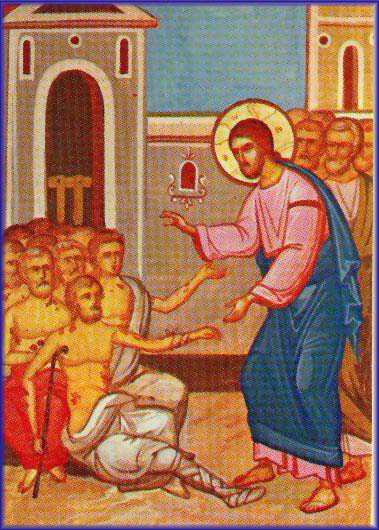
Living With Lepers

Blessed Francis, from the beginning of his conversion, the Lord aiding him, founded himself like a wise builder upon the rock: namely, the great humility and poverty of the Son of God, calling his Order that of the Friars Minor because of his great humility. From the beginning of the order he wished that the friars should live in leper houses to serve the sick, and there lay a foundation of holy humility.  For when gentle and simple folk came to the order, amid the other things which were announced to them, he tended to say that it was good for them to serve lepers and abide in their houses.  

So it was in the first Rule: “They are willing to have nothing under heaven except holy poverty, by this they may be fed by the Lord in this world with bodily and spiritual food, and in the life to come they will attain their heavenly inheritance.”  In this way he chose for himself and others a foundation on the greatest humility and poverty.  He might have chosen to have been a great prelate in the church of God, he chose and wished to be lowly, not only in the church of God, but also among his brethren.  For this lowliness, in his opinion and desire, was very great exaltation in the sight of God and man.
-Mirror of Perfection, Section IV, Chapter 44

Humility isn’t about seeing yourself as some invalid or monster.  Humility isn’t lying about yourself to seem more-modest-than-thou.  Humility is putting oneself in situations that lowers your social standing.  Francis wanted his Brothers Minor to live with lepers partly to assist the lepers, and to give them a better context in which to live.  But mostly he did it because he realized that if they lived with lepers, they would also be outcast from normal society.

Isn’t that the way of it?  If you hang around with the outcasts, the outcastness rubs off on you.  In the Mosaic Law, that was a bad thing.  You didn’t want to be separated from society, to be declared “unclean”.  But Jesus had parties with the outcast, and welcomed their attention.  He touched the leper who was not supposed to be touched.  He forgave those who should not be forgiven. And he loved those who should not be loved.

This is the true way of humility: loving those who “should” not be loved.  Surrendering your own reputation and personal well being to do so.  This is the way of Jesus. 

Thursday, April 30, 2015

Transforming Grace

Based on a true story. Names have been changed.

Trevor was a young man when he became homeless.  He had worked a few jobs, but it was hard to stay with any of them.  As long as he could remember, he was struggling with himself.  He would become furious with his mother.  There were good reasons, always, for him to be angry, but his response seemed over the top.  He would rage, throw things, break things, and people would back off, fear him.  That was somewhat satisfying, but he was as scared of himself as his family was.  His mother would tell him that he was a bad boy, his father would express his disappointment in him.
When he became homeless, his family fully expected it.  They figured he would be a criminal or a bum. It’s the kind of person he was.  So they offered him help, but at a distance.  They would invite him to family gatherings, and most of the time they wouldn’t show up to get him as they said they would.  They didn’t know how to handle him.

Even after Trevor had been camping for a long time, he liked to work.  He wanted the respect and pay of a job well done.  He would clean up bars after they were closed, for nothing.  To work eased his mind, gave him something to focus on apart from himself.  He needed that.  Because he couldn’t stand himself.  He felt he was a good person, but he couldn’t help but look back and see all the mistakes, all the people yelling at him, all the problems he had caused.

Darren was a pastor of a local church.  He allowed Trevor to sleep overnight behind the church on occasion.  Trevor asked to help clean up, to care for the facility, and Darren figured there was no harm in it.  Trevor did a fantastic job.  Every task he was given he did with gusto and did more cleaning that he was originally asked.  Darren invited Trevor to stay behind the church every night, because he was a good man, and helpful.

Eventually, there were problems.  Trevor had a habit of collecting too much stuff around him, making his area look like a trash heap.  Darren gave him a garbage can and asked him to keep his area clean, and Trevor did his best.  People visited Trevor in the middle of the night, and Trevor would allow people to stay there overnight.  Eventually, Darren wrote out a contract with Trevor, clearly stating the rules of their agreement.  Trevor had to keep his area clean, and couldn’t have guests in his space, and if he wanted to talk to someone, they’d have to speak quietly or go off of the property.  After Darren explained the reasons why, Trevor understood and dealt with the issues.

Then Trevor had a bad day.  They didn’t come often, but when he had them, he was on the edge of exploding.  On this day, Darren happened to come upon him and told him firmly that he had to clean up his garbage.  Trevor started throwing all of his possessions at Darren, screaming, “How about this?  How about this?”  Darren stood there, and calmly said, “Trevor, you need to calm down.”  “How about you just leave me alone? Leave!”  Darren stood firmly and said, “No, I won’t leave.”  “Leave!  I’m going to hurt you!  You know I will!”  Darren responded, “If you hurt me, I will still love you.  I will still do what I can for you.”  Another homeless person saw this and went to Trevor and calmed him down.

Trevor knew that he would be asked to leave now.  He wasn’t worthy.  He had screwed up another part of his life.  Another rejection because he was too weak.  Darren saw him the next morning and said, “Great, Trevor.  You got that area cleaned up.  Thanks for doing that. Did you need to come in and use the bathroom?”  Trevor realized that Darren wasn’t going to reject him, no matter what.  He is amazed at the grace he has been shown.  He didn’t know such people existed.

But word got around the church at Trevor’s explosion at Darren.  Many of the church members decided that Trevor was a danger.  What if he blew up at one of the church members?  What if he hurt someone, or put someone in the hospital?  The issue was brought up at a church board meeting, where they asked Darren, “How long will you have this man at the church?  He’s dangerous, and we don’t feel safe.”  Darren responded, “I understand that having Trevor staying here is a risk.  You have to admit, as well, that he is an asset.  When have you seen the bathrooms or the kitchen so clean?  Every true act of grace is a risk.  To accept the difficult or the dangerous is hard and sometimes scary.  But this is what Jesus did for us.  He took us in, when we didn’t deserve it, when we were so much a risk to him that he died for us.  Grace isn’t something that we just receive.  It is something we pass on.”

When it was clear that Darren wouldn’t change his mind, the board was divided.  After much discussion, it was decide that they needed to make a vote as to whether Darren should still be pastor.  They took a formal vote, and the pastor was allowed to remain, by a narrow margin.  Some church members decided that they couldn’t be in a church that had a person like Trevor hanging around, so they left the church. Darren, meanwhile, carefully kept this all from Trevor, so he didn’t feel that is was another mark of rejection against him.


Trevor stayed at the church for years.  He had other explosions, but never with a member of the church.  He softened over the years and was accepted by everyone in the church as a full member.  Eventually, Trevor got a paying job and an apartment, which he kept a terrible mess all the time, but he always visited his friend Darren.

Wednesday, April 22, 2015

On Generosity by Walter Brueggemann

"
"On our own we conclude:
there is not enough to go around

we are going to run short
of money
of love
of grades
of publications
of sex
of beer
of members
of years
of life
we should seize the day
seize our goods
seize our neighbours goods
because there is not enough to go around

and in the midst of our perceived deficit
you come
you come giving bread in the wilderness
you come giving children at the 11th hour
you come giving homes to exiles
you come giving futures to the shut down
you come giving easter joy to the dead
you come – fleshed in Jesus.

and we watch while
the blind receive their sight
the lame walk
the lepers are cleansed
the deaf hear
the dead are raised
the poor dance and sing

we watch
and we take food we did not grow and
life we did not invent and
future that is gift and gift and gift and
families and neighbours who sustain us
when we did not deserve it.


It dawns on us – late rather than soon-
that you “give food in due season
you open your hand
and satisfy the desire of every living thing.”

By your giving, break our cycles of imagined scarcity
override our presumed deficits
quiet our anxieties of lack
transform our perceptual field to see
the abundance………mercy upon mercy
blessing upon blessing.

Sink your generosity deep into our lives
that your muchness may expose our false lack
that endlessly receiving we may endlessly give
so that the world may be made Easter new,
without greedy lack, but only wonder,
without coercive need but only love,
without destructive greed but only praise
without aggression and invasiveness….
all things Easter new…..
all around us, toward us and
by us

all things Easter new.

Finish your creation, in wonder, love and praise. Amen.” 
― Walter Brueggemann


Sunday, April 12, 2015

A Dangerous Book

A rich man's wealth is his strong city, And like a high wall in his own imagination.The sleep of the working man is pleasant, whether he eats little or much; but the full stomach of the rich man does not allow him to sleep.The rich man is wise in his own eyes, But the poor who has understanding sees through him.-Proverbs of Ancient Hebrew writings, also known as Proverbs 18:11; Ecclesiastes 5:12; and Proverbs 28:11
Good morning, my brothers.  I am honored that you have chosen me to speak to you, the All-Wealthy Fathers Under Liberty,  for I have been concerned about our plight for some time.  We have been subjected to oppression long enough! (Cheers in the crowd.)  I was shocked last week to hear Brother Steven’s speech on hate crime in motion pictures.  Up until this point, I have enjoyed the James Bond movies—but no more.  Now I understand that they are simply anti-rich propaganda, intended to throw suspicion upon the good brothers who have worked hard to obtain their wealth.  How dare they make Dr. No or the other villains wealthy?  All of them?  Clearly, just as our brother has pointed out, it is simple prejudice and jealousy! (More cheers.)  I thank Brother Arnold for his insider’s view and especially for his work in banning these films, as well as any others which portray the wealthy according to stereotypes, instead of the truly honorable men we are.  Let the media put the specter of suspicion where it belongs—on the government and the poor!  (More cheers.)  Let us bring back more wholesome programming, such as Schindler’s List and The Millionaire! (More cheers.)

           As serious as the prejudice found in movies is, there is yet another, more insidious cultural influence that we must be concerned about.  Movies and magazines, television and newspapers, and, of course, the internet—all have their various forms of prejudice and oppression against the rich and all need to be influenced, such as our Brother Rupert, Brother Ted and Brother Bill have done.  But there is another, greater influence that has been all but overlooked.  There is a medium that has been influential, not just for decades, a century or a century and a half, but for millennia!  It has been used by the enemies of the rich, oppressing us and destroying us since time immemorial!  It is the cause of many of the wars against the rich—The Lombard uprising of the 1400s in England, the Thirty Years War in Germany in the 1500s, and it is still used as a primary inspiration of the Marxists in Latin America today!  And while you may think that these events are too out of touch with our current structure, I need to inform you that this medium—this dangerous piece of literature—is in the majority of homes in the United States.  Right now.  And many of you have read this book, yea, even quoted this book.  By now, you have probably guessed what I am speaking about, but you dare not say its name, nor even think it.  Yes, that’s right, I am speaking of the Bible—the New Testament in particular. 

            Perhaps some of you are ready to stand up and speak against me now, because I am speaking ill of a book that you hold so dear.  Perhaps some are ready to walk out on me, because much of your wealth—the very reason you are here—has come in part because of your talent in speaking on this particular book.  I do not begrudge your use of it, Brothers—especially our dear Brother Robert and Brother Benny.  I appreciate your skill and tact in opening this book and carefully directing the thoughts of those who read it.  You religious leaders have been essential to our cause, and our most important supporters!  You have succeeded to make wealth popular and important among your people with greater success than any of us have!  We thank you for your work! (Scattered clapping throughout the hall.)  But we must also recognize how dangerous this book is.

            The Bible is a complex and multi-faceted piece of literature.  It is sixty-six different books, written by a variety of authors over at least a thousand years.  Their perspectives vary, as do the issues they discuss.  With this, there is much for anyone to expound upon with safety.  There are examples of wealthy people who are heroes in this collection of scrolls—Abraham, Jacob, Boaz, Job, Solomon and Esther.  However, even these are marginal victories.  Abraham and Job are seen as righteous, not because of their wealth, but because of their generosity, faith and sacrifice.  Boaz is righteous for assisting a poor, illegal immigrant.  Solomon is famous for his wisdom, but ultimately rejected for his disobedience of God’s law and idolatry. Esther is of an oppressed racial minority, which is the real focus of her story.  And Jacob is displayed as obtaining his wealth through deceit and the power of God, and suffering greatly in his later life because of his trickery early in his life. 

            In the Old Testament, where all of these stories take place, there are dangerous themes that crop up now and again.   We have a sympathetic woman, gaining a child after praying for so many years, saying, “The weapons of the powerful are cast down and the weak take up strength.”   One of the many psalmists say, “Better is the little of the righteous than the wealth of the wicked.”  In the book of Proverbs it says, “Give me neither poverty nor wealth, lest I become arrogant and say, ‘Who is God?’”  Another psalmist says, “These are the wicked who have increased in wealth.” 

            In the prophets of the Old Testament, the danger to us increases.  Ezekiel says that the sins of Sodom is that the city was wealthy and arrogant, refusing to help the poor and needy.  Jeremiah says that the wealthy in his day became so because of deceit.  Micah claims that the rich of his day were “full of violence”.  Of course, this is blatant prejudice, painting all the wealthy with the same stroke. 

Nevertheless, the Old Testament is not problematic overall.  None of these passages must be thought of as speaking of the rich in general.  While there seems to be a theme—especially that of obtaining wealth through violence and deceit—it is not consistent, and we can avoid such pitfalls by our Bible-brokers speaking of these cases as being rare, while most wealthy are good and right before God.

            The real problem comes in the New Testament.  This is a revolutionary text, and I do not mean that positively.  It is speaking from the perspective of the disorderly elements of society, those that disrupt the proper flow of economics and authority.  As many of us well know, it is within this tome of subversive writers that we have a few passages that support the lower classes being in submission to the upper classes—and this is as it should be.  However, it is always spoken of in the context of the upper classes oppressing and harming the lower classes.  The New Testament has nothing good to say about us, brothers. 

           Let us take, for example, a brief letter to various churches, written by the brother or cousin of Jesus, James-- or perhaps by his students.  James was an important figure in the early church and his word was considered law by many groups of this fledgling— but revolutionary— religious movement.  He had much to say about us, my brothers—and none of it was good.  Listen to this: “The poor brother should be glad for his high position, and the wealthy should be glad for his lowly position, for even as a flower in bloom will soon fade and become ugly, so will the rich man fade away in the midst of his pursuit of wealth.”  Again, listen to this: “God chose the poor of this world to be rich in faith… but it is the wealthy that drag you into court and oppress you.”  (A few gasps in the midst of a shocked silence.)  But this is not all.  This so-called “just” James dares to make yet another, more horrible, even more prejudicial remark.  This is difficult for me to read, and it is extremely shocking, so please be prepared for it:  “Weep and howl, you rich, for your miseries are coming upon you.  Your riches have rotted and your garments are destroyed.  Your gold and silver have rusted, and its rust is a witness against you in God’s judgment.  The laborers you have hired are crying out against you for you have withheld their wages and it will be heard by the Lord of the harvest.  You have lived… luxuriously on earth…”  I’m sorry, I’m trying… “and you have… fattened yourself for the day of slaughter.”  (Stunned silence fills the hall.)

            I hope you are outraged as much as I am.  This is blatant hate speech.  It is more forthrightly prejudiced against us than almost anything I have ever heard or read, except perhaps that despicable song by Aerosmith.   And if it was only in the letter of James—which our Brother Martin Luther called a “right straw epistle”—then perhaps it could be bearable.  The book is small, it could be avoided.

 But who can avoid Jesus?  Yet Jesus says, “Woe to you who are rich for you have already received your comfort!  Woe to you who are well fed, for you shall go hungry!  Woe to you who are entertained now, for you shall weep!”  It is Jesus who says, “No one can serve two masters, either he will love the one and hate the other.  No one can serve both God and wealth.”  It is Jesus who says, “Sell all your possessions and give to the poor, and then you will have treasure in heaven.”  It is Jesus who says, “None of you can be my disciple unless you renounce all of your possessions.”  It is Jesus who says, “You say ‘I am wealthy, I have need of nothing,’ but you do not see that you are poor and blind and wretched and miserable and naked.” 

Clear lies, all of them!  Our God could not despise us, who has blessed us so?

Do you not see?  The real enemy of our cause in this so-called Holy Writ is not James, but Jesus himself.  It is Jesus that enacted the change that turned the Bible from a humble critic of the excess of the unrighteous rich to an attack on all of us!  These terrible, poor-loving, deceptive words, in blatant opposition to the equality of rich men everywhere were spoken by the founder of the Jesus movement himself!   I know that many of you scholars might be saying, “Well, Jesus may not have said that,” or, “there are certainly other interpretations.”  Of course there are.  Of course there are doubts.  But the clear reading of the text is impossible to deny when brought all together. 

Allow me to repeat a couple main points.  This book is dangerous.  It works directly against our cause, and influences the simple minded to be prejudiced against the wealthy.  Secondly, this book is in the majority of American homes!  There are people who read from this book daily!  Worst of all, there are many who actually believe this book to be God’s own Word and so might very well believe what it says. 

Now, we know, Brothers, that God supports us and our cause—let there be no question about that.  God has granted us our wealth and so wants us to rule the world and influence the people with it.  And so God has given us a commission—we must subvert the clear meaning of this book.  It is a book filled with despicable lies that will tear down the fabric of our very society.  And so we must continue the work accomplished so boldly by our forefather Thomas Jefferson.  We must discourage the reading of this book as much as possible.  If the masses are to read anything, let them read the relatively safe Old Testament. 

Even better, we must follow in the ways of our Muslim brothers and claim through our media that both New and Old Testaments have been superseded by greater, better, teaching.  The best, most popular teaching are the new ethics based upon scientific principles.  This allows us to support an ethics that are based on positive, capitalistic principles.  In this way, the hate speech may be muted, and we will regain our former glory and honor that we deserve to have. 

I see my time is up.  Thank you for your rapt attention, brothers.  (Wild applause breaks out.)