Wednesday, April 8, 2015

Breaking Down Hobo-phobia

Prejudice is seeing a person, not as an individual, but as a part of a cultural movement you dislike.   It is an instant reaction, not something we control.  As soon as we see someone, we have a response from our most primitive, fastest part of our brain, and our minds have already judged that person.  When we see a young black man, our instant response is fear (even if you are black).  When we see a handicapped person, our instant response is pity.  When we see a wealthy person, our instant response is envy.   That doesn’t mean we have to respond to that instant response, but the response, for most people, is there and instant. 

Studies have shown that the strongest, most pervasive of prejudiced instant responses in American society is toward the homeless.  The far majority of people in the United States, when they see a homeless person, have a response of disgust.  Susan Fiske, in summarizing her analysis of the data, said, “A homeless person is seen as a garbage heap.”  This is an interesting metaphor, because this is how many city governments treat the homeless: piles of trash that should be moved on from place to place because there is no garbage heap to dump them on.

Once we see people as disgusting and horrible, if we give into that emotion, we will have one of two responses: anger or fear.  We might feel anger if we feel that they are lying by their appearance, trying to strike pity, but really being criminals or hidden monsters.  This might cause us to want to push them away, perhaps say something in anger or even desire to do violence to them (although we never would).  Our instant response might cause us to see the homeless as so much an alien, a blight on our land, that we fear them and what they might do to us or our children.  We don’t want to harm them so much as get them away, to transform them into people we can appreciate and care for.

Many of us reading this might say that we have never had these emotions about the homeless.  As far as we know, we have not felt disgust or fear or anger toward someone just because they were homeless.  The other instant reaction that might come up, and is just as limiting, is pity.  We might see a homeless person and instantly feel sorry for them.  This seems to us a positive response, and so we often allow ourselves to give into our impulses of pity.  But these impulses also diminishes an adult, even infantilizes them.  A person filled with pity might want to teach the homeless how to live, to “mentor” them, to assume what they need and give it to them.

How do we know if we have a prejudiced attitude toward the homeless?  Take this simple yes or no quiz:
  • Do we assume we know a persons’ life story by looking at them?
  • Do we assume we know how a person got into trouble?
  • Do we assume they are criminals, lazy or miserable?
  • When we see two homeless people talking together in private, do we assume they are up to no good?
  • When we see a homeless person working on two or more bikes, do we think they have stolen them?
  • When we see a homeless person pushing a shopping cart, do we assume they stole it from a grocery store?
  • Do we think homeless people need just one thing to help them? (e.g. food, a place in a shelter, a kick in the butt, a listening ear?)
  • Do we assume that all homeless want to live like us? Or that they all want to be homeless?
  • Do we assume that all the homeless are addicts?
  • Do we look down on a homeless person doing something that wouldn’t be considered “bad” if they did it in their own personal apartment? (e.g. drinking a beer, having sex with their girlfriend, sleeping)
  • If we saw a homeless person on our property, is our impulse to call the police to get rid of them?
  • Do we want to take care of the homeless, assuming they can’t help themselves?
  • Do we assume all homeless are mean?  Or dangerous?  Do we assume all the homeless people are friendly? Or looking for help?


If you answered “yes” to any of the questions above, it means you have prejudiced assumptions about the homeless.  But don’t beat yourself up about it, almost all homeless folks have one or more of the assumptions above, even if they themselves don’t fall in any of the categories.

Homeless folks are people.  Yes, many of them do need help, and yes, some of them are criminals.  Just like housed folks.  Some are mean and some are friendly.  Some have hope and some have given up.   The homeless are young and old, men and women, educated and drop outs, employed and unemployed. 

However, there are a few generalizations we can make about all homeless folks:

1.       They are stressed
Because of the stigma of homelessness, even if they don’t believe it, they know that most people do.  So they don’t know when they might get attacked, abused, yelled at or told to move.  They might get ticketed or even arrested for something they didn’t do.  Generally, they have to work hard to get less, just to survive.  Almost everyone who has been homeless for a year or more have PTSD, and this stress leads to a shorter life.  Stress is usually the cause of addictive behavior on the street, and it requires a strong will not to give in to that crutch. To just leave the stress behind.

2.       They are lacking support
If a homeless person had adequate support, they would be staying in someone’s home.  We don’t know why they lack that support, if it is their own fault, other’s fault or some combination. But most people have friends or family who will let them crash on a couch, if nothing else.  Some people are unable to obtain support from their friends because they have been stigmatized by their homelessness.  The homeless are the 1 percent who have no where to go, no one to help them in the way they really need help.  Even those who help the homeless full time don’t have the resources to provide for them what they need. 

3.       They don’t know who to trust
Because of the widespread prejudice against the homeless, what a person looks like may not be the truth.  Perhaps they are trying to take advantage of you, they are using the poor to prop themselves up.  There are shelters that abuse their guests, and people who look like they want to help who turn on you in a moment.  This is because almost everyone feels superior to homeless people and some don’t have any problem with stealing or taking advantage of the homeless.  It is easier to con the homeless because they are so desperate.  Because the homeless have been hurt so many times, they don’t trust people easily.

4.       They need opportunities
The homeless don’t really need a handout, although they might ask for that because they think it is all they can get.  What they really need is an opportunity for a better life.  Each homeless person understands a good opportunity differently.  For some, it is a job.  For others, a safe place to sleep.  For others, an apartment.  For others, a friend to stay with.  Some need mental health assistance, some need rehab, some need work to do.   But opportunities for the homeless are hard to come by, and the longer they stay on the street the harder they are to find.

If we want to help the homeless, then there are a few things that, knowing these facts, come to mind immediately.  The first is that, just like any racism or sexism, we need to speak out against hobophobia.  If anyone makes a prejudiced statement about the homeless, they should be gently but firmly corrected.  We don’t know any person’s story, and we must not make assumptions or generalizations.

Second, we should make relationships with the homeless.  We must not treat them like a group, as if their issues or cares are all the same.  We should get to know them individually, listening to their story and responding appropriately, knowing that they have a unique experience and a unique life-situation.  This means we know fewer homeless than those who serve hundreds, but we can have a greater chance to actually help them if we get to know them.


Third, we provide opportunities for the homeless we get to understand.  We ask what they want and need and we see if we can help them take the next step to escaping poverty or the stigma of homelessness.  We don’t all have the same resources, so we won’t be able to give our homeless friend what they might need.  We won’t always know if what our homeless friend wants is what will really improve their lives.  But in friendship and partnership, we can improve the life of our homeless friend, just by being their friend.

Sunday, April 5, 2015

Jesus' Politics, part 2: Death and Resurrection

The glorious one, the resurrected finishes his discussion of confession and forgiveness with the child who denied his Father.  

Peter: Well, that was uncomfortable.

Jesus: Wasn’t too comfortable on my side, either.

Peter: Yeah, I’m sure.  (A silence hangs in the air for a moment, as a decision to change the subject is made.)  So what is with all the elaborate setup?

Jesus: (Raises his eyebrows) Sorry?

Peter:  I’ve had some time to think and I realized—You set all this up.  The arrest, the conviction, the crucifixion.  Not only did you know it was going to take place, but you created the circumstances through which it would happen.  Okay, so why?  Why do all this?  I mean, resurrection is great and all, but why bother?  There were other ways to accomplish your goals.

Jesus: (Sits back) Really?  So what is the goal?

Peter: Well, to be Messiah, right?  To be king of Jerusalem?

Jesus: Well, kind of.  Remember my first message?  What I repeated again and again to all synagogues?

Peter: (Thinking…) Well, um.  Yeah.  “The kingdom of God is near.”  Sure.  And that’s how you establish God’s kingdom, by being Messiah, right?

Jesus: Well, that’s how I establish MY kingdom. 

Peter: (Speaking quicker, with more assurance) Same thing.  So why didn’t you establish your kingdom through armies?  Killing off your enemies?  Or why didn’t you do politics, infiltrate the Council and take power bit at a time?  Or just ask God to wipe them all out?  Or tell your followers to take over Jerusalem.

Jesus: Yes, those are all good ways to establish my kingdom.  But I never was interested in doing that.  I want to set up God’s kingdom.

Peter: I just don’t understand the difference.

Jesus: When Moses established God’s kingdom, who did the work?

Peter: Moses.  Of course.

Jesus: Um, really?  Moses freed the slaves?  Broke open the Red Sea?  Feed the masses?  Established the ten commandments?

Peter: Well, yeah… I mean, kind of.   (He slowly realizes Jesus’ point.) Well, I guess not really.  God did all the heavy lifting.

Jesus: Right.  This is the difficulty: God’s kingdom must be led by humans, because that is God’s promise to Adam and Abraham and David.  But it cannot be God’s kingdom unless it is established by God’s power and principles.

Peter: That still doesn’t explain why God didn’t just do a major miracle—like wiping out all the Roman armies—and just put you in charge.  That would be God doing the work and you stepping in.

Jesus: Yes, but that’s not how God’s justice works.

Peter: I think it’s quite just.

Jesus: (Rolling his eyes) Yes, you would.  Do you think God just wipes people off the way a child destroys ants? Don’t you yet understand God’s love for people?

Peter: I don’t think he much loves the elders and priests who killed you.  I can’t wait to see their comeuppance.

Jesus: All this time with me, and you still don’t understand the ways of God.  Haven’t you heard that God is merciful and compassionate, slow to anger and forgiving to many generations?  Don’t you think that the elders and the priests and the Pharisees fall under God’s grace as much as you do, denier?

Peter: (Winces at the hard truth) Ouch.

Jesus: (Softening) I’m not trying to rebuke you, Peter, I’m trying to explain.  God isn’t interest in condemning anyone.  His mercy falls on all people.   Remember, I asked for God’s forgiveness on all those who crucified me.

Peter: (Quickly responding) I heard about that.  You said, “Father, forgive them for they know not what they do.”  Surely that applies to the Roman soldiers who tortured you, but not the elders or high priest.  They knew exactly what they were doing.

Jesus: (Firmly) Stop judging quickly, Peter, and start thinking with compassion!  The Council didn’t understand, either.  They thought they were protecting their temple and nation.  God’s plans were so deep, they didn’t have a clue what was going on.

Peter: (Confused, as usual) So why did you allow yourself to be killed?  Why did God resurrect you?  I understand less than before.

Jesus: (Giving that condescending smile that professors have given since time began) Good, now you are ready to hear.  Who are God’s appointed authorities?

Peter: Well, the priests, of course.

Jesus: Right.  And with them the High Priest, right?

Peter: Of course.

Jesus: What about the Council of elders?

Peter: Well, they are given authority in the Scriptures…

Jesus: Yes.  Who else?   

Peter:  Um… maybe the Emperor?

Jesus:  That’s right.  Who else?

Peter: I’m not sure.

Jesus: Under the Emperor is the Roman army.  And Pilate, who condemned me to death.

Peter:  Pilate was established by God?

Jesus: Absolutely.  I told him so myself.

Peter: (Smiling slyly) I bet he loved that.

Jesus: He avoided almost everything about me.  You know who else is established by God?  The Pharisees, who plotted my death.  And the Sadducees who hated me.  And Herod who condemned me.  But you see?  Since God established all of them, do I have the right to take them down, to destroy them, to take their place.

Peter: Well, if you were appointed by God, as you were, then you had that right…

Jesus: (Slightly exasperated)  Do you really think so?  Look, David was appointed by God while Saul was still ruling God’s kingdom. Did David have the right to take out God’s appointed Messiah and put himself in Saul’s place, even though he had God’s anointing?

Peter:  Actually, no.  It’s strange, but he made a point of stepping back and never even touching Saul, because he was God’s appointed king.

Jesus: That’s right. David didn’t step toward ruling the kingdom until God had dealt with Saul himself. Until Saul had proven that he was unworthy and had been judged by heaven.  David never raised a pinky against Saul, even though he had the promise.

Peter: So he waited for God to act?

Jesus: Yes, because God has to establish His kingdom.  We humans can’t do it ourselves.  Our place is to wait for God to act.

Peter: So why didn’t you hide out in the desert, like David, and wait for God to act against the evil authorities?

Jesus: Well, first, it would take forever.  There’s always a new High Priest, always new Pharisees, always another Herod, another governor appointed by the Emperor.  Also, there needed to be decisive proof that these authorities were evil.  They needed to all be complicit in the worst deed a God-appointed authority can do.

Peter: (Guessing) Sexual immorality?

Jesus: Worse than that.

Peter: Umm… (Thinking for a minute). Taking a bribe?

Jesus: Do you want me to tell you?

Peter: Sure.

Jesus: Killing an innocent citizen.

Peter: (Incredulous) Really?  These guys have done that for years!   Blood drips from their hands!

Jesus: That’s true.  But now they have gone that extra step—they have killed God’s chosen one.  They have killed the Messiah, the Son of God.  Every life is worth a world.  But the stirring of God’s ire against them is rising into a flood of wrath.  They prove themselves to be the anti-David, more than willing to destroy God’s chosen if it is politically convenient.  They have proven, decisively, that they are unworthy to lead God’s people.  That they need to step aside.

Peter: Is that why you are resurrected? 

Jesus: Among other reasons.  It is true.  I was sent to dark Sheol, where those who have been declared guilty go.  But my case was given before the final Judge of heaven and earth, and he decided to overturn the verdict of the Pharisees, of the Council, of Herod and of Pilate.  They declared the very innocent one to be guilty, and so their sentence was reversed.  And I was brought back.

Peter: So now, now is the time? Now God will take them out, and destroy them?

Jesus: No.  Our political campaign isn’t over.

Peter: What do you mean?  We’ve done the work.  You paid the ultimate price.  It’s time to end this and establish your kingdom.

Jesus: You are right.  It is time for God’s reign through me to begin.  And I will go and take this kingdom up very quickly.

Peter: (Standing up in excitement)  Well great!  I’ll call the others over and we’ll gather all the followers back and we will take over Jerusalem…

Jesus: (Laughing out loud)  Peter, you know I love you, right?

Peter: (Eyes like slits)  I hate it when you do that.  You make me look like an idiot.

Jesus: (Slyly) I’ve never had to do that, Peter.  Why do you think I named you “rock”?  No, this dirty, unholy Jerusalem is not where I will receive God’s kingdom.  You think the Father will come down here and hand me this mess?  My kingdom is not of this world.  I must receive it elsewhere.

Peter: (Eyes tearing up, delving into the waters of mourning he had just released. ) You go to the Father?  You will leave us again?  Can’t you take us with you?

Jesus: No, Peter, I can’t.  I will go to heaven and try to repair the world from up there.  But the work you will do is just as difficult.

Peter:  (Tears dripping down his face.) Great.

Jesus:  Peter, it’s okay.  I’ll make sure you are ready.  You’ll have enough time to mourn and to be prepared, I promise. 

Peter: What is this work?

Jesus: You know that I forgave all the authorities that killed me.  I want you and your fellows to go to them all and give them an opportunity to repent and to be a part of my kingdom.

Peter:  How does one become a part of your kingdom, Lord?

Jesus: Same as always, Peter.  Turning away from the nations of this world, even Judea and the priesthood, and taking on the rite of immigration to my kingdom-- being baptized in my name.

Peter: The authorities would never do that. 

Jesus: Probably not.  But some will surprise you.  Even Gentiles, even oppressors of our people, will come into my kingdom. 

Peter: Yeah, sure.  We won’t even get an audience with the Council or Pilate or Herod, let alone the emperor.  No one will listen to us.

Jesus: You’ll see.  Tell them of my resurrection.

Peter: Couldn’t you do this yourself, Lord?  We’ll talk with them, but it would be much more convincing if you show yourself, alive and glorious, ready to rule God’s kingdom.

Jesus: Then they might hesitate to show who they really are.

Peter: What do you mean?  How do they do that?

Jesus: They are killers of the innocent.  And even if I have forgiven them, many of them will refuse to repent and continue to kill the innocent.  Once they have made their final refusal, then God will step in and take them out.

Peter: Wait… you are talking about us, aren’t you?

Jesus: Yes.  I will send to them apostles and prophets and they will kill you.  You will go to kings and judges and priests and emperors and they will show you who they really are.  And God will then judge them according to their actions.

Peter:  So when you said to take up your cross…

Jesus: I meant it literally.  It is the only way to establish my kingdom on earth.  And when I come, you, in full resurrected splendor, will reign with me as well as all your companions who were rejected by this world by enacting the mercy and grace and compassion of God.

Peter: Well, that’s a tall order.

Jesus: Yes, it is.  Few will be able to accept it.  But I have confidence in you.

Peter: But I’m not worthy.  How do you know that I won’t deny you again?  I’m already broken, fallen.

Jesus: Yes.  I know.  But I have confidence in you, Peter.  In all of you.  As broken as you are, that’s just how strong God will make you for this work.

Peter: So when you establish the kingdom in heaven…

Jesus: So you will establish my kingdom on earth.  Bring people to me, Peter.  I’ll  take care of the rest.

Peter: (Breathes deeply the breath of decisiveness.) Okay.  I’ll do it.


Jesus: I knew you would. 

Friday, April 3, 2015

Jesus' Politics, part 1

Jesus got up at the beginning of his final week and decided to make a declaration for public office.  He had a couple volunteers gather a colt and he entered Jerusalem.  Every good church-going person knew what was going on—he was fulfilling holy writ, that the next king of Jerusalem would go in triumph on a colt, a humble animal.  So his supporters gathered around him, made a parade into the city of Zion, and celebrated his candidacy.

To the people of Jerusalem, this was not such good news.   Although they were looking for a Messiah,  Jesus and his followers were foreigners, from the hill country, impure from their close proximity with foreigners.  Their accent was strange and their background questionable at best.  These upstarts were barely welcome to worship with them, let alone rule them. 

Jesus, in his first work in Jersusalem, just observes. He strolls through the streets with his throng of supporters, goes up to the temple and just observes the goings on.  He sees the sacrifices, he observes the praying men, and he sees the outer court filled with tables, allowing men to exchange their foreign coin with temple money, and then move over to purchase animals for worship.  He mumbles to himself, and then leaves the city for the day.

The next day, as is his custom, he gets up early to pray.  As his supporters rise and they eat and pray, he leads them back into Jerusalem, heading straight into the temple.  The morning routine was in full motion, with many rising early to exchange their coins and to purchase animals for sacrifices.  Jesus heads straight to the money exchangers, and knocks over their tables.  Outraged, they come at him and he picks up a long piece of rope and uses it as a whip, causing them to step back.

“Muggers!” he cried.  “Bandits!  You are stealing God’s glory!  People from all over the world come to worship my Father, and you take the only place they are allowed to worship and use it for your business.  You steal from God himself!  Get out!  Allow the women and Gentiles back in the temple, giving them a place to pray!” The money men quickly pack up their things and go. 

The local priests and some ruling authorities see this commotion and are outraged.  The high priest gave these local businessmen this space in the temple.  Who is this hick, this foreigner to drive them out?  They heard of him—he is the one who declared his intention to be king of Jerusalem.  Now, it seems, that he is taking over for the high priest!

“What right do you have to do these things?” they demand.  “Who gave you this authority?”
Jesus looks at them slyly, “I will answer your question, if you answer mine.  Was John the Baptist from God?”

John, of course, undermined the authority of the priesthood and the temple, declaring that all were unfit for the coming kingdom of God.  But he was also massively popular and the priests didn’t want to be given a bad reputation so they answered, “We refuse to answer your question.”
Jesus smiled, “Even so, I refuse to answer yours.  You figure it out.”

Jesus then announced to all in front of the councilmen,  “A successful businessman spent years creating and causing his business to thrive. He decided to hand his business over to a set of managers, and allow them to run it.  However, these managers refused to grant the owner any of the profits of justice and mercy that he deserved, that he worked so hard for.  So he sent them messengers and lawyers and  holy men to give him his fair proceeds.  The managers, deciding to rule the business themselves, tore up the letters, beat the lawyers and killed the holy men who demanded justice from them.  Finally, the owner decided to send his son, who had great authority.  The managers saw the son of the businessman and thought that if they killed him off, there would be no one to contest their ownership.  So they beat him up, forced him to sign a release agreement, threw him out of the building and killed him.

“What do you think the owner will do?  He will come back with a group of thugs and beat these managers and kill them, and place his business under the rule of someone who will do as he asks.”


Then Jesus turns to the councilmen and priests, “What kind of authority are you looking for?  Or do you think you can run things any way you want, without justice or mercy?  Remember the holy words, ‘The stone which the builders rejected became the chief cornerstone.’  The very one you reject and kill is the one who will rule over you and kick you out of the kingdom.”

Thursday, March 19, 2015

Balance

So, I’ve been having some bad days.
I’ve been resting, which is good, but it hurts.  I’ve had cramps, headaches, diarrhea, deeper depression, and a growing sense of failure.   Most of this is because of adrenaline withdrawal, which often hits people who overwork and then stop suddenly.   I know that I work a lot, too much.  But I’ve been feeling that I want to return to overworking if this is how I feel at rest.
This is a minor symptom of my lifestyle, really.  There are greater ones:
A hormone imbalance over the last decade.
Social instability as I do not fit in one culture or another.
Lack of control over my emotional state.
My family and I living in poverty for the last fifteen years.
Neighbors, police, and the violent screaming at me.
Threats and fines from the city.
Of course, my friends and family, who really love me, don’t like this at all.  Everyone, including myself, would like to see me live a life of greater balance.  God made us all to exist in a world of balance, of shalom, where we would have our needs met, the rest we need, positive companions and emotional strength to love.
My friends see that I am choosing not to live in that shalom, even though it is within my reach. They tell me to rest more, to take more breaks, to eat better, to participate in more joy, to write more, to spend more time with God.  I have friends who tell me that I cannot save the world, that I am doing too much, that I need to delegate, that perhaps I should quit.  After all, my health is at stake, and my family’s well-being.
The solution, of course, is simple. I just need to back off.  I just need to say “no”.
I need to say “no” to the man who comes to me thirsty, when I have much to drink.
I need to say “no” to the woman who is hungry, when I have a cupboard and refrigerator full of food.
I need to say “no” to the family who is harassed and unable to sleep, even though I have a safe place where they can sleep.
I need to say “no” to the mentally ill, who just me to give them comfort.
I need to say “no” to those who have no opportunity for worship, and to not give them an opportunity to come before the Lord.
I need to say “no” to those who want to tell me their long story, to refuse to listen so that I cannot pray for them.
I need to say “no” to the sinner and the outcast, refuse to give them a place of safety.
My well-being is more important than saying “yes”.  My health is more important than theirs.  My rest is more essential than theirs.
Laudable ExchangeThe problem is that we do not live in a world of balance.  If everyone lived balanced lives between work for ourselves and work for others, if we all lived out compassion and mercy, if we all gave people the benefit of the doubt and the kind of grace that God gives us all, if we all took our extra resources and shared with those in need around us, then we would have a world of shalom.  But that’s not the kind of world we live in.  We live in a world where criminals are punished, not rehabilitated.  We live in a world where the poor are rejected and treated like garbage.  We live in a world where cultural, ethnic and social differences result in poverty and death.  We are far from the balance God created.
Because of this extreme imbalance, some must love more to make up for that.  Because some do not have ample food or drink or clothing, others must give so that they might survive. Because most do not share of their wealth, some must share more, even out of their poverty.  Because most do not offer grace, some must open their arms in welcome all the more.  Because too many labor for little return, some must labor more so that they may rest.
It isn’t fair.  But it is the way of Jesus.
Jesus healed the masses, even when balance required that he rest.  Jesus walked hundreds of miles to go to those who had need. Jesus offered food out of his poverty.  Jesus counselled in the middle of the night, and rose up early to pray.  Jesus made himself a target to the authorities so that some might rest.  Jesus surrendered his life so that others might live.
And Jesus told his followers that we are to live the same kind of life.  “No one has greater love than this, that a man lay down his life for his friends.” “Sell your possessions and give to the poor.” “Deny yourself, take up your cross and follow me.” “Surrender all that you have.”  “Go from town to town, heal the sick, cast out demons, raise the dead and proclaim the kingdom.”  “Blessed are you who are poor.” “Blessed are you when men speak ill of you.” Jesus wasn’t a great advocate of a life of balance.
The reward for this is that which cannot be seen.  Jesus promises that a life of sacrifice and persecution due to love will have joy, but also mourning.  That we will have a community of support amidst persecution.  That we will have our needs met amidst poverty.  And that we will have lives of comfort and peace and balance in a future time that is beyond our current resources.  This is why this is called a life of faith.  Because sacrificial love is for a pleasure that cannot be touched or even perceived with our senses.
If you live a life of balance, I do not begrudge you that.  Good for you, as long as you give to those in need.  In fact, know that I am a bit jealous of you.  I wish that I could live a life of balance.  But that is not my purpose in life.
Some think that I am trying to save the world.  I am not so delusional.  All I am trying to do is to help the person in front of me.  And the next one.  And the next one.  To provide just a teeny bit more balance, a bit more shalom, in this world than when I came to it.  If that means that if my health, my economics, my emotional state, my social standing or my life suffers because of it, then I just have to trust that God will make it worth it all.

Saturday, March 14, 2015

Giving and Receiving-- Testing Theology #2

Theory: The more you give to the poor, the more you get, in order to give more to the poor. 

Principle:
He who is generous will be blessed, for he gives some of his food to the poor. (Proverbs 22:9)

He who gives to the poor will never want, (Proverbs 28:27)

How blessed is he who considers the helpless; The LORD will deliver him in a day of trouble. (Psalm 41:1)

He who is faithful in a very little thing is faithful also in much; he who is faithful in unrighteous money, will given greater responsibilities. (Luke 16:10)

Test:
In 1995, our family invited the homeless and poor to share of our evening meal.  Some nights we would have one person and some we would have ten sitting outside our two-bedroom apartment.  I was only working part time, and we were barely above the poverty line… and later far below it.  But we always took whatever extra we had and provided for the needy in our area.  We didn’t need to reserve much for ourselves, because we always had our needs provided.

In about a year, as we saw people in desperate need, especially women with children, we would invite them to sleep in our living room.  We learned how to judge who we should have and who we shouldn’t in time, and what we should leave out and what not to (checkbooks, for example). 

Now we have a house, a three acre property, a warehouse full of clothes and furniture and daily donations.  We help feed 450 people a week, house full time 8 people beside ourselves and provide shelter for another 20 people beside.   The more we give away, the more we receive.  As long as we are faithful to give to the poor, and not sell for our own benefit, the more we get to give to more people.

Anecdote:
 Eventually, our apartment had the sick and the freezing staying with us, as well as those who need to be discipled or delivered from their addictions.  Our two bedroom apartment was filled with people, some staying for a day, and some overnight.  Our apartment building was sold to a new owner and he decided he was going to “clean up” the apartment building.  One of the first things he did when he received ownership is provide us with a thirty day notice to evict the apartment.  He said, “Your work doesn’t fit with my work.” 

In the meantime, we had to figure out where we were going to live.  We weren’t going to receive any deposit for our apartment because we hadn’t paid any, for the apartment was in poor condition when we moved in.  And the rent was higher than ever in apartments around town, beyond our means.   We prayed for God to grant us some housing, because we didn’t have the income or resources to get it.
We asked for prayer right after we received the notice from two people: my bishop and my father.  Within two days, my father called me and said that he was willing to purchase us a house.  He didn’t say what he would pay, just that he would purchase us a house.  Amazing!

The question is, what house would meet the needs of our people and our needs and be not too expensive.   We got a realtor and looked on the internet and started to look at houses.   This house was too small, and that house was in the wrong neighborhood.  I felt that God was telling us to look close to downtown Portland, so we started driving in neighborhoods around there.  In one of the poorest sections of North Portland, there was a large house for sale.  Diane said it would be too expensive, but I thought we should check it out. 

The house was used as a foster care home that was being closed down because the family was retiring.  It was also used as a shelter for local homeless folks (and a drug lair for some).  The family who owned it were Christians who helped the poor and seeing that we were the same kind of folks, they were happy to sell it to us.  They gave us a reasonable price and we then had a house with six rooms for people to stay in with our family.  We now have 13 people in our house. 


As we provide for the needy, the Lord provides us more so we can provide for the needy some more.

Saturday, March 7, 2015

Testing Theology #1-- God's Practical Provision

Thesis:
Surrender for God’s purposes allows for our own needs to be met

Jesus’ principle: 
“Seek first His kingdom and His righteousness and all these things (e.g. food and clothes) will be given to you.” 

The idea here is that if we are following God’s calling for us as a family, and if we surrender all we have and do for that calling and for the righteousness that God calls us to, then God will provide all our needs.  Although Jesus mentions only food and clothing, we also, as a family need housing, water and electricity so our children do not get taken away.

Test: 
In 1997 I was led by God to quit my job and to work with the homeless full time.  I asked others, including my wife and my church supporters to pray with me and to seek God’s will in the matter.  All of those involved affirmed this direction and supported us to do this.

 I quit my job in March of 1998.  I asked my parents to purchase plane tickets so Diane and our two kids could stay with her mother in Pennsylvania for four months.  I stayed on a friend’s couch and occasionally slept on the street, all the time eating at various soup kitchens throughout the Portland area, connecting with the homeless.   After four months, Diane and the children moved back and we slept part of the week in a room next to a garage at a friend’s house in Hillsboro part of the week and in an office converted from a house in Gresham  (forty miles away) for three days a week, where we served and counselled the homeless.  The day before we were supposed to leave our room in Hillsboro, a supporter of our ministry granted us enough money for us to rent a two bedroom apartment in Gresham.  The Mennonite denomination also provided us with some funds for living expenses.  During this time, I sold my plasma for some extra finances and Diane went to a gleaner to pick up extra food for us.   We never asked for food stamps or other government assistance.  Eventually, the IRS asked us to apply for Earned Income Credit, which we did, gladly, but we had already been living this way for a number of years.

Result: 
In all this time, to the present day, my children never went hungry, never had to sleep on the street, always had enough medicine to cover their medical needs, always had the clothes they needed and we homeschooled them successfully.  We often had to pray in money to pay our bills, and our bills are often paid late.  Our water was turned off once, and we collected water so the toilets and all worked.  The water company gave us a number of fines and threatened to call child services who would take our children away if they were in a place without running water.  But we were able to pay the bill before it came to that.

After 16 years of living out this experiment of feeding and housing the poor with no salary and no regular income, I can firmly say that God takes care of those who surrender all to serve Him.  God provided for us all these years, especially the early years when resources were very thin.  We still have trouble paying bills and we still live on less than what we can afford.  But in the leanest times, we are provided for and no one in our house has ever gone hungry.

Anecdote:  
We had a household of 12 people, five being my family and the rest being folks who used to be homeless but now live in our house.  One morning we were desperate for food.  There were some condiments and spices, but nothing of substance to eat.   I prayed that morning for God to provide for my children to have something to eat. 

In the midst of my prayer, Diver, who lived in a tent in our backyard, came in and said, “Bye! I’m going out on a bike ride!”  I wanted to ask him to help us get some food, but I decided to trust God and see what would happen.

Diver, meanwhile, got on his bike and trailer and rode South.  After heading that direction for a while, he felt that he was going the wrong way.  He needed to ride North.  “Okay,” he thought and turned around.  Along his ride, he looked in the occasional dumpster, just seeing what he could find.  Usually he’d find quite a bit, especially in apartment dumpsters.  Various odds and ends: CDs, old metal he could scrap, other items of interest.  Today he didn’t find anything.

After riding a number of miles, he came to a Fred Meyers, a local supermarket.  He saw a huge dumpster, the dumpster of his dreams.  He’d never seen it before, so he figured he’d see what he could find.  Climbing the ladder and peering over the side, he noticed that the whole bottom of the dumpster was filled with frozen food.  “Score!” he cries.  As he picks some up, he discovers that all the food is still in the package, and still frozen. 


He fills up his trailer with frozen food and rides back to our house, proud to be able to fill our empty freezers.  That night, and the next two, we ate very well. 

Sunday, March 1, 2015

Experimental Theology

There are different kinds of knowledge, and different ways to determine what is true and what isn’t.  In court, the truth of a past event is determined through witness and evidence.  In science, general truths are determined through repeated experiments and different studies from different cultural spins.  To know a person, we will want to understand their cultural background, interview them and see what repeated actions they do.

How does one determine theological truth?  In the past, traditional stories/poems were passed on to explain how God relates to humanity.  These traditions were eventually written down and then collected in larger texts.  Now, theology is often determined by analyzing themes developed from the collected texts.  The themes are often skewed by the biases and assumptions of those developing themes, because the larger a collection of texts, the easier it is to have at least a portion of the text fit one’s own bias. 

However, I find the truth about God to be extremely personal, based on my own experiences.  The reason for this is because God is a person and my understanding of God has to come from my own personal experiences of him.  I do believe that Jesus, above all other people, had the best understanding of God, and so he leads me in my quest for knowledge about God.  But I don’t just take what Jesus says for granted.  After all, Jesus said some pretty insane things, and I shouldn’t take what he said for granted.  Rather, in my life and in the life of my family, I held experiments to see if certain statements Jesus said was true.   I wish I could say that these statements were true for all people in all situations.  I just don’t know that.  But I do know that certain principles worked for me, because I lived them and saw them happen.  If we had a thousand people do the same experiments in different contexts then perhaps we could make broader claims.  But from where I stand, I can only say that this is how my relationship with God works.

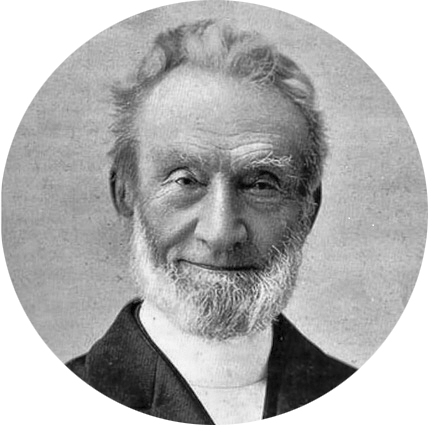
In 1836, George Muller, a missionary to Christian England determined that he would hold a theological experiment.  His theory is that God would provide for all of their needs without asking any human being, as long as they served the poor and asked only God through prayer.  So he established an orphanage in his house, and began to pray for all their needs, keeping a close account of their needs, whether in kind or financial, and also accounting for what they had received by only praying.  This experiment lasted for forty years during which time he built five homes at the cost of 100,000 pounds each, and he received donations worth more than a million pounds.  Not a single child went hungry, nor the workers at his facilities.  His account books were always open to the public and they are still available today.  His theory was proven by his own personal study and sacrifice.

Even so, I have made my own experiments in theology, testing a number of principles of Jesus by living them out in circumstances that one would conclude otherwise.  I can show that these principles worked for me, although not in as great of detail as Mr. Muller.  My experiments I will detail in a number of blog posts with long term effects and anecdotes.

But, in a sense, this is the relationship with God for each one of us.  God works a little different with each one of us, teaching us different principles.  In a sense, in each of our relationships there is a theory, a test and a conclusion.  We think that someone is a certain way, over time we observe and interact and then determine if that person really is the way we thought they were.  The same with God.  We think He’s a certain way and will interact with us a certain way, but in that, time will tell, and we will know only that which we test.   There are many experiments that I have not done, but others have.   And there are theories I have tested and others have not. 


I can’t tell you that God is exactly this way or that and you can’t tell that to me.  All we can say is how God interacted with us, and how he interacted with others.  But hopefully we can encourage each other in our relationship with Him, to take chances with God and step out where we might not do ourselves.