Friday, July 26, 2013

Support for the Abusive Parent?

Walking through a wealthy neighborhood, I noted a number of American flags and patriotic slogans.  I often recoil from such open displays, but this time I realized that they were absolutely right to display their undying support for their nation.

After all, their nation really made them what they are.  They have the nice house, the nice cars, the good food, the health insurance-- the basis of a comfortable, good life.  And how did they get this good life?  Well, they worked for it, I assume.  But most importantly, the system worked for their work.  The system of the nation supported them and granted them wealth and comfort.

It is like Socrates said, speaking as his state, Athens:

...after having brought you into the world, and nurtured and educated you, and given you and every other citizen a share in every good that we had to give, we further proclaim and give the right to every Athenian, that if he does not like us when he has come of age and has seen the ways of the city, and made our acquaintance, he may go where he pleases and take his goods with him; and none of us laws will forbid him or interfere with him. Any of you who does not like us and the city, and who wants to go to a colony or to any other city, may go where he likes, and take his goods with him. But he who has experience of the manner in which we order justice and administer the State, and still remains, has entered into an implied contract that he will do as we command him.  (Crito)

So the state, the nation, grants so much, and the least we can give back to the state is our support, our obedience and our taxes.  That makes sense.

But what if the state doesn't support you?  What if it has been disinterested in you?  What if, instead of providing an education that makes you succeed, it provides an education that teaches you how to be a slave-wage employee?  What if instead of giving you a route to comfort, it provides you a route to poverty or distress?  What if it takes away your ability to have health care?  What if the state, instead of treating you like the full citizen you are, treats you like a criminal?

Well, then, patriotism doesn't really make sense in that situation.  Because the state, then, isn't acting like a nurturing parent, but like an abusive parent.

But what can you do?  Most of us don't have the ability to move somewhere else, because there is a certain level of worldly success needed to immigrate in today's society.

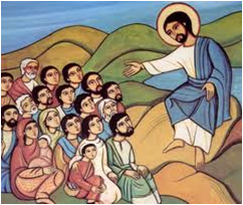
This is where Jesus comes in.

Perhaps some of you are saying, "You've got to be kidding, Steve!  You're going to pull in some spiritual mumbo-jumbo?"  Well, maybe, but this is the whole point of the gospel.

The gospel begins with us being oppressed by an unjust state, whether as slaves in Egypt or as outcasts from our own theocracy.  And Jesus comes to us and says, "Hey, I'm starting my own nation.  It's called the kingdom of God.  It doesn't have the same rules as the nation you live in now.  And if you love God, you will be completely accepted in this nation.  And if you work hard in love of others, I guarantee you great success."

No racial divide, no poverty divide, no oppressive corporations, no evil government-- just a bunch of people who agree to be ruled by a king who loved them so much that he died for them.  Everyone gets what they need, everyone gets mercy and the poor gets justice.

So I'm not very patriotic about the United States.  Because as a mother, she plays favorites.  I'm very patriotic about the Kingdom of God, though.  Because everyone is welcome, and all this nation wants us to do is to love each other.  That's awesome. 

Saturday, July 20, 2013

A Biblical Guide to Privilege

I've been thinking about the controversy stirred up by the acquittal of George Zimmerman this last week.  I don't care much about George Zimmerman nor the court system, but I am interested in how we respond to the discussion of race and privilege.

Let's face it, we live in a white culture in which whiteness, maleness, and a certain income level is the "norm" and everyone else has to prove themselves in order to make that norm.  If we can't prove ourselves, then we are suspect and worthy of fear and oppression.

The funny thing is how many people deny this is true.

Let's face it, if you are reading this blog, the likelihood is that you are privileged in some area.  And the Bible has something to say to you.

Who are the privileged?
Those who have greater resources than anyone around them, whether through birth or fate or labor. Resources could include opportunities in wealth, education, prestige, relationship, and esteem through race, sex, social class, or any other level of status as determined by society. We should remember that we are all privileged in some way, so these commands apply to all of us in some areas of our lives. If we live in the United States, even if we are among the poorest who live here, we are most likely privileged above the majority of the rest of the world.

If you have two coats and another has none, you are privileged.
If you are able to be politically active and another is not, you are privileged.
If you have supportive relationships and another does not, you are privileged.
If you have a job and another does not, you are privileged.
If you have excess time or money and another does not, you are privileged.
If you have peace when you go to sleep at night and another does not, you are privileged.
If you have clean drinking water and another does not, you are privileged.
If you never have to worry about racial injustice and another does, you are privileged.
If you belong to the majority religion of your culture or nation, you are privileged.

We are not all privileged in the same way.  For some, an area of privilege (for example, education) can erase much (not all) of the oppression an area of lowliness (such as race) gives us.   On the other hand, an area of oppression (such as poverty) could erase much benefit we have obtained some an area of privilege (such as a privileged race or sex).

But if we have an income above the poverty line in the U.S., or are educated, or have a solid social network then we have at least some areas of privilege and we need to pay attention to these following teachings of the Bible:

a. Do not boast about your privilege.
“Thus says the LORD, "Let not a wise man boast of his wisdom, and let not the mighty man boast of his might, let not a rich man boast of his riches; but let him who boasts boast of this, that he understands and knows Me, that I am the LORD who exercises lovingkindness, justice and righteousness on earth; for I delight in these things," declares the LORD.” Jeremiah 9:23-24

b. Do not use your privilege for primarily your own benefit.
But woe to you who are rich, for you are receiving your comfort in full. Woe to you who are well-fed now, for you shall be hungry. Woe to you who laugh now, for you shall mourn and weep. Woe to you when all men speak well of you, for their fathers used to treat the false prophets in the same way.Luke 6:24-26
"The land of a rich man was very productive. And he began reasoning to himself, saying, 'What shall I do, since I have no place to store my crops?' Then he said, 'This is what I will do: I will tear down my barns and build larger ones, and there I will store all my grain and my goods. And I will say to my soul, "Soul, you have many goods laid up for many years to come; take your ease, eat, drink and be merry."' But God said to him, 'You fool! This very night your soul is required of you; and now who will own what you have prepared?' So is the man who stores up treasure for himself, and is not rich toward God." Luke 12:16-21

c. Use what privilege and resources you have to benefit the oppressed.
We know love by this, that He laid down His life for us; and we ought to lay down our lives for the brethren. But whoever has the world's goods, and sees his brother in need and closes his heart against him, how does the love of God abide in him? Little children, let us not love with word or with tongue, but in deed and truth. I John 3:16-18

d. Surrender your material resources to benefit those who are needy.
Sell your possessions and give to charity; make yourselves money belts which do not wear out, an unfailing treasure in heaven, where no thief comes near nor moth destroys. For where your treasure is, there your heart will be also. Luke 12:33-34

e. Set aside some of your privilege, so that God might raise you up.
When you are invited by someone to a wedding feast, do not take the place of honor, for someone more distinguished than you may have been invited by him, and he who invited you both will come and say to you, 'Give your place to this man,' and then in disgrace you proceed to occupy the last place. But when you are invited, go and recline at the last place, so that when the one who has invited you comes, he may say to you, 'Friend, move up higher'; then you will have honor in the sight of all who are at the table with you. For everyone who exalts himself will be humbled, and he who humbles himself will be exalted." Luke 14:8-11

f. Use your privilege to make friends with the oppressed, God’s chosen, so that they might welcome you into God’s dwelling.
And I say to you, make friends for yourselves by means of the wealth of unrighteousness, so that when it fails, they will receive you into the eternal dwellings. Luke 16:9

g. Welcome the oppressed into the benefits of your privilege.
And He also went on to say to the one who had invited Him, "When you give a luncheon or a dinner, do not invite your friends or your brothers or your relatives or rich neighbors, otherwise they may also invite you in return and that will be your repayment. But when you give a reception, invite the poor, the crippled, the lame, the blind, and you will be blessed, since they do not have the means to repay you; for you will be repaid at the resurrection of the righteous." Luke 14:12-14

h. Use your privilege to create a context of justice for the needy and oppressed.
Vindicate the weak and fatherless; Do justice to the afflicted and destitute. Rescue the weak and needy; Deliver them out of the hand of the wicked. Psalm 82:3-4

i. Pay your workers their full wages on time.
Behold, the pay of the laborers who mowed your fields, and which has been withheld by you, cries out against you; and the outcry of those who did the harvesting has reached the ears of the Lord of Sabaoth. James 5:4

j. Do not cause those who are under your authority to be angry, but be at peace with all in as much as you are able.
Fathers, do not provoke your children to anger. Ephesians 6:4

k. Cheat no one, nor work for a company that cheats anyone of their wages. If you do cheat anyone of their meager resources, pay them back four times as much.
Do not defraud. Mark 10:19
Zaccheus stopped and said to the Lord, "Behold, Lord, half of my possessions I will give to the poor, and if I have defrauded anyone of anything, I will give back four times as much." And Jesus said to him, "Today salvation has come to this house, because he, too, is a son of Abraham. Luke 19:8-9

l. Repent of your sins—especially your misuse of your privilege— with tears.
Come now, you rich, weep and howl for your miseries which are coming upon you. Your riches have rotted and your garments have become moth-eaten. Your gold and your silver have rusted; and their rust will be a witness against you and will consume your flesh like fire. It is in the last days that you have stored up your treasure! James 5:1-3

m. Welcome the opportunity to be oppressed yourself, for then you will be of God’s people.
Blessed are you when people insult you and persecute you, and falsely say all kinds of evil against you because of Me. Rejoice and be glad, for your reward in heaven is great; for in the same way they persecuted the prophets who were before you. Matthew 5:11-12

n. Don’t worry if you become needy through obedience to God’s commands, for God will provide for all your needs if you seek His righteousness first.
Do not worry about your life, as to what you will eat; nor for your body, as to what you will put on. For life is more than food, and the body more than clothing…. And which of you by worrying can add a single hour to his life's span? If then you cannot do even a very little thing, why do you worry about other matters? But seek His kingdom, and these things will be added to you. Luke 12:22-23, 25-26, 31

o. If you have taken advantage of all of your privilege for your own benefit, then God will give you a second life in order to punish you.
And a poor man named Lazarus was laid at his gate, covered with sores, and longing to be fed with the crumbs which were falling from the rich man's table; besides, even the dogs were coming and licking his sores. Now the poor man died and was carried away by the angels to Abraham's bosom; and the rich man also died and was buried. In Hades he lifted up his eyes, being in torment, and saw Abraham far away and Lazarus in his bosom. And he cried out and said, 'Father Abraham, have mercy on me, and send Lazarus so that he may dip the tip of his finger in water and cool off my tongue, for I am in agony in this flame.' But Abraham said, 'Child, remember that during your life you received your good things, and likewise Lazarus bad things; but now he is being comforted here, and you are in agony.’ Luke 16:20-25

Tuesday, July 16, 2013

The Difference Between Death and Dying

This post is part of a MennoNerds Synchro-Blog on the topic of Death, Loss, Pain and Grief, July 14-30, 2013. Check out our page on MennoNerds.com to see all the other posts in this series.

Four weeks ago, Mike-- our handyman at Anawim and good friend-- fell and hit his head on a sidewalk near our house.  He happened to fall in front of the police, who saw he wasn't getting up, so they picked him up and took him to the hospital. It turned out he had blood on his brain, which caused a severe memory lapse. Health-wise, he wasn't doing well, so the kept him in ICU.

Mike also drank daily, and being without alcohol put him into shock.  They sedated him in the hospital, but his body wasn't really equipped to deal with such a sudden change.  Complications arose, and his heart stopped, with no oxygen going to his brain for a short period of time.  He remained sedated for a week, and when he came out, he didn't respond to anyone.  He is alive, but he isn't there.  Today they will take out his ventilator tube and he will die.

I thought I was prepared for this, but I'm really not.  I could see that he wasn't doing well, for over a year.  I knew that he was going to pass on, one of these days.  But now that it's happening, I'm really not sure what to do or say, especially to his daughter, Sarah, who hasn't seen him for 15 years, who now is making life and death decisions for her father.  Or to his grandsons whom he has never seen, never met.

If he had just dropped dead, or not woken up one day, I was ready for that.  But death doesn't seem to work that way anymore.  I've had dozens of my friends die, but usually it is sudden, or they make choices to (basically) end their lives by their actions.  Mike wasn't like that, neither was Rick who was in my house last year.  And death isn't sudden, but a long, drawn out process.  When we have hope and very, very gradually, that hope is dashed until we realize that they will linger, as different people, and just fade away, as completely different people than who they were the rest of their lives.

Dying is okay, really.  It is just a passage to the next phase of our lives.  The Psalmist says, "Precious in the sight of the Lord is the death of his godly ones."  Hezekiah didn't understand this when he begged the Lord for longer to live, that he was too young to die.  I have a sense of loss for those who die, but no real sorrow.

The problem in our lives is not dying, but Death.  Death n the Bible isn't the sister of The Sandman, who shows up to lead us to the next life.  Nor does Death wear a robe and carry a scythe.  Rather, Death is the name of the power that makes our life a living hell.

"My strength is dried up like a potsherd, And my tongue cleaves to my jaws; And You lay me in the dust of death." (Psalm 22:15)

"You have crushed us in a place of jackals And covered us with the shadow of death." (Psalm 44:19)

"The cords of death encompassed me And the terrors of Sheol came upon me; I found distress and sorrow." (Psalm 116:3)

Death is not the same as dying.  It is the living hell that we dwell in, a life of sorrow and misery.  Death is the famine, the war that destroys, the debilitating illness, the runaway teen.  Death is homelessness, imprisonment, abortion, isolation.  Death is not Michael Meyers of the Halloween films, but the everyday horrors that we try to live with and ignore.

Death is separation from family.  Death is going to the hospital, and they make you worse instead of better.  Death is senility, living without the power to think, living with memories instead of those who are in front of you. Death is having to look over your shoulder because you are of the wrong race, the wrong social class.

Dying is, or can be, our friend.  It is the passage to the rest that we so desperately need.

Death is our enemy.  It is he who tears our lives to pieces.  Who makes us so desperate for rest.  Death is lying in bed, doing nothing, but there is no peace or comfort.  Rest is beyond our grasp, no matter how much we sleep.

It was once said, "I'd love to have eternal life, if only I didn't have to die first."  But dying is the glory of the gospel.  It is the passage to our hope, our rest.  The ultimate goal of the gospel is the defeat of Death.  "The final enemy to be abolished is Death."

Honestly, I can't wait.


Saturday, July 13, 2013

An Apology from American Christians to Muslims

We are American Christians, whom some Muslims claim to be an enemy of submission to God.  And they have a right to, in some ways.

We have lived in the United States, but we recognize that our country of birth has done evil against you, and against all of Islam.  The United States has destroyed the rule of at least three Islamic states, and has attempted to put in their places governments that have no desire to do the will of God.  Some Americans have tortured Muslims for little or no cause, in opposition to their very own laws.  Some Americans have killed Muslims for little or no cause.  Many American Christians have blamed all of Islam for the evil of a few, although most Muslims would not agree with the death of innocents, and the military laws of Abu Bakr is opposed to such actions.  Some, perhaps most, American Christians characterize Islam as a religion of evil, bent on violence and torture, when Islam is simply the attempt to be fully submitted to God in word and deed.

However, Jesus is not like that.

All Christians claim to honor Jesus (whom the Qur’an calls Isa) as their teacher, prophet, Messiah and example.  And yet the actions of these Christians do not reflect the life or teaching of Jesus.  When Jesus was attacked by his enemies, he submitted to their torture and did not return torture to them.  Jesus told his people to do good to those who hate them and to love their enemies.  Jesus taught us to rely on God for His vengeance, and that we could depend on His justice. 

Most High God, Holy and Beneficent, we ask that you would have mercy on us for our sin.  We ask that you would make us like our Master and Teacher, Jesus, able to follow his way.  We pray that we would be more attentive to his teachings.

Our Muslim friends, we have failed in many ways.  We did not rebuke those who did evil in the name of Jesus.  We did not pray for the Muslim peoples of the world, asking for God’s help for them.  We did not love you as Jesus told us to.  

We oppose those who call themselves “followers of Jesus”, but kill and destroy and torture.  We separate ourselves from those who proclaim the God of Jesus and also declare orders to oppress the innocent.  We denounce the false prophets who announce that Muslims are killed rightly or that no son of Ishmael will stand right before God. 

Most High God, Merciful and Mighty, forgive us for our sins.  Forgive us for not acting and speaking like Jesus.  We have sinned before you and ask for a way for us to stand before you pure.

Even as many Muslims teach, Jesus himself declared that he would come to judge his people.  He said that when he comes, he will not accept everyone who call themselves “Christian” or who call him “Lord.”  Rather, he said that he will judge his people by what they do--  he will look at his people and if they have chosen not to obey his commands, given by God, then he will declare before God, “I never knew you.”  We live in this fear, both for ourselves and for our brothers.

Most High God, we do not want to see our brothers hated by Jesus.  We do not want to see them destroyed.  And so we ask that You would help them change their ways.  We pray that You would teach them to stop killing and hating Muslims, but to treat them as friends. 

May you be blessed and may the face of God shine upon you and grant you peace… yes, even peace from the hands of those who stand beside us and claim to be of Jesus.  We ask that you forgive us, and please have mercy upon us, even as God has mercy on us all.  May we all agree to live by this word: "Do not return evil for evil, but overcome evil with good."  May God help us all to do this.


If you are an American Christian and you agree with this, please post "Amen"

I welcome comments from Muslims as well. 

Thursday, July 11, 2013

Who I Seek To Be


Who I seek to be with my family, my church, my friends, my enemies and strangers in need:

Always loving, never mean spirited.
Always giving, never expecting.
Always gentle, never in a rage.
Always faithful, never careless.
Always humble, never self-seeking.
Always kind, never spiteful.
Always helpful, never apathetic.
Always Jesus, never the Accuser.

Father, may you help me through your Holy Spirit to meet these goals.  May the Peacemaker always dwell in me and act through me. 

Sunday, July 7, 2013

Bad Preacher! Bad!

In 1973 a group of Seminary students in Princeton Divinity School were given the text of The Good Samaritan to preach on. In case you didn't know, that's the story Jesus told about a guy who was beat up, lying on the road and a couple religious leaders passed him by, while a member of a cult stopped and helped, and Jesus concludes, "Go and do likewise."

What these students didn't know is that they were part of an experiment.  Oh, you sneaky social psychologists!

Each student was given a different day to preach.  Half of them were told in the last minute, just before they were to give their sermon, that the classroom changed, so they had to rush to the class.

But all of them had to pass by a person, laying by their path, clearly sick or injured (this was a fake sick person, but necessary for the experiment).

Without regard to their religious preference, 63% of those people preaching on the Good Samaritan who had plenty of time to get there stopped to help the sick person.

But of those who were in a rush to preach their sermon, only 10% stopped by to help.

What do we learn?  Two things:

1. Often we don't help people because we are too busy.  If we are in such a hurry to do our small tasks, we won't stop to do the more important matters, like helping someone in need.  How many times have we passed someone who needed our help because we had "more pressing matters"?

2. Studying and preaching the Bible means nothing unless we intend to do something about it.  If we don't love, no matter how much we know about the Bible, we are knowing it wrong.


Sunday, June 30, 2013

Jesus' Moral Teaching

This post is kinda technical.  It's a list, a condensed summary of all that Jesus taught about morality.

For a non-Christian, this list is maybe an interesting intellectual exercise.  For a denominational Christian, it may be unnecessary to go over an area that the church presents for our own good, and with greater detail.  But for a Jesus follower, this list is essential, a basic tool of our lives, that we return to again and again.  When the Spirit is working in my life, I find myself resembling this lifestyle, and as I grow distant from God, I struggle with this way of life.

This is the shalom that Jesus leads us to.

A. The Basics
Jesus basically summarized the ten commandments, but he also applied them in specific ways.
Don’t murder

Don’t steal

Don’t defraud—
This means not lying in court or trying to cheat someone in business.

Don’t commit adultery—Jesus described this as not cheating on your spouse, not having sex with someone else’s spouse—even if they are divorced—and not desiring that someone else’s spouse was your own.

Honor your parents—Jesus described this as giving respect for your parents and providing for them in their old age.

B. Loving God
“No one can serve two masters”—This command also comes from the first two of the ten commandments. Jesus doesn’t want us serving other gods, nor does he want us to worship images as God. The main issue that Jesus spoke of in this regard was wealth. He considered wealth, money and possessions to be another god that demands service. There are certainly other gods that we can serve instead of God as well, such as sex, drugs, alcohol, or television/movies.

“The Lord’s name in vain”—Part of respecting God, Jesus says, is using His name carefully. So we do not use God’s name in cursing, falsehood or broken promises.

“Pray this way”—Jesus told us that we need to pray on a regular basis. When we pray, we use the Lord’s prayer as a model. Also, we need to pray for the Holy Spirit. Another thing that Jesus would often do when he prayed is to listen to God and see if he has anything to say to us.

“Clean the inside of cup”—To be right before God, Jesus says, we have to have our intentions and motivations pure, not just our actions. Even the smallest of actions display our true intention, and that is what we will be judged on. This is why we pray for the Holy Spirit, to clean our inner thoughts.

“Don’t be as the hypocrites”—Jesus wants us to take care when we worship or serve God that we are doing it for Him and not for other people. Jesus said that it would be good if we did some of our religious deeds in secret, so no one would know else would know we are doing them.

Porneia— As a part of our purity before God, Jesus wants us to not participate in sexual immorality. By this Jesus meant not being involved in: sex outside of marriage, homosexuality, pornography, or incest.

“I desire mercy, not sacrifice.”—Jesus wants us to focus on two things—what God says and helping people. But he doesn’t want our added traditions or commands—our religion—to in any way harm others or to stand against God’s commands. This means, for instance, that we don’t use the Bible to destroy others, emotionally.

“Faith the size of a mustard seed”—Jesus wants us to recognize that God can do anything He wants to—and that He will respond in love to our prayers. This means sometimes that we need to step out in faith to do what God wants us to do, even if it seems crazy to those who don’t trust in God.

“Seek first the kingdom”—Jesus wants us to do work for God, expecting no wage. There are different kinds of work Jesus affirmed—evangelism, giving to the poor, prayer, teaching Scripture, healing the sick and more. Also, Jesus tells us to pray that God would call more workers.

C. Love your neighbor
“Do Unto Others”-- Treat others as we would have them treat us. We want to be respected, communicated with and supported—so, Jesus says, we do the same to others.

“Whoever is angry”—Jesus told us not to act in hostility against others, including insulting them or harming them in revenge.

“Look of lust”—Jesus told us that our sexual purity must include even the smallest actions such as looking at someone with lust.

“Certificate of divorce”—Jesus tells us that the only thing that breaks a marriage is adultery or divorce. But to divorce and get remarried is adultery, and a forced divorce could cause great harm.

“Let your Yes be Yes”—Jesus said that if we make a promise, we must keep it, even if it’s inconvenient. To do less than keep our word, Jesus says, is of Satan.

“Love your enemies”—Rather than getting revenge, Jesus says that we are to do good to those who do evil to us. We are always to think of how to best benefit others in all circumstances.

“Be reconciled”—If we have done anything wrong to others, we should make our wrongs right by going to the person we have wronged.

“Judge not lest you be judged”-- Don’t judge without mercy. Always assume the best and give people a chance to make their wrongs right.

“Forgive and you will be forgiven”—Jesus says that if anyone tries to make their wrongs right, we must take them back into relationship. We cannot keep people at arm’s length because we don’t like something they’ve apologized for.

“Give to the poor” – Jesus says that if we see anyone in need, we should do what we can to help them.

D. Church Morality
“Love one another”—Jesus said that in the church we are all to look out for each other, caring for each other as we would family members.

“Be at peace”—Jesus doesn’t want us to have arguments about minor matters. Nor are we to divide ourselves from others in the church, except for continuing sin.

“Rebuke him privately”—Jesus told the church to correct anyone in the church not living up to Jesus’ morality. This correction is to be done gently, with the intention of restoring the sinner.

“Well done, good and faithful servant”—Jesus said that everyone in the church needs to do work for the kingdom of God, with God as our employer and rewarder.

“Wash each other’s feet”—Jesus wants us to be hospitable to others who follow Jesus—including feeding each other, inviting others to our homes, praying for each other, and visiting each other when we are sick or in prison.

“I came to seek the lost”—The church of Jesus is to constantly be open to those who have failed God and wants to come back to Him.

“Preach the gospel”—Jesus tells the church that we—especially our leaders—are to proclaim God’s kingdom, the death and resurrection of Jesus and the forgiveness of sins.

“Heal the sick, cast out demons”—The church of Jesus, especially the leaders of the church, are to pray for others to give them spiritual freedom from sickness and evil spirits.

“Beware of false teachers”—The church is not to put leaders over ourselves who teach something apart from what Jesus taught. Nor are we to place people who are disobedient to Jesus over us as leaders.

“The last shall be first”—The leaders of Jesus people are there to serve all the others, to be humble and merciful.

“Freely received, freely give”—The teaching and the ministry that Jesus gave the church to give to others is to be free—without cost.

“The worker is worthy of his hire”—The church of Jesus is to take care of their leaders, providing for their basic needs.

E. Humility and Sacrifice
“The humble will be exalted”—Jesus says that we are to allow ourselves to be humiliated, disrespected and put down. If we do this, God will honor us and raise us up.

“Invite the poor”—We are to give honor to the lowly, poor and outcast, who cannot repay us, so God will give us honor.

“Sell your possessions”—Jesus wants us to not just give to the poor when it is convenient, but to sacrifice our own personal wealth for the poor.

“Turn the other cheek”—We are to submit to authorities, even if they do us harm. The only time we do not submit is if they tell us to disobey Jesus.

“Take up the cross”—Jesus wants our lives to be surrendered for the sake of others and God. Doing minor acts of mercy or devotion is not enough—we must surrender our whole lives, even literally if necessary.

“Rejoice and be glad”—Jesus said that if we do get persecuted, hated, isolated, or rejected because of following his way, speaking the gospel or living for Jesus, then we shouldn’t be depressed, but happy. For God will look at our faithfulness and reward us greater than the persecutions we suffered.


How did I come up with this list?
I wrote out by hand all of the sayings of Jesus, creating an index of Jesus' main themes.  Then I pulled out from this index the moral teachings and summarized them.  This list was distilled even more over years of teaching and discussion with other Jesus' followers.  This list covers Jesus' commands in the gospels only.

I am sure there are many who disagree with my findings.  I would appreciate any polite comments and critiques.