Showing posts with label Prejudice. Show all posts

Tuesday, December 9, 2014

Driven by Fear

There are certain fears that we should respect.  Fear of cliffs.  Fear of snapping dogs.  Fear of a person who is threatening to kill us.   But when we fear whole groups of people—Blacks, Muslims, the homeless—then we no longer have a proper fear, but rather anxiety.  We are fearful of that which we do not know will harm us. 

Our most natural responses to fear is to either fight or run.  But they are not the only responses possible for human beings.  We might also discuss or argue, threaten or remain passive, we might listen and understand, we might control or establish peace.  When we are authorities, we have even more options than others to that which we fear.  We can order, we can encourage, we can bring in others to help us, we can meet needs. 

I can’t tell people what to fear or not fear.  I can’t tell people what they should be anxious about or not.  But I do know from my own experience that I can control my fear and choose to be rational.  

When I was a child I was attacked by a dog in front of my house.  Since then, barking dogs set an immediate fear response in me.  I can’t control the shot of fear that goes through my brain, but I can recognize in the second moment whether the dog is really a threat or not, and whether someone is handling their dog appropriately.   One time I was out on a trail and an unleased dog was barking at me.  I was wildly afraid of that dog, and the owners telling me that the dog was nice did nothing to ease my mind because the dog clearly did not like me.  I had options.  I could have kicked the dog.  I could have yelled at the owners for their irresponsibility.  I could have decided never to go out on that trail again.  What I chose to do is to firmly ask the owners to keep their dog away from me, and to remind them that the dog should be on a leash.

If a dog is on my property and getting out of control, I have more options.  I could say that no dogs are allowed on the property; I could just ignore the dogs and let them do what they want; or I can get with dog owners and establish a policy that works for everyone.  Because that last was the peaceful solution, allowing ministry to be done for everyone, that’s what we did.  We want to choose options that are best for everyone, despite our fears or anxieties.

As followers of Jesus, we should not allow our fears or anxieties control us.  Rather, by the direction and power of the Holy Spirit, we should set aside our fears in order to live with everyone in love and peace.  If we are directed by our fears, it will spell disaster for everyone.

Yesterday, I was in a crowded parking lot.  An older lady was having trouble making a left turn and ended up having to back up and start again.  Another lady was waiting for her to move, and when she saw the first lady back up, she became nervous and backed her car up as well, even though the first lady wasn’t going to get close to her vehicle.  That’s no problem, of course, being overly cautious and taking care to avoid an accident that wasn’t going to happen, right?  Well, it would have been fine, except that there was a group of three children walking behind the second vehicle, and the second lady was fearful enough of what was happening in front of her, that she didn’t notice the children that she was running into.

When we have power, like a car, we might think of ourselves as a weak, frail human being, but every movement we make affects others.  If we are careless, or respond out of our own deep need or fears, we can harm the weak and the innocent.   When we have power, every move we make is powerful.  And if we use our power in response to fear, rather than a drive to act in peace for everyone around us, then we will be destroyers of peace, and destroyers of lives.


When we use power, we must seek the benefit of all, not just a few.  And if we use power primarily for our own survival, or lifestyle or in response to our fears, then we can cause destruction to many.  It doesn’t matter if that power is money or weapons or authority.  We have a responsibility to everyone around us, especially those weaker than us, to use our power for peace, not our personal protection.

Thursday, December 4, 2014

How Do We End Prejudice in our Society?

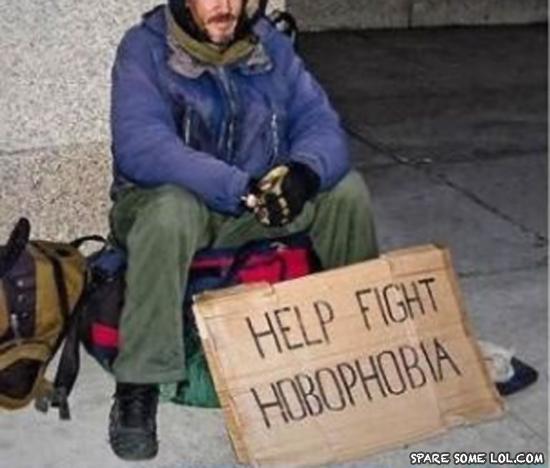
Every prejudice in human existence—racism, classism, sexism, homophobia, Islamophobia, hobophobia and any other phobia or –ism you wish to name—will not end when we see all people the same as us.  To see all people the same is to grant power to those who already have power, to maintain the current prejudices.  To claim racism and classism doesn’t exist is to say that the status quo of killings and people sleeping in the snow and rape and war is an acceptable cost for our society and culture.  But our society is deeply broken. 

So how do we change?  I'll talk about a couple of ways. There are many more, but these are two that seem anti-intuitive in our society.

First, we must stop seeing people as just as good as us.  We must not look at the African American and say that he is as good as a white man.  Rather, we need to see the black man with all of his cultural differences and irritating habits and recognize that he is better for being black.  In many ways, he is better than a white man, and we need to admire those qualities and thank God that he isn’t the same as a white man and so give him unique opportunities that whites couldn’t get because he’s better than that.  We need to look at a woman and give her opportunities that men couldn’t get because she’s better than he is.  We need to look at the homeless and the Latino and the transgender and the mentally ill and rather than forcing them to fit in as “normal” we need to see their uniqueness and recognize that they deserve an equal place because they are of unique cultures and see things and respond to things differently than we.   We need to stop demanding that these “minority” cultures act “normal” in order to get a seat at the decision-making table.  In a multi-cultural society we need to hear from all cultures to make the society work.  This does not mean fitting each cultural group into a set role—our society tried that and it didn’t work.  Rather, an international corporation needs to hire a black CEO because he is  black.  A church needs to ordain a woman because she is a woman.  A city council needs to invite a homeless advocate to vote because she is homeless.  We allow our children to marry people of other races. Not because they have learned to be “white enough” or “male enough” or “middle-class enough” to be heard.

Second, to end the prejudice of our society, each minority culture and community need to make their own decisions about their communities.  A majority culture leader, or group of leaders, should not be deciding issues for a minority community.  A mayor in the pocket of the business community should not be making decisions for the homeless community.  Yes, the business community’s concerns should be heard and worked with, but they cannot be the deciding factor in a city’s actions to the homeless.  Rather, the leaders of the homeless community should be the loudest voice as to what happens to the homeless community.  The reason for this is because any “solution” handed to a community will never be successful unless they have  bought into it themselves.  And they will never buy into it unless they have the loudest voice in creating it.  Changes in community must come from the community, not from a culture that does not understand the community.  The Hispanic community should be allowed to make their own choices for their community.  Whites shouldn’t be making decisions for them, or for the Black community, as if they “know what’s best for them.”   They don’t.  The rich don’t know what’s best for the poor.  Men can’t decide what’s best for women, nor the other way around.  Groups should be allowed to speak for themselves and to determine their community’s destiny.

We live in a society where all these cultures should be equal.  This means equal opportunities, equal rights, and equal power.  Unfortunately, it is human nature to not give power or opportunity if it means that one’s own person or culture loses opportunity or power.  This is where Christ’s call to humility comes in.  Humility isn’t thinking less of oneself, according to Jesus.  Rather, it is taking a lower station than one deserves.  It is time for those of us who naturally can take a powerful place, whose voices are naturally heard, and give our place to others.  Once we have gained the status and power of this world, it is time for us to step down and surrender it, so that others can have it.  No, they will not use power in the way we thing is best.  In our opinion, they might screw everything up.  But it will be their opportunity, their choices and our society, in the end, will be better for it.

Let us who have control learn to lower ourselves to give others the opportunities we had.