Friday, May 23, 2014

Membership Is Not Cheap: Classism in the Church


The Third World is alive and well within North America.  The poor are in the apartments with black mold; they are in the food stamp offices and being run out from under bridges.   Difficulty and disease and shame mark their lives; they’re stigmatized like lepers.  Jesus is among these people; living with them, encouraging them and doing miracles among them.

But you’d never know this by looking at the churches of North America.

A few churches cater to the upper class, but the massive majority of churches throughout North America see themselves as ministering to “communities”, by which they mean communities of the middle class.  The poor are left out of the equation of the normal, everyday life of the church.  And because of this, the church itself is poorer.  Below are four areas in which the poor are marginalized in most modern churches:

1.     Cultural uniqueness
The third world of North America is unique, and has unique features.  For one thing, its inhabitants tend to use foul language, even the most religious of them.  More poor people smoke than middle class people, and they are also more likely to have obvious addiction issues.  Poor people tend to be less educated and focus more on survival.  But, paradoxically, the poor are more likely to give their last dollar to someone else in need.  Poor folks are more likely to rely on God instead of a system or even their own work.   These are unique cultural characteristics, not right or wrong, just different.  There are weaknesses and strengths in this culture, just as there are in the cultures of the middle or upper classes (or, indeed, in any culture).

The cultural uniqueness of being poor isn’t celebrated, but preached against in the everyday church.  Not that every facet of poor culture should be celebrated; but the same is true of the middle and upper class cultures.  When we praise the middle and upper class trait of making and following a reasonable budget, for example, why can we not also praise the lower class trait of sacrificial generosity?   The church cannot be a culture-free environment, but in our middle-class model of church, where can the poor worship in a manner cohesive to their culture?

2.       Stamped with otherness
This does not mean that the poor do not go to church.  They don’t go as frequently, but since many know that participation with God is participation in the church (which is, all too frequently, not really Jesus’ body, but only a form of Christendom), they will go.  But when they do, they are considered outliers.  A church made up of the poor is traditionally called a “mission” because the poor aren’t naturally considered a part of a church.  Instead, they are often considered “converts” when they regularly attend a church, because after all, if they were actually spiritual they’d be financially self-sufficient, right?  The poor aren’t fully “sanctified” until they give up the ways of the poverty class—smoking, drinking, “low” language—even though these requirements aren’t made by Jesus.  Even those things (like the aforementioned generosity) which should be considered “good” are simply considered foolish or wasteful if one is not on solid financial ground.  Until the poor can afford to dress and use educated language like the rest of the church, they aren’t considered part of the norm.  Because of these church norms being shaped by middle class norms, the poor have developed a notion of individual spirituality, without a corporate component.  Because they don’t “fit” in the average church.

Even a church that is very oriented toward the poor participates in this hierarchy.   They are told they need to “go out and serve the poor”, because the poor aren’t a part of them, but a group that is outside of them.  And rather than welcoming them and their insights, often reserved for the middle class potential member, they are told to “serve” them out of pity or even guilt.  But this service is that of the haves to the have-nots, the higher to the lower.  The poor are not asked to participate in spiritual service, let alone lead it, in an average church context.

3.      Limited participation
The social activity of even the most open churches are based around many activities that the poor cannot attend; due to their poverty.  Of course, public worship, small groups, bible studies and potlucks are free to all who wish to come.  But those contexts are only the formal meetings of a community (although some small groups are an exception).  The real social connection with other members of a community, the support network, happens at informal gatherings.  These informal gatherings often happen in restaurants after worship, and at retreats and camps.  The youth have this same structure where some activities are free, but the activities where deeper connections happen cost money.   When the middle class take retreats and after-worship paid meals for granted, the poor feel separated and shamed because of their lack of participation.

4.      The Leadership Gap
Leadership in a church is reserved for the middle or even upper middle class.  Part of this has to do with practical considerations: the upper middle class has more leisure time and so they are able to participate in meetings, while the poor must spend time working to survive.  National or regional conferences are often expensive and require travel.   This creates a class-based leadership perspective, which cannot imagine the spiritual or physical needs of the poor, because few of them have ever been in that circumstance.


We Need the Poor
 In bringing up this issue to the moderator of MCUSA, I was told by him, “For those I’ve talked to, the poor don’t even want leadership, so why is this an issue?”  Of course the poor don’t want leadership.  The culture of church leadership is so foreign to them, that the idea of speaking out in a meeting with their very different perspective and language and communication styles scares them.  But that misses the point.  The point is, our churches need the poor, we need them to be equal partners and we need them in leadership.

We need them because the poor are an essential part of our church life—not as service projects, but as fully human people we need to interact with, to love and to learn from and to minister to and to receive ministry from.  

We need poor people in leadership because we want to meet the actual needs of the poor—not the needs we have imagined for them when we try to put ourselves in their place. We need the poor to be equal because Jesus is among the poor, living with the poor and, frankly, alive among the poor, more than in many of our churches. 

 If we are going to have Jesus in our church, we must have the poor, even though that disturbs our middle class “order”.   Accepting the poor as equals feels, to the middle class, chaotic.  And it often is chaotic, like any exchange of ideas.  But marginalizing the poor, as Christendom has done for centuries, is marginalizing Jesus.

“Did not God make the poor rich in faith and heirs of the kingdom which he promised to those who love Him?  But you have dishonored the poor…”  James 2:5-6

Sunday, May 11, 2014

Public Poverty

Public poverty is being ignored by all except those who notice the troubled—cops and bleeding hearts.  All else turn away or turn aside or patch their pity with a coin.  Public poverty is crying out for help and being told to shut up. It is a desperate plea to be normal, and the eventual surrender of this hope when normalcy is a dream of the past.  Public poverty is too much honesty, revealing one’s difficulty and  shame and others assume that you are lying; it is the heaping of scorn when you are desperate for a little kindness.
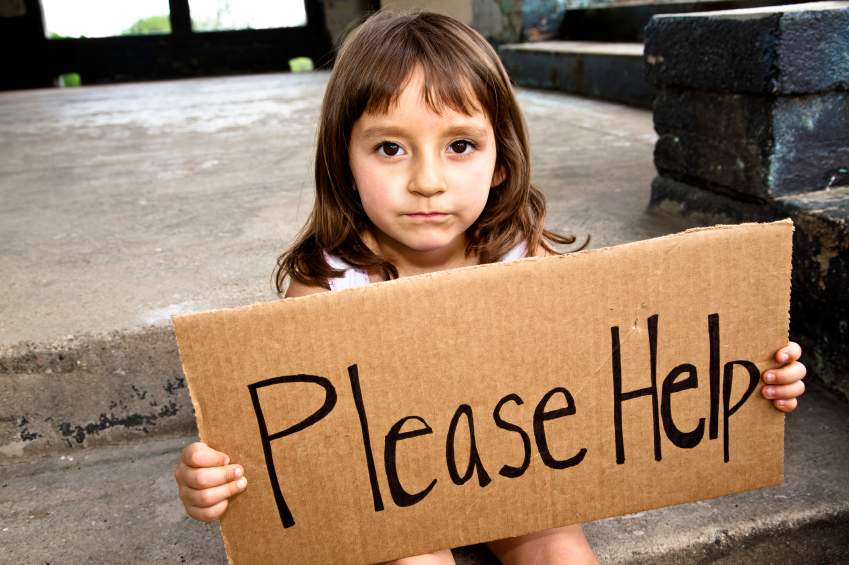
If only poverty were this cute...

Really, poverty is like sex, only not as fun.  Some revel in it and don’t care where it is displayed, but a majority of people are fine with it in private, but disgusted with it in public.  Like sex, poverty should never be mentioned in polite company, and the more details someone describes poverty in, the more offensive they become.  "Poverty should only be discussed in counselling sessions, with social workers or pastors, but please don’t publicly discuss how you can’t pay your bills, and please don’t display your poverty in a way that all of us can see it."

The homeless are the professionally poor, those who have no choice but to represent the public poor. The homeless are scorned and even hated because they represent all that is wrong with our communities.  They are the indications that our nation is not an economic success, no matter how much of a powerhouse we are on the international economic stage.  The homeless are the crazy uncle you want to keep in the closet, especially when there are guests, but that is especially when he appears, naked and saying something insane.   Just by their existence, the homeless make us uncomfortable.

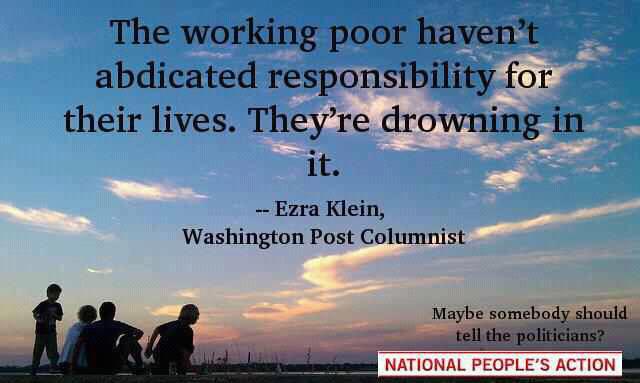
Would you please cover your poverty?
The real problem with homelessness is that it doesn’t know where to keep its place.  It appears right where you don’t want it to appear—around city hall, on freeway onramps, in public parks.  The public poor appear in the places where a city wants to showcase their friendliness or family nature.  Instead, they are revealed to be a hotbed of poverty and drunkenness.

But the public poor are simply doing what everyone else is doing, except on the street:  They are drinking a beer, they are laughing too loud with friends, they are asking for help.  They are desperately trying to forget about their miserable, mundane existence for only a moment.  They are trying to forget that the silence they experience daily, the turn of the head is scorn being poured upon them.  They are trying to erase the judgments that sentenced them to this miserable life, even the judgments that they put upon themselves.

Policy makers, in seeing the public poor as a serious social problem, do one of two equal errors.  First, they might force the public poor to be silent, to be out of sight.  For this, they create laws which make it illegal to be the public poor, or for them to be seen by the populace.  They might create a skid row, or at least move them out of the downtown area, out of sight, out of mind.  They might shuffle them into jails, as a housekeeper might sweep dust under a carpet.

But this is not a solution. For the more scorn and punishment policy makers apply to the poor, the more public poor there are.  This is because public scorn, public punishment is acceptable punishment, that which can be replicated and increased by the public citizenry.  That which is done in the public parks will eventually be repeated in homes and churches and elsewhere.  And the poor of a home is no longer cared for at home, but is moved to be homeless.  The poor of a church is no longer cared for at a church, but is seen as unacceptable anywhere.  If there is no place for the poor, the only place for them is the public areas.  And if the public areas are not acceptable, then the only place for the poor is no place.  Non-existence.

#22351, come in for your Compassion Treatment
The other solution for policy makers is to end poverty or end homelessness.  This means taking millions of public dollars and putting them into institutions for the poor.  In the past, it used to be missions to religionize the poor, as if their problem were a lack of religion.  Then they shelter the poor, stacking them like firewood, and herding them into cafeterias.  Now they want to eliminate the public poor by giving apartments or single-resident occupancies, so they can be poor in private.

The problem is that these solutions are too expensive for all the public poor, and the system of scorn will not allow them to be “rewarded” with a room without a kitchen with public money.  A different government, a different mayor and compassion dries up like a puddle in a drought.

The only real solution is equality.  Give the public poor a chance to determine what the solutions should be for themselves.  Yes, they will make mistakes, but we should give them that.  The only solution is to give the public poor the respect of a human being.  To look at them, to love them enough to smile and say “no”.  The only solution is to give them what they lack: a social network so they can solve their own problems.  Help them to see what opportunities exist and let them make their own choices.

Surprisingly, some may choose a life outside, without walls, without bills, without demands (or perhaps not so surprisingly).  They should be given a place to live in poverty, or to work their way out of poverty.  Some may choose education, some may choose a steady job (if one is offered) and some may choose reuniting with their family.  But if they are given respect and an opportunity to choose, choose they will.


What the public poor lack is opportunity of choice, and the respect to be offered a choice.  They are treated as dogs, as piles of garbage that should be cleaned up, as proto-criminals that will soon need to be arrested.  Instead, they should be treated as they are—citizens.  Treated as human beings who deserve to be heard just as much as we do.

Monday, May 5, 2014

Following Jesus: A Set of Lists

Jesus is my hero, my one and only, the guy in my life.
There are many others I love and exemplify:
Francis of Assisi
Dorothy Day
Jean Vanier
Martin Luther King, Jr.
Peter Waldo
Desmond Tutu
Keith Green
but I only love these because they love Jesus.
These are the experts in following Jesus, without Jesus they are nothing.
I follow their example of following

* * *

I am busy.
I know this because people tell me that I am, so I must be. I do use up whatever energy I have doing a lot of stuff, that’s for sure (but I still have time for a number of movies).
I spend my days with the homeless, mostly.
I get food with the homeless and for the homeless and local poor families.  A ton of food a week for four hundred people.
I work to make work for those who don’t have work. Sometimes I am able to pay them.
I make peace amidst violence.
I encourage Jesus’ followers to serve those who need service.
I make disciples and preach sermons and lead worship.
I only do this because I firmly believe that it is what Jesus did
and if he were here he’d be doing something like what I do
(if not exactly these actions).
Jesus, if here in our “first world” would be hanging around the third world that exists within it.
If Jesus were here, he’d be healing those who can’t get healed.
He’d provide justice for those who have no recourse for justice.
He’d feed the hungry, comfort the outcast, make disciples.
He did all that, so I’d expect him to do the same.

* * *

This doesn't mean I’m always like Jesus, God knows.
I have days when instead of making peace I make enemies.
Instead of making disciples I make haters of God.
Instead of helping the needy I push them away.
I hate days like that.  Moments like that.
But I remember that my goal isn't balance.
It isn't happiness or personal fulfillment.
My only goal is following Jesus.

* * *

There’s a number of people who tell me that following Jesus isn’t a good idea,
or at least the way I’m doing it.
My doctors tell me I’m too stressed.
Some friends tell me that they don’t want to watch my life, because it’s too painful for them.
My atheist friends tell me that I’m too smart to be caught up by one guy.
My Christian friends tell me that I go too far.
My progressive friends say I’m not political enough
My conservative friends say my economics are too radical.
My fundamentalist friends say I’m too flexible with the Bible and
My liberal friends imply I should be more intellectual
(not that they would judge).

I’d love to be living a different life myself.
One that doesn't pressure me all the time.
One that doesn't push my cultural buttons everyday.
One that doesn't cause me to be anxious about people on the edge of dying.
One that doesn't require so many memorial services.
Maybe a life that paid a regular salary would be nice.
A life that gave me more opportunities to meditate and write.
Where I could watch my health a bit better and could give my wife the life she deserves.
But if I gave up on this life,
If I chose some other religious vocation--
The life of a middle class pastor or a professor in a Bible school or to be an advocate for the homeless—
I’d be living a lie.
I’d no longer be following Jesus.
I am not pointing fingers at other professions, I can’t do that.
I’m only talking about me.
This is what I have to do to follow Jesus.
To take an easier, more mainstream path is no longer following Jesus.
I must follow this path until I am no longer able to follow this path
Because of physical incapacity
Or because I am too much of a jerk.
(Being a jerk for Jesus isn't following Jesus at all.)

* * *

I’m not interested in being a Christian
whether a zealot, or a mystic, or denominational promoter or spirit-filled.
I’m not interested in being the family guy
whether the proverbs 31 gal, the good spouse or parent.
I’m not interested in being the social justice guy
whether of the racism, sexism or classism variety, or even a homeless advocate.
I’m not interested in being the smartest guy in the room
a rationalist, a poet, a history expert, a Bible scholar or move nerd or Menonerd.
I’m not interested in being a leader
whether preacher or administrator or prophet.
I’m not interested in being a repentant sinner
whether an ex-addict or former fundie or on a diet.
I’m not interested in offering services
whether being a tax consultant, an EMT or handing out blankets.
Honestly, I’d like to be all of these things
And sometimes I am all or some of these things.
But all these things are crap compared to following Jesus.
In the end, it’s always following Jesus I come back to
and surrender everything I can do or be to him.
 

* * *


I've always got blinders on.
In following Jesus love is central so I can’t hate or be apathetic.
(by which I mean I can but I can’t if I’m following Jesus).
In following Jesus I always begin with the low and I can’t get wealthy support first.
Leadership is servanthood, so patriarchy is out.
Forgiveness and restoration is always the goal, so I can’t cut anyone off.
Mercy is the law, so meeting needs is a constant activity.
I live at creating peace, so violence and harshness is out.
Poverty is a blessing so personal wealth isn't an option.
Wisdom is found in the uneducated, so no diplomas for me.
Vulnerability is basic, so I can’t protect myself as much as I’d like.
There’s a lot I can’t do.
But this is the path the world is changed.
One act of kindness at a time.
Following Jesus is a limitation.


This post is a part of a series of blogs.  They asked me to post this in the article: "As MennoNerds, we all have found certain distinctives of Anabaptism to be central in our expression of faith.  This article is part of a MennoNerds Synchro-Blog in the month of May on Anabaptism."Mennonerd Blog Series on Anabaptist Convictions. 

Sunday, May 4, 2014

Small Graces

Woke up this morning feeling sad and lonely.

We all get that way sometimes, and there's no real reason for it.  We can gaze at our lives in many different ways.  We could look at our successes, we could look at our failures, we could see how rewarding our relationships are or we could recognize that our relationships are really meaningless.  We could see how our work has done something important, or note that no one really appreciates the work we've done.

The funny thing is how our mood so often colors our lives.

I wonder how God feels about His life, His work.

Does He wake up some mornings and say, "No one really cares about me.  For all the praise I get, almost none of them really care about me outside of being in a group of worshipers.  Few are grateful, and for those who are, they often thank me for things I didn't do, and ignore the hard work I did put into their lives.  Believers fight tooth and nail over doctrine I never taught and ignore the basic principles I want them to live by."

I'll bet most of the time, he avoids such depressing thoughts because they really aren't helpful. Such thoughts make us depressed or angry, but I'll bet God recognizes that it's best to focus on the small good instead of the large, ignorant populations that disrespect Him though apathy or carelessness.

Perhaps that's why Jesus likes to look at the small things that change reality.  The things that seems so insignificant to sweeps of history, but are so full of God's grace.

The sisters whose brother had died.
The boy who returns to his father.
The servant who obeys his master.
The woman with non-stop bleeding.
The embezzler who impresses his boss.
The woman who lost a coin.
The man who finds treasure in a field.
The woman whose son died.

Small people.  In the scheme of world events, pretty unimportant.  But these are the small things God wants us to notice.  Not the everyday negativity, not the horrors of the world.  But the small graces that make all the differences.

Tuesday, April 29, 2014

Class Warfare

The reason severe injustice exists is because everyday people will not speak out against it.  We cannot allow protesters or talking heads to be the spokespersons for society; to stand against war, bigotry, racism or classism.  We have to do it ourselves, in our everyday lives, politely but firmly to those who display their prejudice.

Perhaps we are too shy, or too afraid of confrontation.  I understand.  I have those days in which confrontation feels like a chore, instead of the joy it often is to have groups of people upset at me.  There are those rare days that I’d rather go to bed than write to the person who is wrong on the internet.   Or perhaps we just don’t know what to say.

Well, let me give you a hand, at least in the area of classism.  When you hear someone making a classist statement, there are things you can say that will gently remind them that poor people are actually human beings.  It’s a public service we should all provide. 

Below are some excellent examples of classist quotes, and I’ll provide a response.  When you hear or see these kinds of statements, perhaps you can just repost one of these responses and it will make your job of stopping classism easier.

“Try to imagine a … presidential candidate saying in front of the cameras, ‘One reason that we still have poverty in the United States is that a lot of poor people are born lazy.’ You cannot imagine it because that kind of thing cannot be said. And yet this unimaginable statement merely implies that when we know the complete genetic story, it will turn out that the population below the poverty line in the United States has a configuration of the relevant genetic makeup that is significantly different from the configuration of the population above the poverty line. This is not unimaginable. It is almost certainly true.” —Charles Murray, “Deeper Into the Brain,” National Review, 2000

As a famous intellectual and scientist, I would like to think that you know the difference between “almost” and “certainly.” And perhaps the reason you have never heard a presidential candidate say this statement is because the candidate certainly does.  (Heh. Heh.  See what I did there?)

“We have got this tailspin of culture, in our inner cities in particular, of men not working and just generations of men not even thinking about working or learning the value and the culture of work, and so there is a real culture problem here that has to be dealt with,” -Paul Ryan, Bill Bennet’s Morning in America.

I know, Congressman Ryan, that you are a hard working man, having experience at working two jobs at a time and raising children on your own with inadequate nutrition and little support from your family… oh, you don’t?  Perhaps we have pinpointed the real cultural problem.  The one pinpointed by billionaire Warren Buffett:  “There’s class warfare, all right, but it’s my class, the rich class, that’s making war, and we’re winning.”

“The typical poor person in the United States has a far higher living standard than the public imagines. While their lives are not opulent, they are far from the images of dire poverty conveyed by the press, liberal activists, and politicians”.– Heritage Foundation Website, http://origin.heritage.org/issues/poverty-and-inequality/inequality

Yeah.  Sure.  The three and a half million people who are homeless every year in the United States have a pretty decent standard of living.   You cannot know the life of the poor until you live it.  If you would like to rule with justice, you should live in an mental hospital or a nursing home for six months to understand what citizens at the bottom live with.

Poverty is caused by laziness.- 27 percent of all Americans.

“Blessed are you who are poor, for yours is the kingdom of heaven.
Woe to you who are rich, for you have already received your comfort.” -Jesus


“I don’t know why you think helping someone, people who were born and dying on food stamps. I don’t know why you think that’s admirable. And yes… a lot of people are lazy and a lot of people are becoming lazier and we’re not doing people a favor, by the way. “  -Charles Payne on Sean Hannity’s show 1/7/14

Helping the poor heals one’s soul.  Speaking ill of the poor without evidence empties one’s spirit.


Prejudiced statements against the poor, both black and white are not just a recent phenomenon.  Here’s a quote from 1947. (I had a quote about poor black folks, but I didn’t put it in because it was too long.):
"Poor whites lacked ambition; they were violent, sexually promiscuous people who did not respect human life."-Wayne Flynt  http://www.demos.org/blog/1/14/14/people-have-always-thought-poor-were-lazy-degenerates
Perhaps we shouldn’t be speaking to a whole class of people as being immoral.  The same lens might be turned on ourselves.

“My humble observation is that most long-term poverty is caused by self-sabotage by individuals,” he argued. “Drug use. Drunkenness. Having children without a family structure. Gambling. Poor work habits. Disastrously unfortunate appearance. Above all, and counted in the preceding list, psychological problems (very much including basic laziness) cause people to be unemployed, have poor or no work habits, and enter and stay in poverty.” –Ben Stein

Mr. Stein, allow me to introduce you to Nobel laureate, Muhammad Yunnus: “Most people distance themselves from the issue by saying that if the poor worked harder, they wouldn't be poor…The fact that the poor are alive is clear proof of their ability.” ― Muhammad Yunus, Banker to the Poor: Micro-Lending and the Battle Against World Poverty


About poor children: “They have no habit of showing up on Monday and staying all day or the concept of  ’I do this and you give me cash,’ unless it’s illegal.” –Newt Gingrich

So poor children don’t go to school?  They don’t get grades?  And poor children are all criminals?  Newt, are you trying to compete with Pat Robertson in crazy talk?


“You gotta look people in the eye and tell 'em they're irresponsible and lazy. And who's gonna wanna do that? Because that's what poverty is, ladies and gentlemen. In this country, you can succeed if you get educated and work hard. Period. Period.” –Bill O’Reilly

Bill, listen to me.  You are irresponsible with your words and lazy with your research.  Success is luck as much as work.  And classism is ugly and immoral.  Period.  Period.


Classism exists everywhere.  There is a long history of the famous and important talking down the poor.  Let’s not let anyone get away with it without being challenged. You can speak out in a much more polite manner than I, I'm sure.  But let's respond.   Let’s drive classism into the back alleys of the internet, where it belongs.

 “The Gospel takes away our right, forever, to discriminate between the deserving and the undeserving poor.”

― Dorothy Day

Thursday, April 24, 2014

The Problem With Praise

God, the Emperor of heaven and earth is the most praised entity that has ever existed, even more than Paul McCartney.   He has more hymns, songs, prayers, anthems, spontaneous outbursts, love poetry, essays, monologues, and even clichés to his nature, character and works than any other being.  He is the only one recognized as so noble to have His pronoun capitalized.  That must be some sort of certificate on the wall that He can compare to other spirits, kings and celebrities: “Sure, Michael, you have the greatest selling album of all time, but I receive the most glory, how about that?”

But I can’t help but wonder if He is actually… comfortable with all this praise.  I know I wouldn’t be.  I certainly wouldn’t like millions of people extolling my physical characteristics as virtue.   I suppose if someone said, “Steve, your beard is glorious,” I’d respond with a humble “pshaw”, but if someone honored me for my height, I don’t know how to respond to that.  I wonder about people praising God for being eternal or almighty.  Did he do anything to obtain these characteristics?   Isn’t he a bit embarrassed for being extolled for that which is his basic nature?

I could understand a certain pleasure in being thanked for something that He had done.  We all like some gratitude for our hard work.  But I wonder how J.K. Rowling feels when the ten thousandth person approaches her humbly and mentions how much the Harry Potter books have meant to them and what an amazing author she is.  I think most uber-popular creators get a glazed look over their eyes and mumbles a half-heard, “Thanks” in response.  It can be wearying, receiving that enormity of thanks.

And what about being thanked for something you didn’t do?  I’ve had this experience quite a bit, being the head of a service organization.  “Thank you for that food,” “Thanks for the clothes,” and I just want to respond, “You know, I didn’t have anything to do with that.  You should thank David, he cooked it or the donors who gave it.”  But I don’t, because the recipient’s lives are complicated enough and they just want to express some gratitude, even if it is directed toward the wrong person.  After all, grateful people are statistically shown to be happier people, so we should encourage that characteristic.  I wonder if God does the same.  If he recognizes that even if He is thanked or praised inaccurately, that He receives it for our benefit.  On the other hand, I’ve very rarely heard him utter a “You’re welcome.”

Not all praise is good, either.  Of course there is sarcastic praise, which the Holy One might only receive occasionally by a disgruntled atheist.  But think about the woman who hears a whistle down the street and a shout, “Nice ass!”  Or my female friend on Facebook who receives requests to be friends with the quip “you’re pretty.”   It isn’t that this praise isn’t sincere, I have every reason to believe that it is, but that the worshippers are speaking honor for their own motives that do not match with those being “honored”.  What they intended is much different than a friend glancing at another’s clothes and responding, “You look great today!”  (One might wonder if there is an implication that other days might be a remarkably different story, but it’s best not to linger on that.)

I wonder if that sense of mixed motives is why Jesus rejects the praise of the wealthy young man in Mark 10.  He goes to Jesus and says, “Good teacher…” and Jesus immediately responds with, “Why call me ‘good’?  Only God is good.”  I suspect it isn’t because Jesus didn’t think of himself as good, but that he was feeling buttered up for a bigger bite, in this case to receive a free ticket to eternal life.  Once Jesus realized the man’s sincerity, he softened up and gave him the hardest blow, but a truth that he needed to hear.  But he wasn’t ready to give the youth this powerful knowledge when only receiving an adjective on false pretenses.

And this makes me wonder about our practice of praise.  In many… perhaps all… churches, we have a practice of pouring praise upon God’s name and power that seems highly suspect.  It is a habit to weekly heap words of gratefulness and honor from the lips of another that often runs counter to our daily experience.   Perhaps we sing and speak the words because of social pressure or because we appreciate the nostalgic feeling of familiar cadence.  But are we really expressing praise or thankfulness in the manner in which God desires it?  If I were God (which, thankfully, I am not), I’d prefer a sincere  statement of awe when viewing a mountaintop or an outburst of gratitude when the cancer is in remission rather than being the object of the worst possible musical ever made. 

Certainly the Bible, while establishing opportunities for regular worship, is equally harshly critical to that same worship.  “Take away your worthless offerings; incense is an abomination to me.”  “You are not pleased with sacrifices, otherwise I would give it.”  It isn’t that praise or worship isn’t inherently wrong, or that a certain kind is opposed by God.  Rather, one’s attitude is essential.   I wonder if God would be more pleased with my narrative of His work this last week rather than another rendition of the Doxology.  I wonder if God wonders about our motives and if we shouldn’t consider them more often.  And I occasionally wonder if my motives are ever worthy of God’s attention. 

Going through the motions never do it for me.  At first, perhaps it would be nice if my wife arose each morning, faced me and said, “Praise to you, my Lord” but after a while her bored tone would get to me, as well as the sense that she wasn’t speaking in all sincerity.   But if I actually did the dishes and she said, “Thanks, you did a great job” that would mean a lot to me.  Or if she read this article and said, “Wow, that’s some amazing writing.  I enjoyed it so much, I’ll read it again,” my heart would truly warm.

I sincerely doubt that this will happen though.  I wonder what God feels is his chance for sincere praise with the motive of a pure heart?   Or is He interested in it at all?  I find it fascinating that the Lord’s Prayer, in the form that Jesus taught it, contains not a single word of praise.  We have the title, “Father,” which introduces the phrase “hallowed be your name,” which is no statement of praise, but is, in fact, a prayer request for God himself. 

Jesus, when giving us a model prayer, does not give us a single line of praise or thanks, but the first three lines are requests for God himself.  “Make your name holy, may your kingdom come, may your will be done.”  These are requests for God to act in his own self-interest.  I wonder if God is less interested in honorifics, or, like the rest of us, just wants to be prayed for?

Jesus prayed in one of the few prayer requests ever made with an immediate answer, “Father, glorify your name.”  So the one who praises is not us, but God, who could do it much better than we.  And the Father responds, “I have glorified it and will glorify it again.”    So how is God praising himself?  Through his works, through his acts of mercy and power that we often miss because we are too busy listening to the number one worship song this week?


Well, Lord, keep it up.  We’ll be the backup to your lead vocal.

Sunday, April 20, 2014

What is Classism?

  • Cities enforcing camping laws on people who do not have homes.
  • A person refusing to hire someone because, although qualified, they don’t have an address.
  • Services not being available to people because they don’t have ID or the means to obtain ID.
  • Looking down at obese poor people who became obese because they bought what food they could afford
  • Seeing wealth as a matter of wisdom rather than a combination of luck and hording resources
  • Telling a beggar to “get a job”
  • A doctor telling a person that to be healthy they need a prescription they cannot afford.
  • Church members looking askance at a visitor who is not dressed well or who smells.
  • Laws reducing welfare because the poor "abuse" the system


Classism, like racism or sexism, has three different levels:
1.       1. The distrust, anger against or hatred of another person simply because they belong to a different class than one’s own.
2.     2.   Making assumptions about another person based on a stereotype of their class.
3.     3.   Societal structures which make it difficult for a person of lower classes to obtain the status of “normalcy” in society.

Because of the three different levels of classism, it is difficult for people to communicate to one another when they are speaking of different kinds of classism.  There is a kind of classism that speaks evil of all wealthy people (definition 1 or 2), but wealthy people are not affected by the societal structures, because they have enough power to overcome them.  Some wealthy, like Donald Trump, suffer under societal infamy (whether deserved or not), but Mr. Trump is not struggling to obtain the everyday benefits of American society.
Classism is still at the starting gate to be battled against.  The poor and homeless are still represented in the mass media as pathetic, not real people.  Politicians and pundits are allowed to call the poor “lazy” without mass outrage.  The assumption that it is easy to get a job or assistance is rampant among the population.  There are many more blocks to raising one’s class than ladders to overcoming blocks.  And classism is often ignored in discussions that speak about racism and sexism.

The first steps to overcoming classism are simple and can be done by most people with access to cyber social media:

1. Don’t let anyone make stereotyped statements about the poor without being corrected, whether personally or publicly.

2. We need to battle our own prejudices against the poor by finding out more about them.  Two good places to begin is with Barbara Ehrenreich’s journalistic expose’, Nickel and Dimed, http://www.amazon.com/Nickel-Dimed-Not-Getting-America/dp/0312626681
or Anawim’s site about homelessness: http://anawimcc.org/articles/dehumanization-articles/

3. We need to pursue relationship with the poor.  We can meet with and ask questions about the life of people we know who are struggling.  Or we can go to a local shelter and ask the homeless how they became homeless and what they do.  Only if the poorer classes and the middle classes communicate can prejudice be overcome.


4. We need to actively oppose any legislation that openly harms the poor, or that makes assumptions about the poor that are untrue.  It is not enough to shake our heads in shame, we can email our Congress Persons, Senators and President and speak to them about the classism in legislation.